Siyabonga, South Africa
Cape Town (01/01/24 - 01/07/24)
Edmonton — Calgary — Frankfurt — Cape Town
35 hours later, we stepped into 2024 on a different continent. Cape Town marked the beginning of our 8-week journey through Africa, and we arrived as a blank canvas with no expectations. We chose to begin our adventure in a suburb located 20 minutes outside of Cape Town’s Central Business District, which ended up being the correct decision. Our guest house was located on the most tranquil property, surrounded by beautiful greenery and home to two elderly Labrador Retrievers – a little pocket of peace to come home to over the next week.
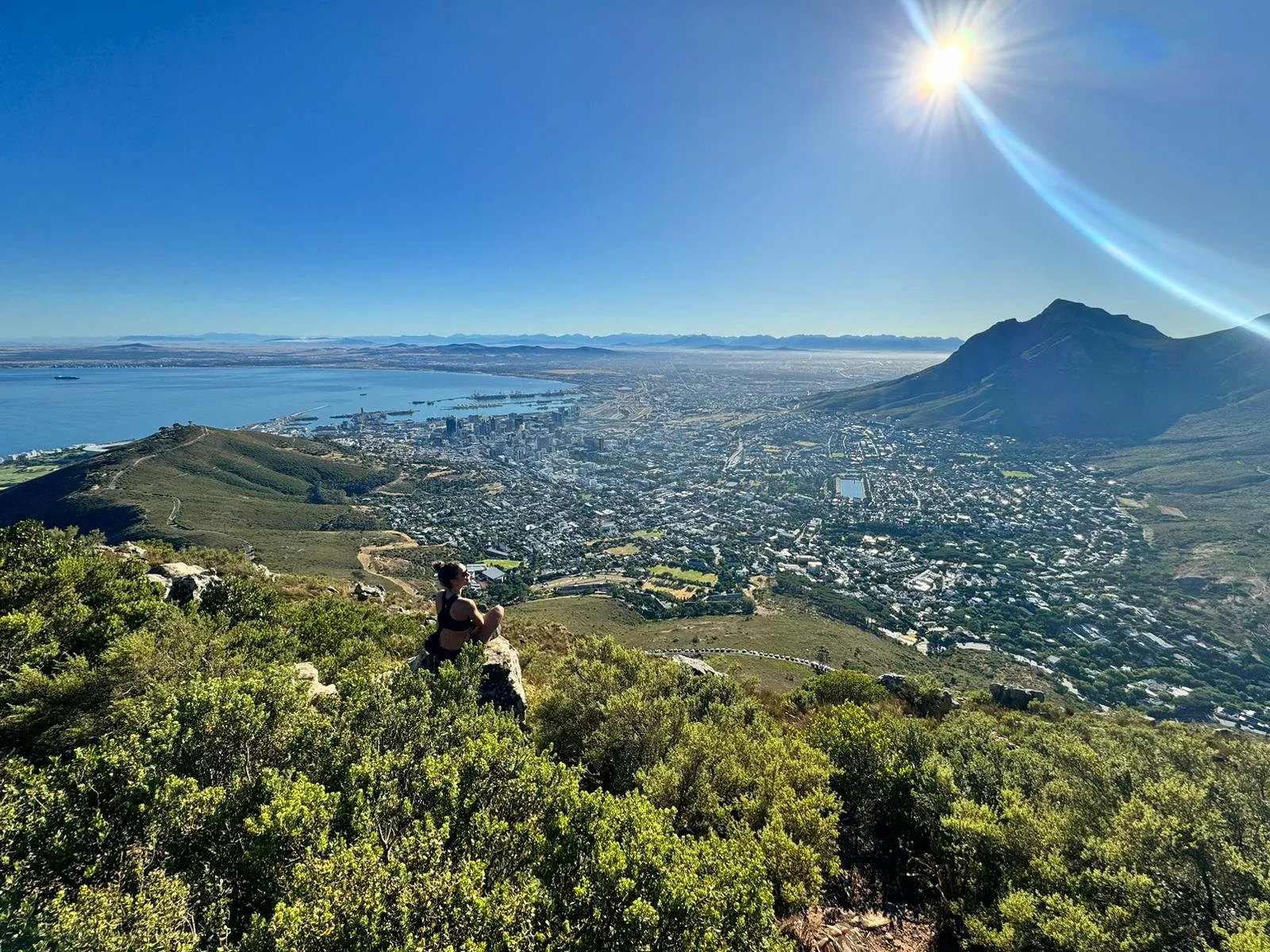
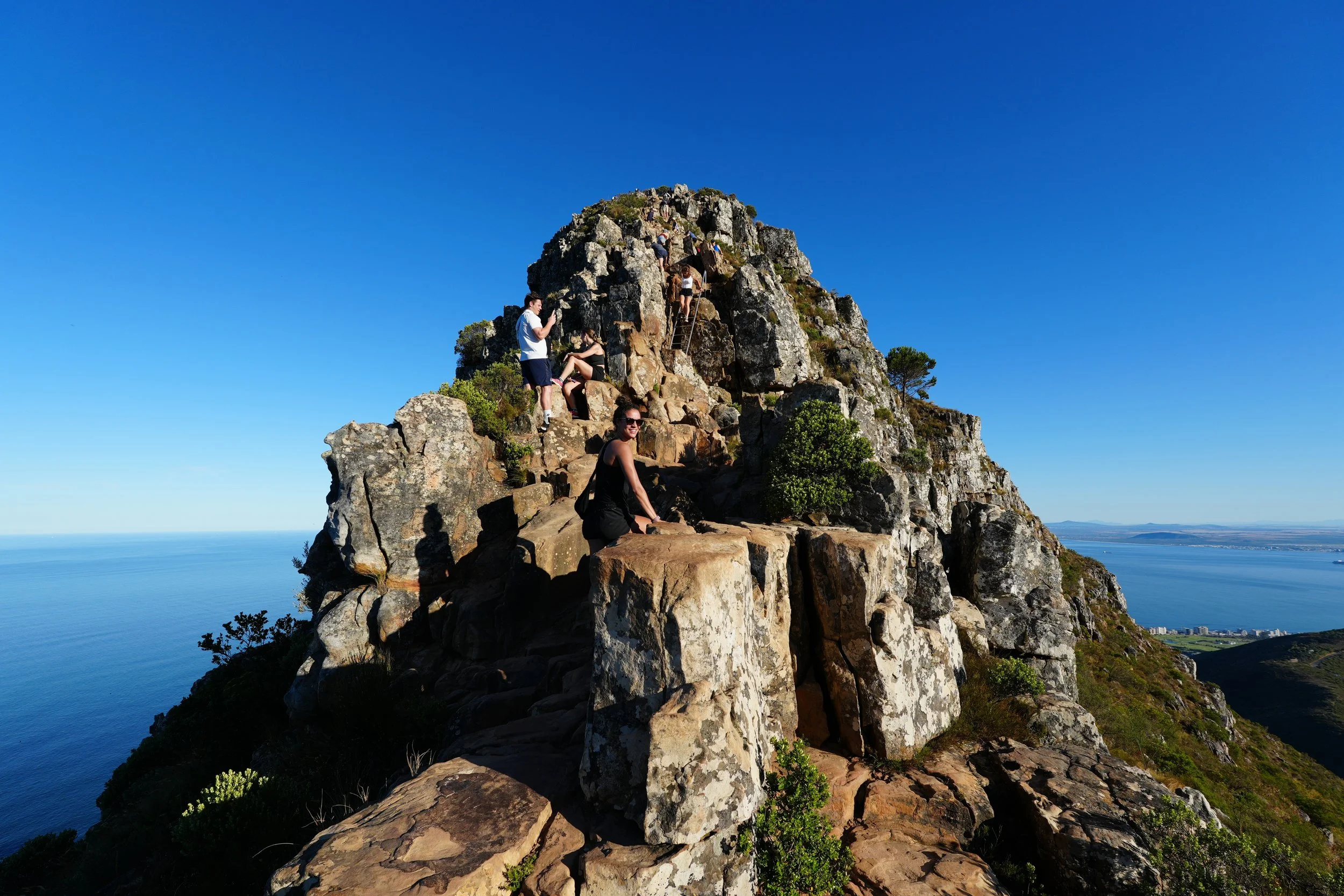
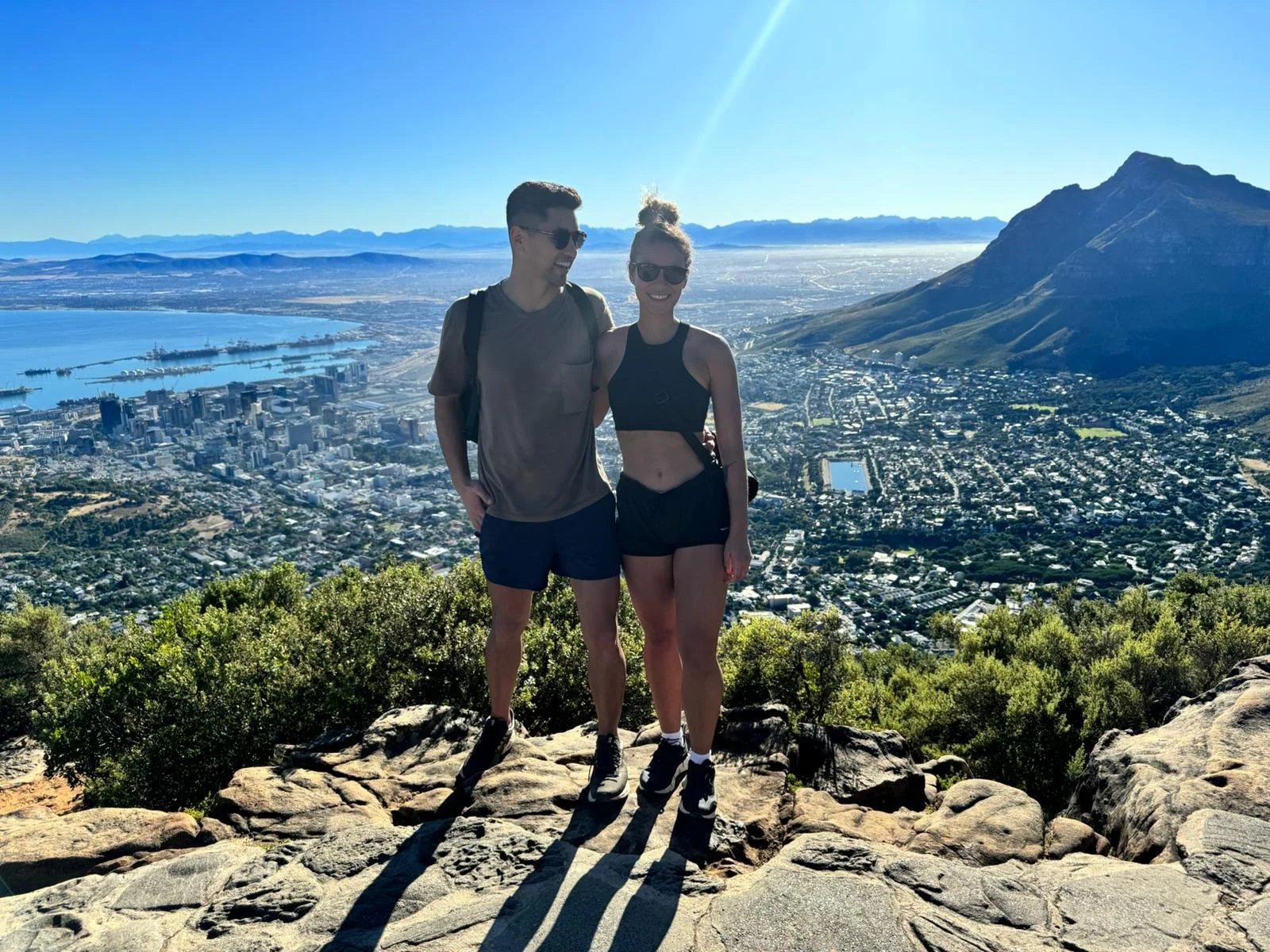
Because jet lag and excitement are an incurable combination, our bodies were super-charged at 5 am and we made an on-the-fly decision to hike Lions Head Mountain. The 90-minute hike up was the vertical cup of coffee that we didn’t know we needed. Sweaty and relieved once we reached the top, we were greeted by a breathtaking 360-degree view of Cape Town. What a welcome to South Africa.
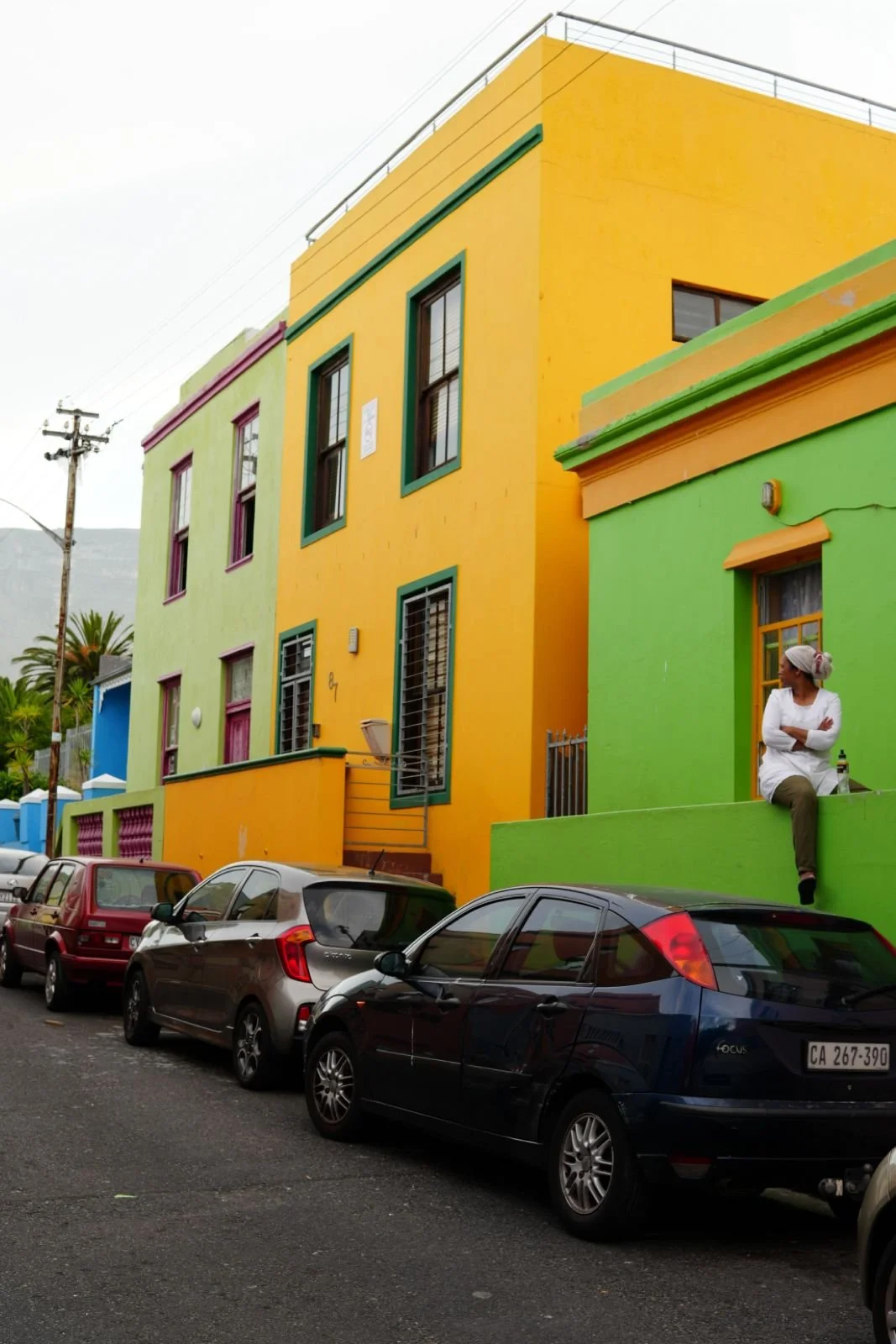
The next day, we’d learned that there would be a giant carnival with music and performers in Bo-Kaap – so that’s where we went. The colourful neighbourhood that you may have seen on Instagram is known as Bo-Kaap, meaning “above the Cape”. Formerly leased by the Dutch to south-east asian slaves, houses in Bo-Kaap were originally painted a mandatory white. After slavery was abolished, the free Cape Malays were legally allowed to purchase their homes and painted them in bright and bold shades of oranges, pinks, yellows, blues, and greens - a collective expression of freedom and joy.
The Tweede Nuwe Jaar is a historical celebration of the second New Year and an acknowledgement of the rebellion against slavery. The locals we had chatted with had mentioned this was a carnival for “coloureds”. Upon hearing this term, I gave Ryley immediate side eye; definitely not an acceptable term in North America and elsewhere in 2024. Little did I know…..Not so the case in South Africa…..
Context: during apartheid (more to come on that later), South Africans were racially classified as “white”, “Indian”, “coloured”, and “black” (ranked in the above socio-hierarchy from first class to lowest class citizens). “Coloureds” are classified as mixed European (“white”) and African (“black”) or Asian descent, like me. Even though post-apartheid, the designation of “coloured” was abolished, the term is still widely used by most (blacks, whites, and mixed-raced folks).
This was a bit of a mind bend for me, but keep in mind apartheid only ended 30 years ago. Reconciliation is still underway, with a long way to go.
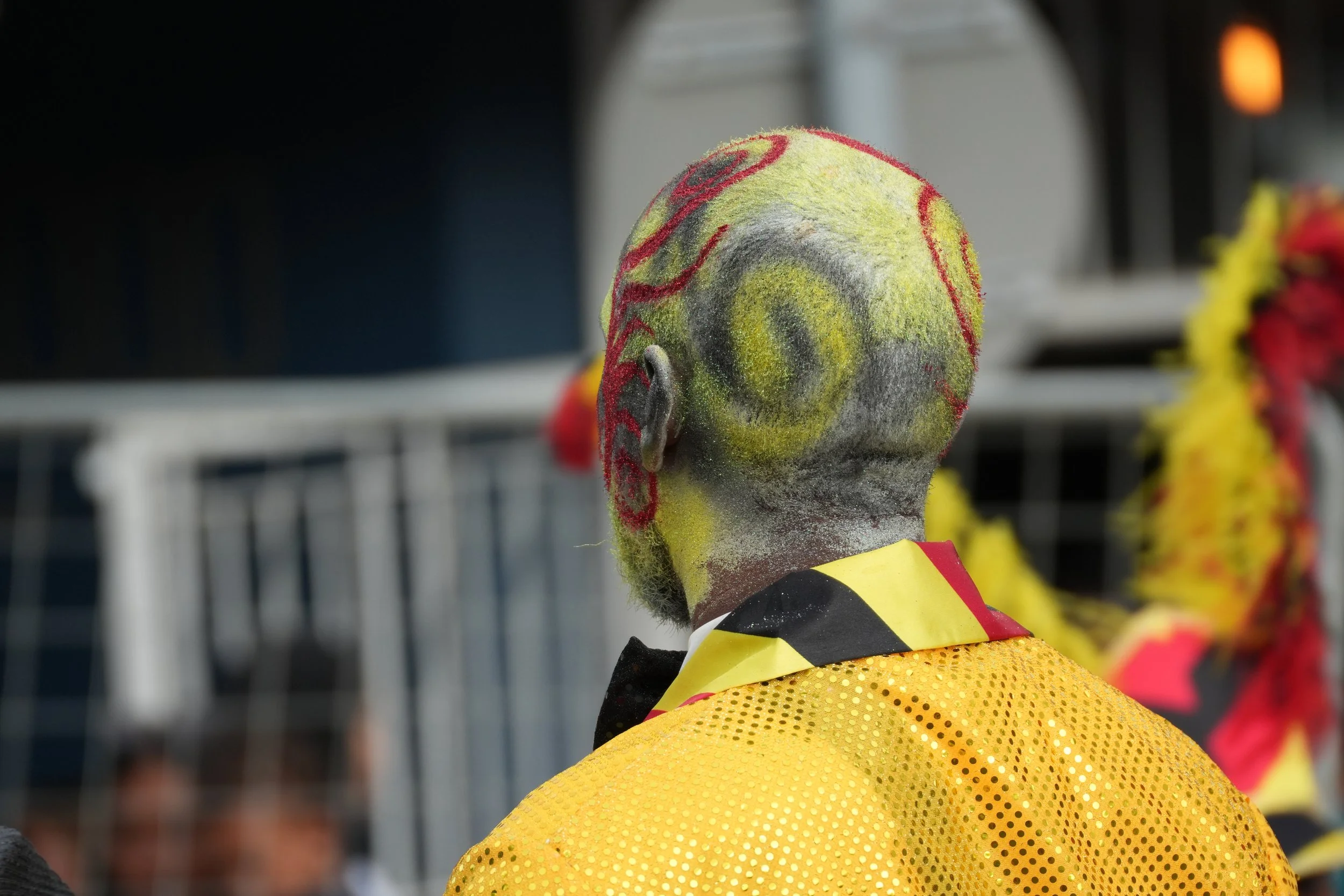
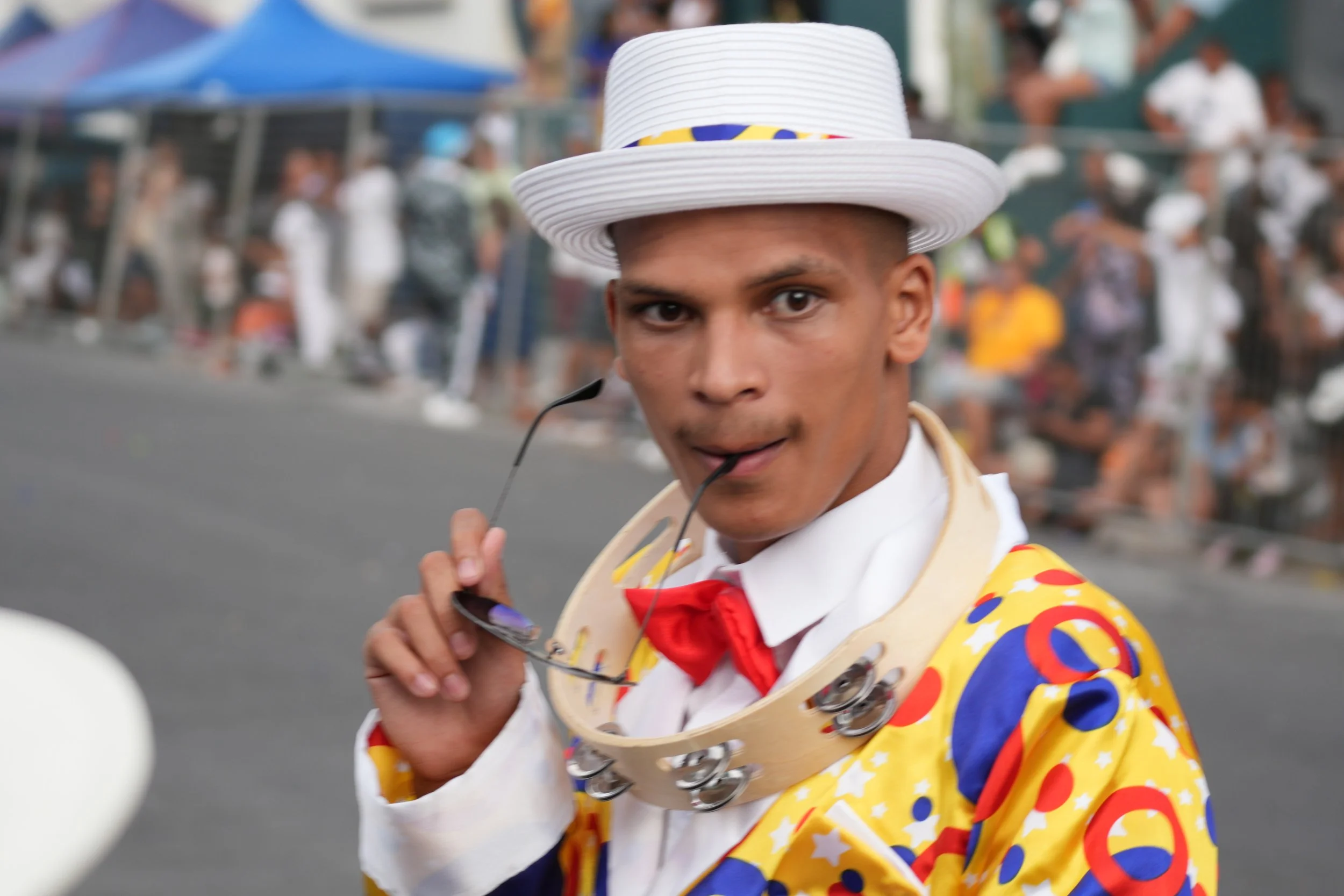
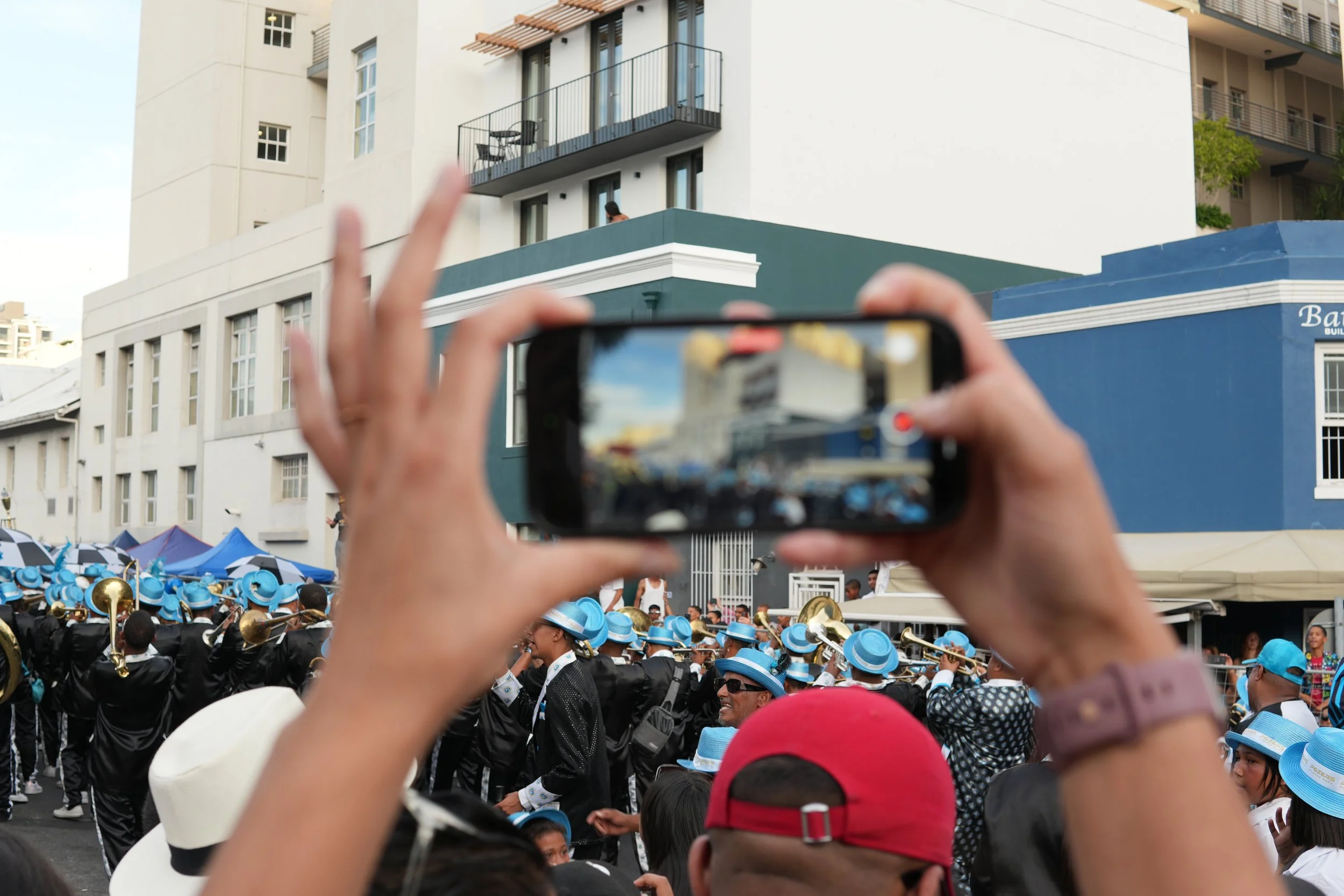
The Tweede Nuwe Jaar, formerly referred to as the Kaapse Kloppse, which directly translates to the “Koon Carnival” (that’s a whole other conversation for another day), was mind-blasting. The main street was barricaded as a parade of marching bands, painted faces, and people of all ages danced their way down the pavement. A variety of shades of brown skin, unique curl textures, and face shapes left us in awe.
What struck us was how everyone around us looked just like us. We blended into the fast-moving stream of on-lookers like never before and felt an immediate sense of belonging. From an identity perspective, and I’ll speak only for myself, it’s fascinating being mixed-race. You’re never quite white enough and never quite black enough, instead you fall into the “in-between”, and the world around you never lets you forget it.
For the first time in my life, I didn’t feel that way and it took me by surprise. I felt like I was exactly where I was supposed to be, surrounded by a beautiful array of brown faces that looked like mine. For once in my life, I wasn’t the minority and THAT is an empowering feeling.
The next day we played a game called “do you think you could drive manual AND right hand drive up the coast in local traffic?”. The verdict: yes to the right hand drive, and hard no to manual bit (automatic all the way). So up the coast we went, and Ryley did a fabulous job of getting us to Boulder’s Beach safely while I periodically grabbed the holy-shit handle and pressed my imaginary passenger brake.
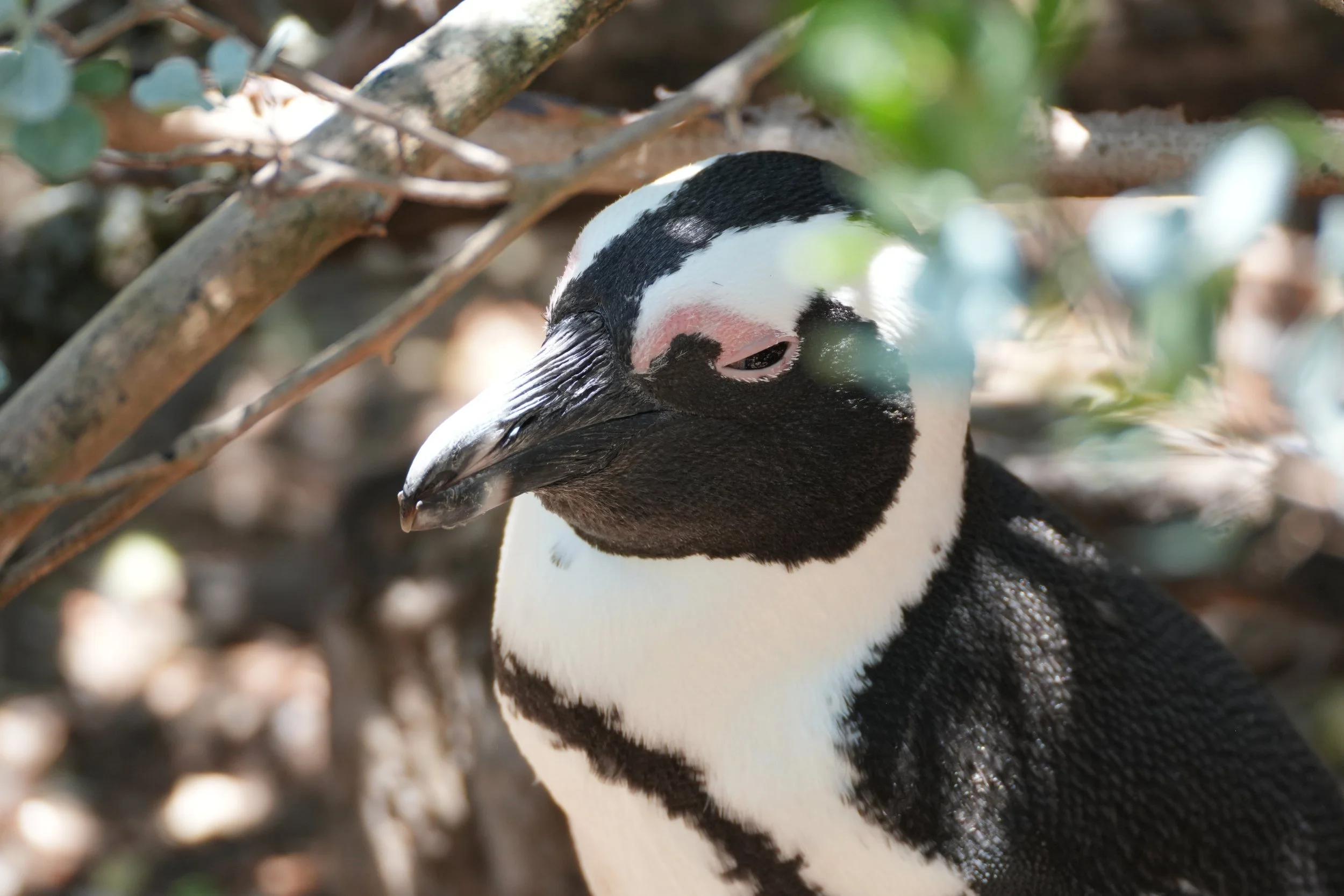
The drive to Boulder’s Beach was stunning – what wasn’t stunning was the three-hour queue to see the penguins. Instead, we walked the boardwalk (for free, may I add) where we were able to view tons of relaxing penguinos and Ryley’s dream came true seeing a baby and full-grown Hyrax.
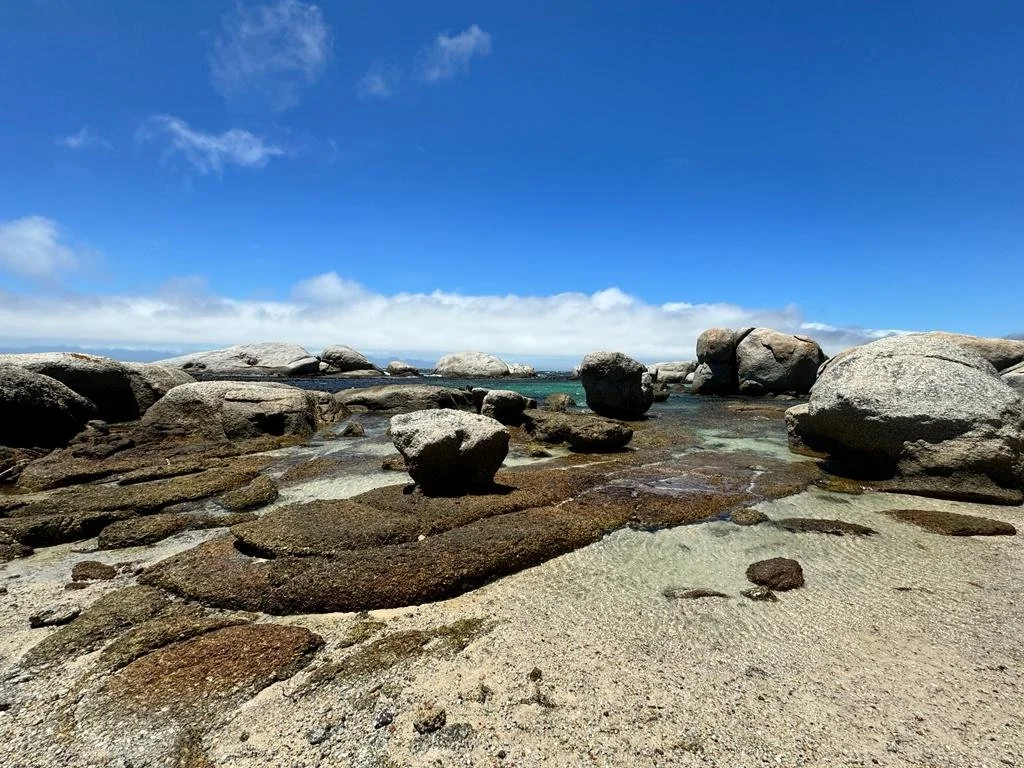
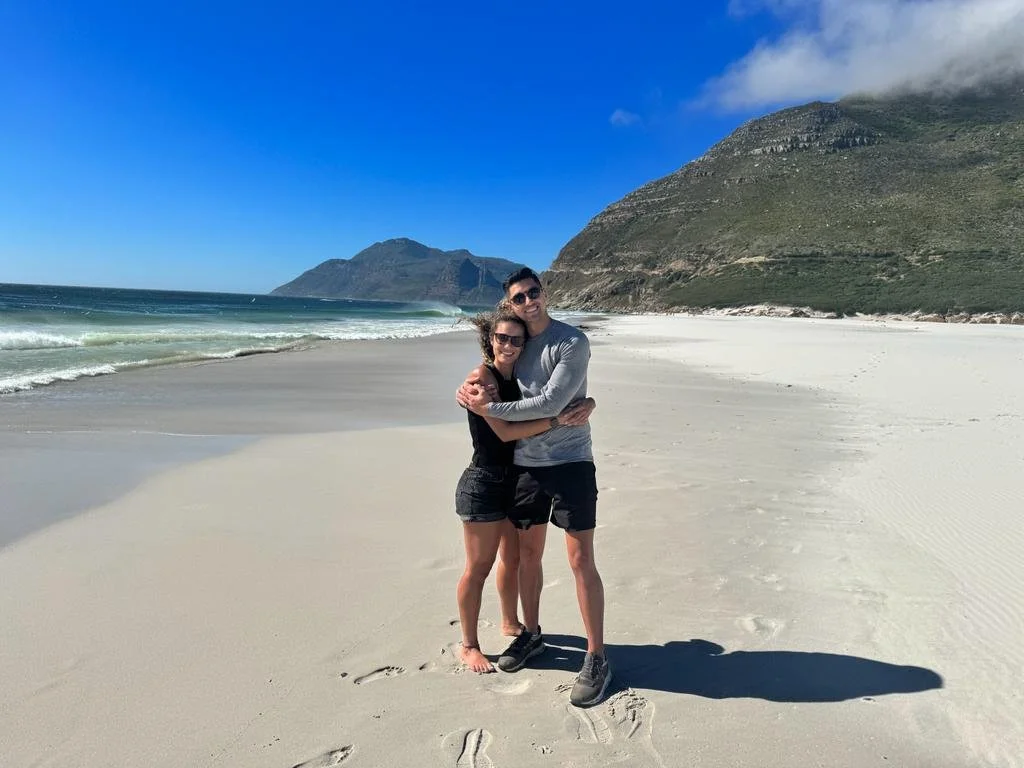
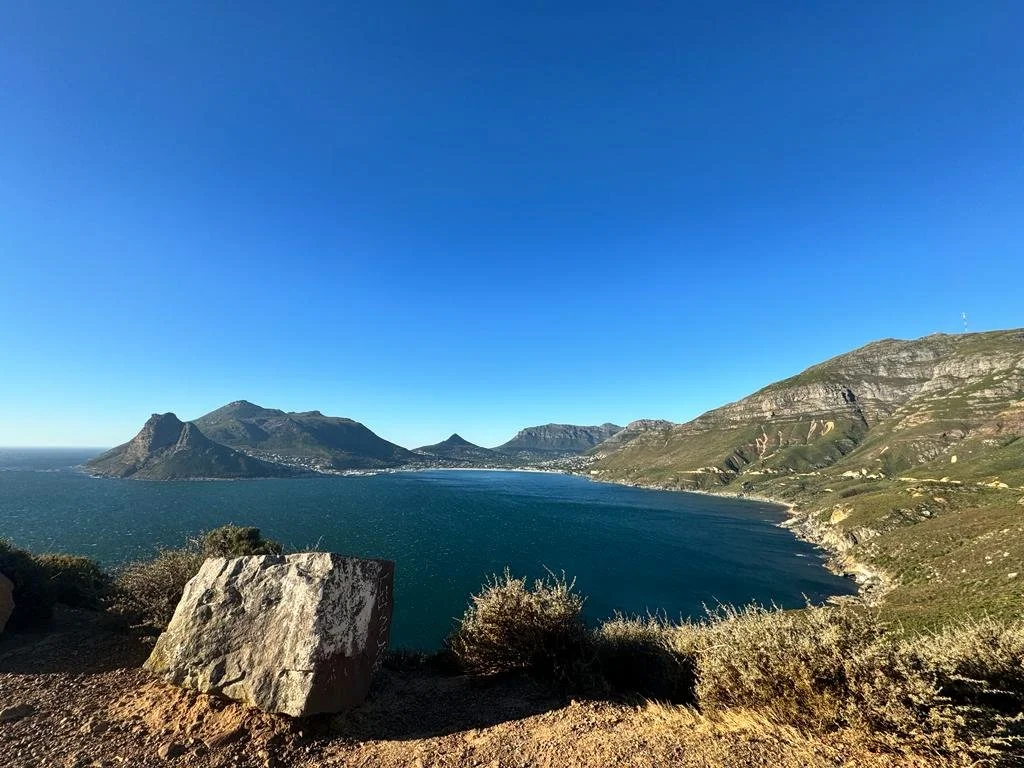
Simon’s Town, Nordhoek Beach, and Hout Bay would comprise the rest of our day, where we absorbed all the beautiful views of the ocean and coastal landscapes.
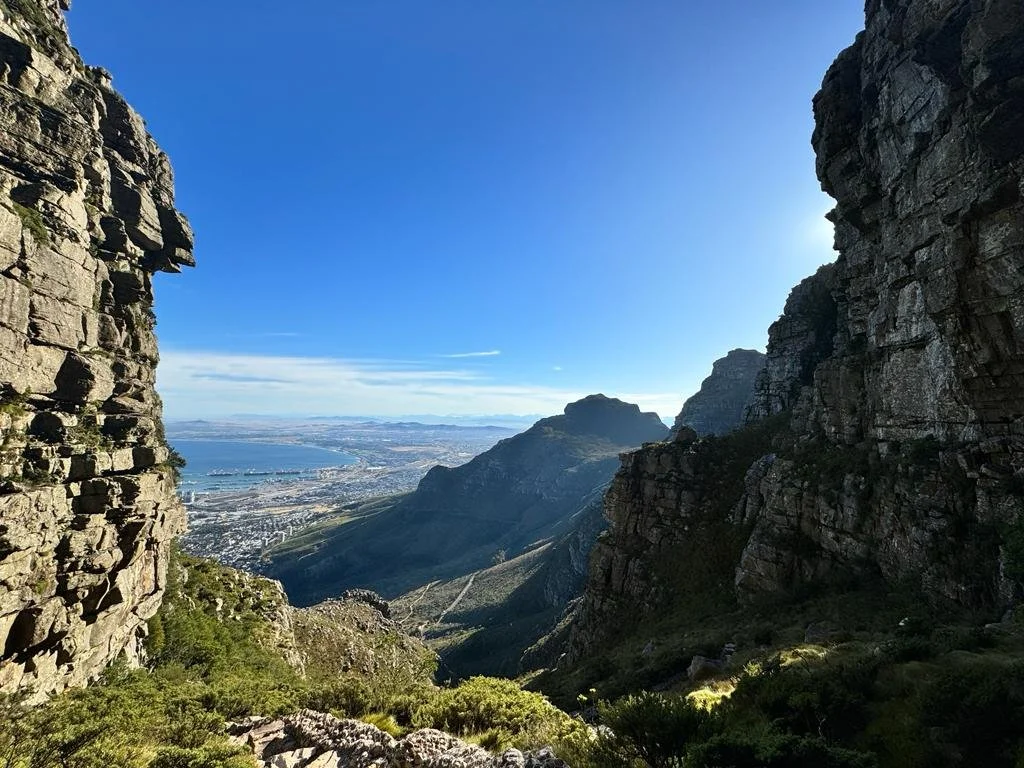
Table Mountain time. We’d heard so many locals sing praises about the hike and the cable car, so we decided to hike up and cable car down (best decision we could have made). A 5:30 am start proved to be the right choice, as small groups of hikers began to gather at the base of the mountain to begin their journey up. The first 15 minutes was a vertical nightmare, which would later turn into a more reasonable traverse across the front side, only to be followed by another 30 minutes of rocky vertical incline.
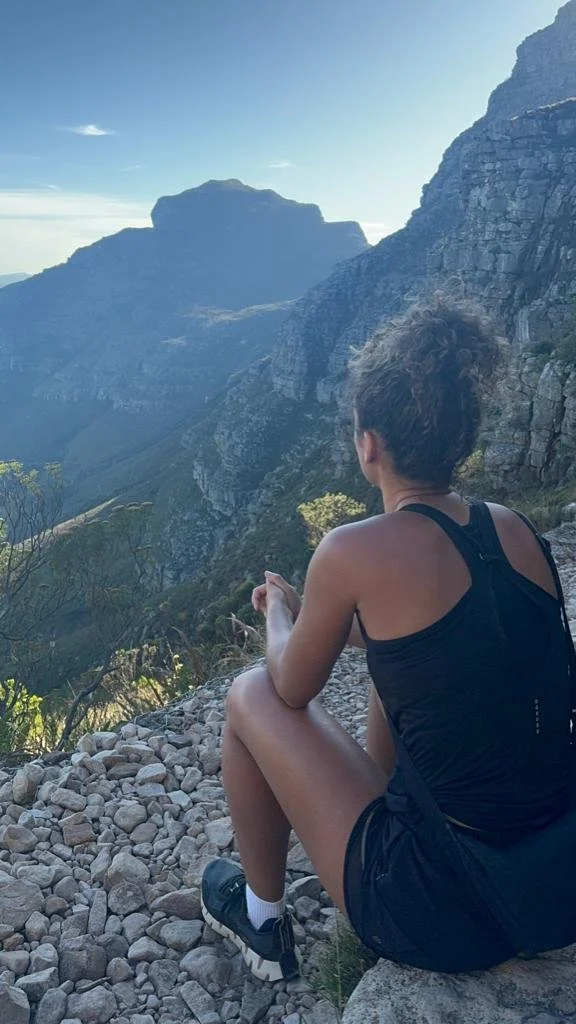
The hike was incredible. However, what made this hike so memorable were the folks we met along the way. A family of four from the UK and their uncle were right behind us, and a friendly banter ensued as we suffered through the sweaty trek. We ended up hiking together and had the most wonderful conversation that continued at the summit, which turned into dinner and drinks. Without any exaggeration, this family was an incredible example of tightly knit, down to earth, welcoming, and overall, just full of love: real life #familygoals.
For days afterwards, we’d ask ourselves how we got so lucky to meet such kind people. We hope to visit them in the UK one day in the very near future.
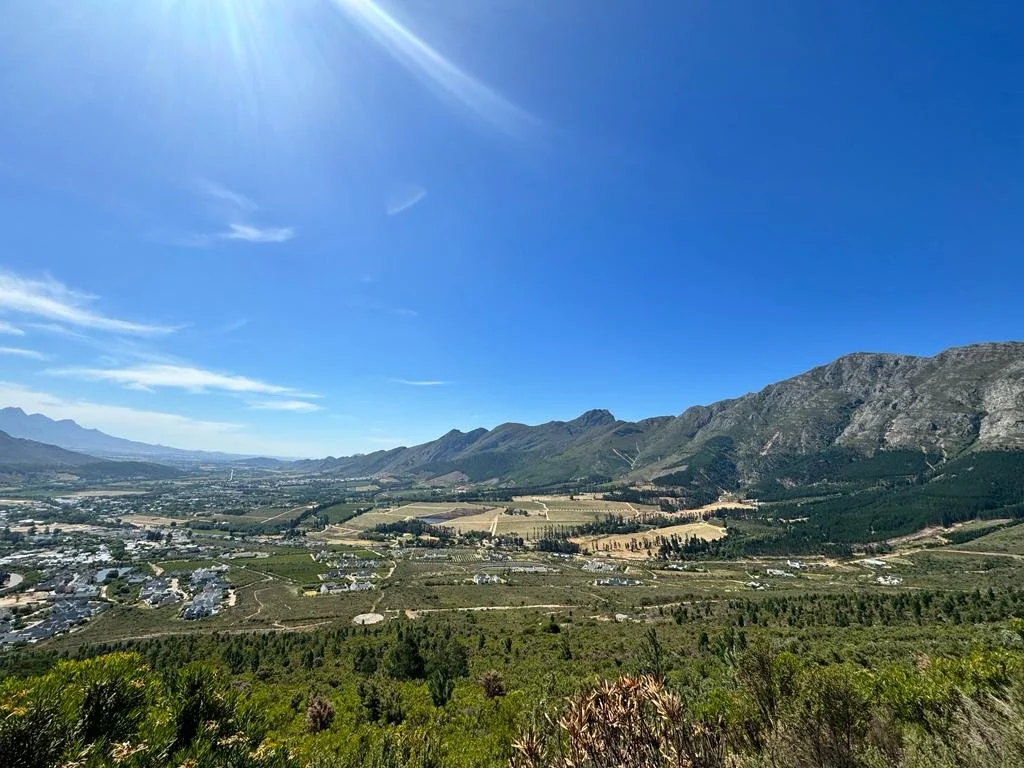
You can’t visit Cape Town without visiting the winelands…it’s actually a crime (I kid). We were the first to be picked up by our lovely guide Bonga. An hour later and our van was packed to the brim with the most top-notch representations of Denmark, Australia, Namibia, San Francisco, Costa Rica, and Poland. The itinerary consisted of visiting the wine regions of Stellenbosch, Franschhoek, and Paarl, which turned out to be the most breathtaking landscape we’d ever seen.
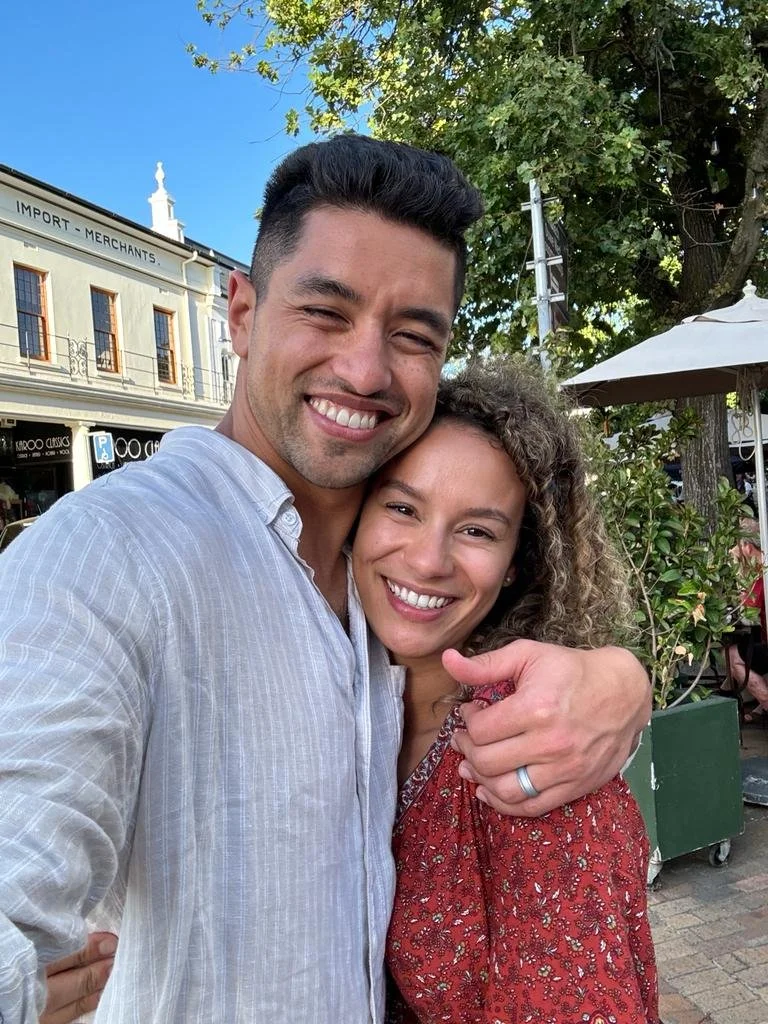
Wine tasting in Canada consists of a one to two ounce pour, where the option to spit is supported – wine tasting in Cape Town consists of solid three-ounce pours, four samples, and NO ONE spits. A communal “finish your drink” rule was established at the first winery we visited; no wine shall be wasted. By the third winery, everyone had exchanged numbers, were making toasts, telling stories, and were beginning to look a tad cross-eyed.
By the time we were released to walk through the streets of Stellenbosch, our group was yelling and dancing down the street, walking arm in arm, and being downright obnoxious. I didn’t know I was physically capable of consuming so much wine – I’m continuing to surprise myself on this trip.
DJ Ryley made an appearance and blasted the afro beats and throw-back R&B, while everyone in the van passed around to-go cups of wine and were dancing and drunk-shrieking from their seat. The tour came to an end and we were so sad it was over.
We were the first to be dropped off, and our entire group stumbled out of the van and had a small dance party with the music still blasting in front of our guesthouse…it was 7 pm and still daylight. Hugs were shared all around and it was one of the most memorable goodbyes I’ve ever been a part of.
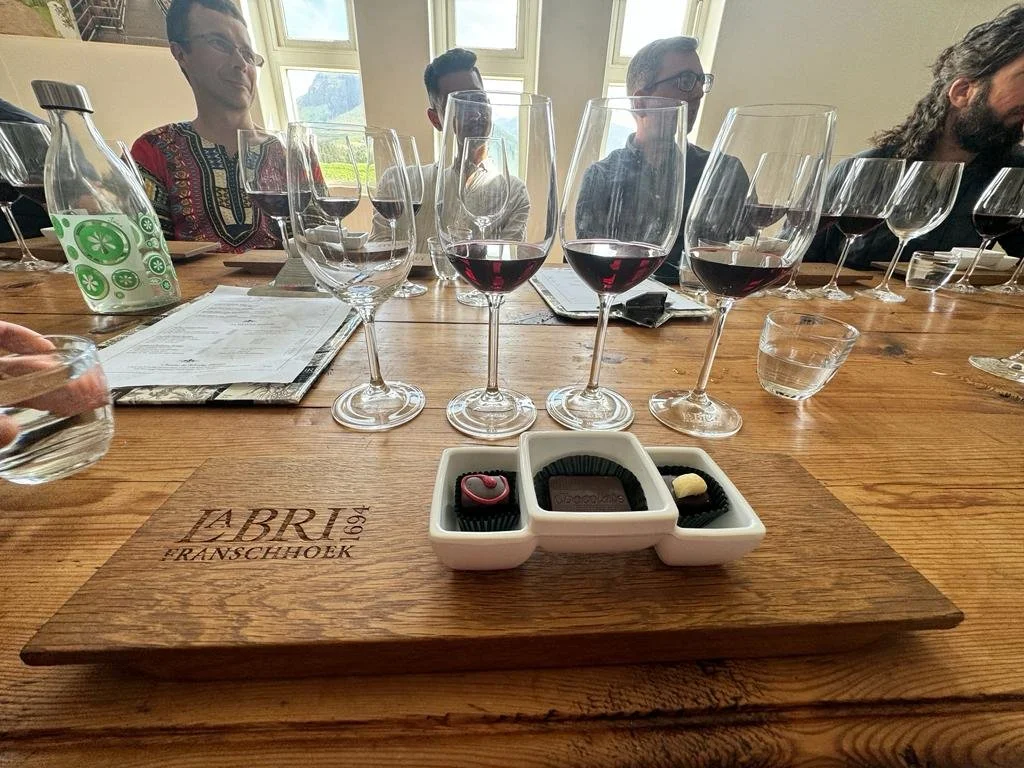
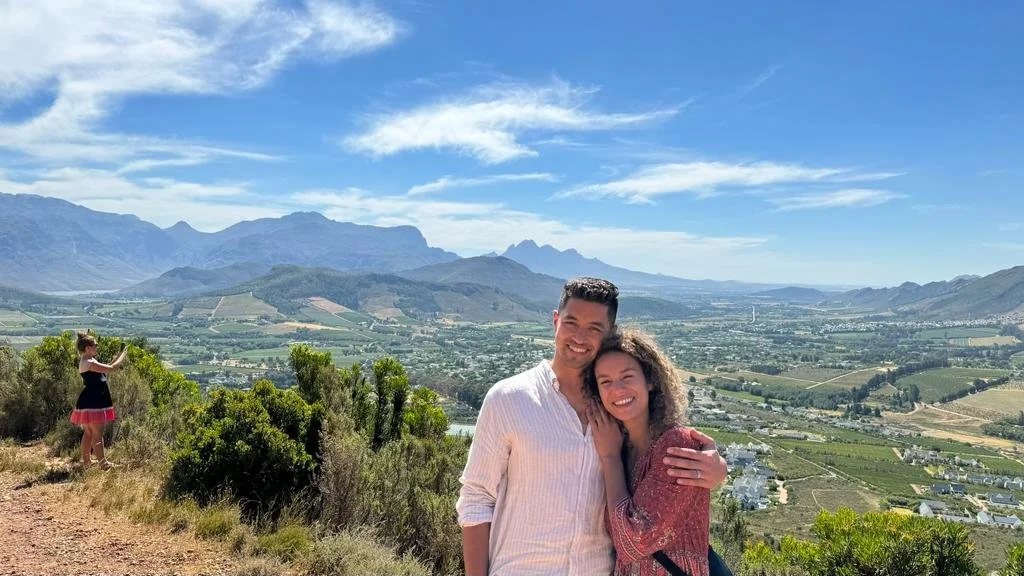
P.s. if you’re looking for a delicious white wine that won’t give you ridiculous acid reflux, dabble with a Chein Blanc - you won’t be sorry.
We bid our goodbyes to Cape Town and made a promise that we’d be back one day very soon.
Johannesburg (01/07/24 - 01/09/24)
Off to Johannesburg – famously known for where the 2010 FIFA World Cup was hosted. A distinct shift could be felt, from coastal laid-back Cape Town to the big city bustle. We naturally gravitate away from big cities; however, we arrived on a mission that needed to be completed in a particular order.
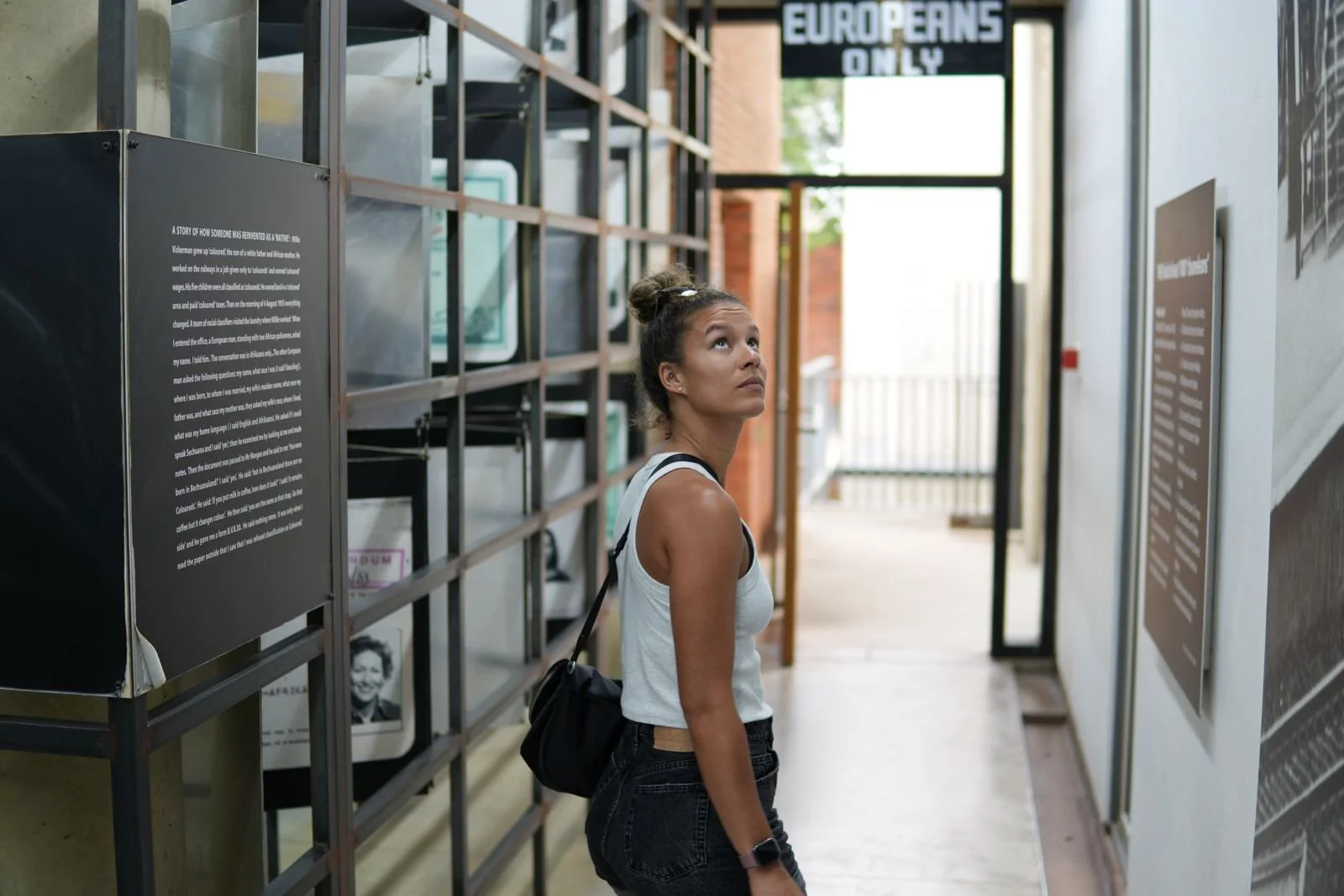
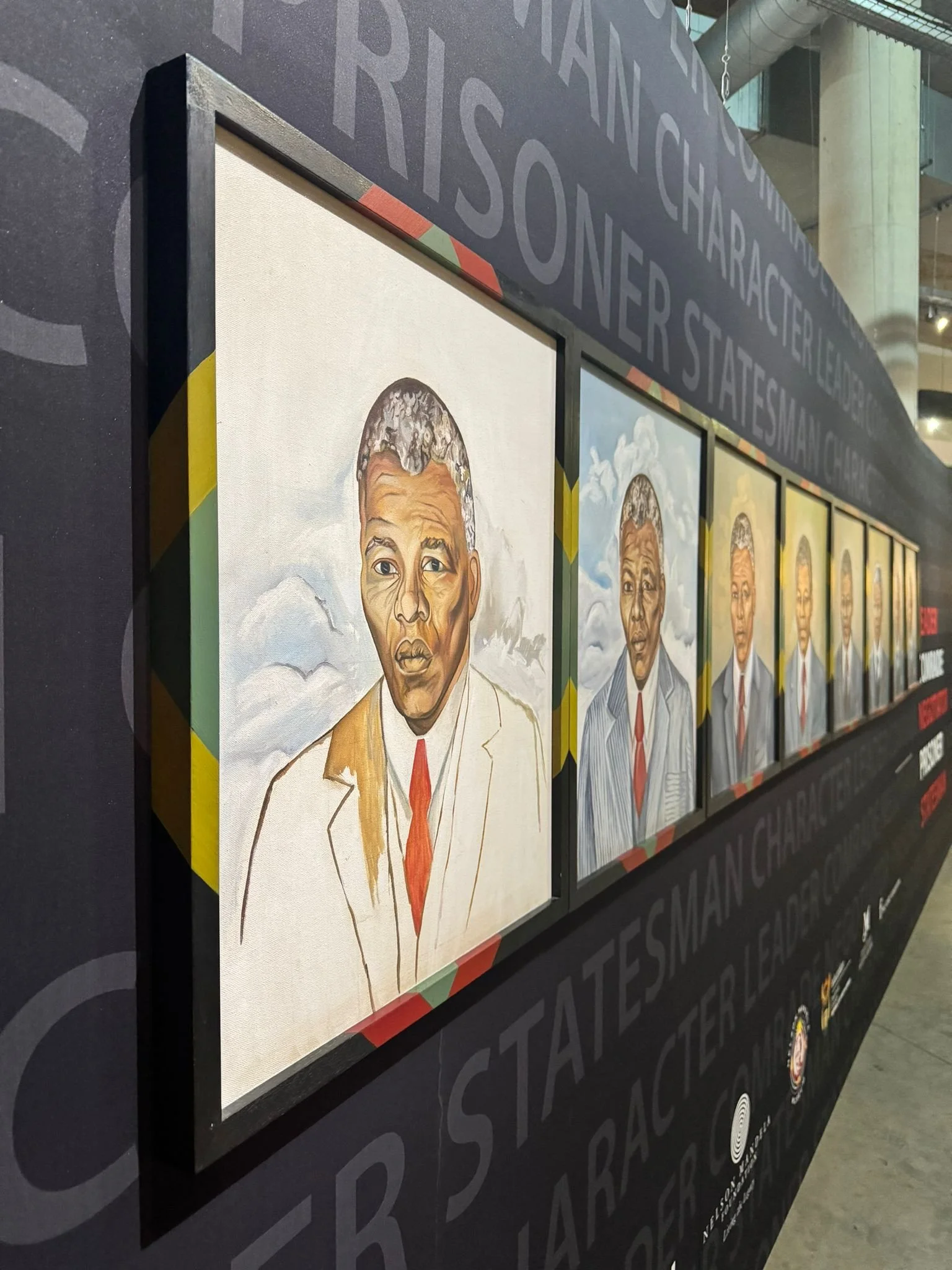
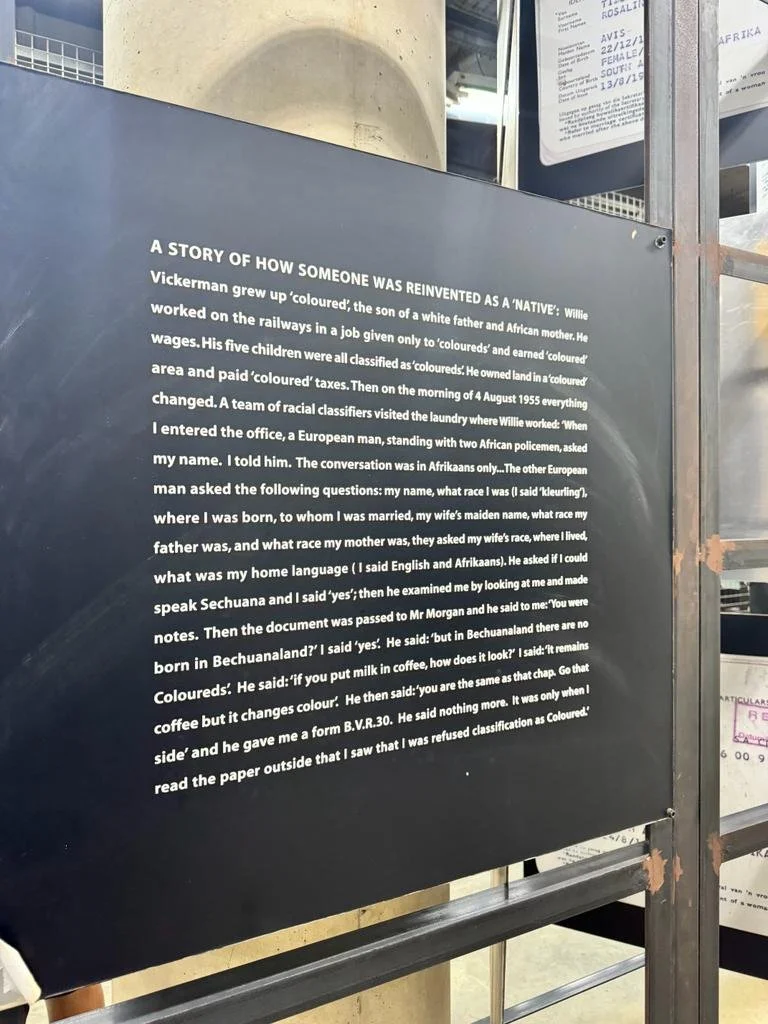
1. Visit the Apartheid Museum
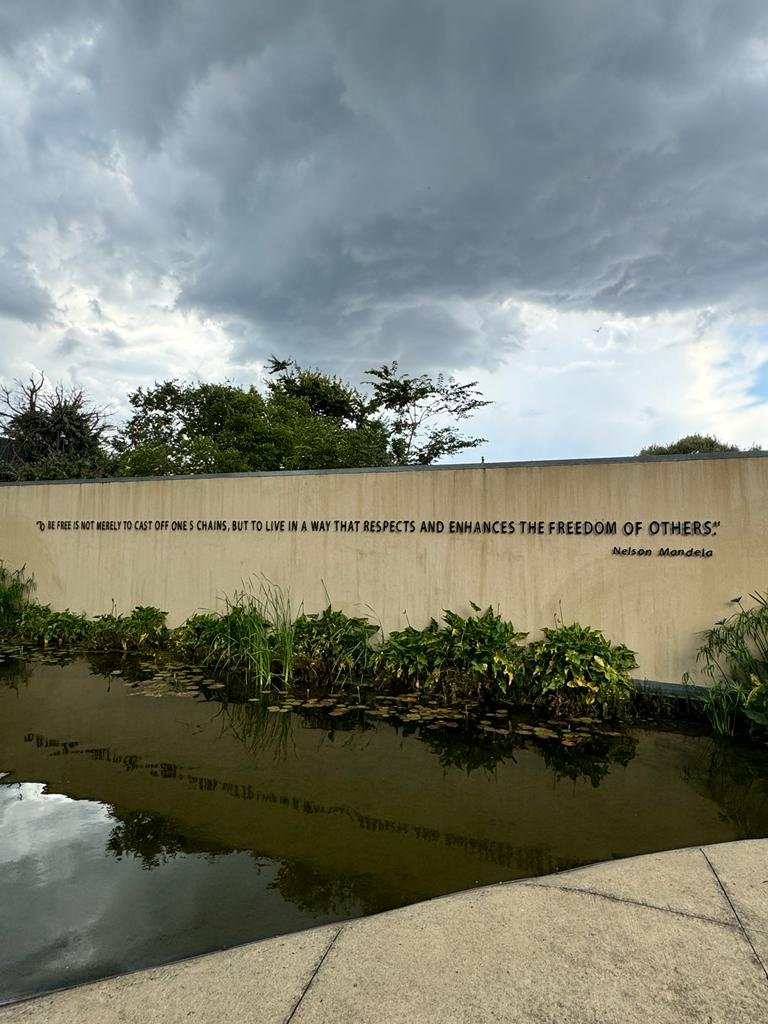
“Reconciliation does not mean forgetting or trying to bury the pain of conflict, but that reconciliation means working together to correct the legacy of past injustice.” – Nelson Mandela
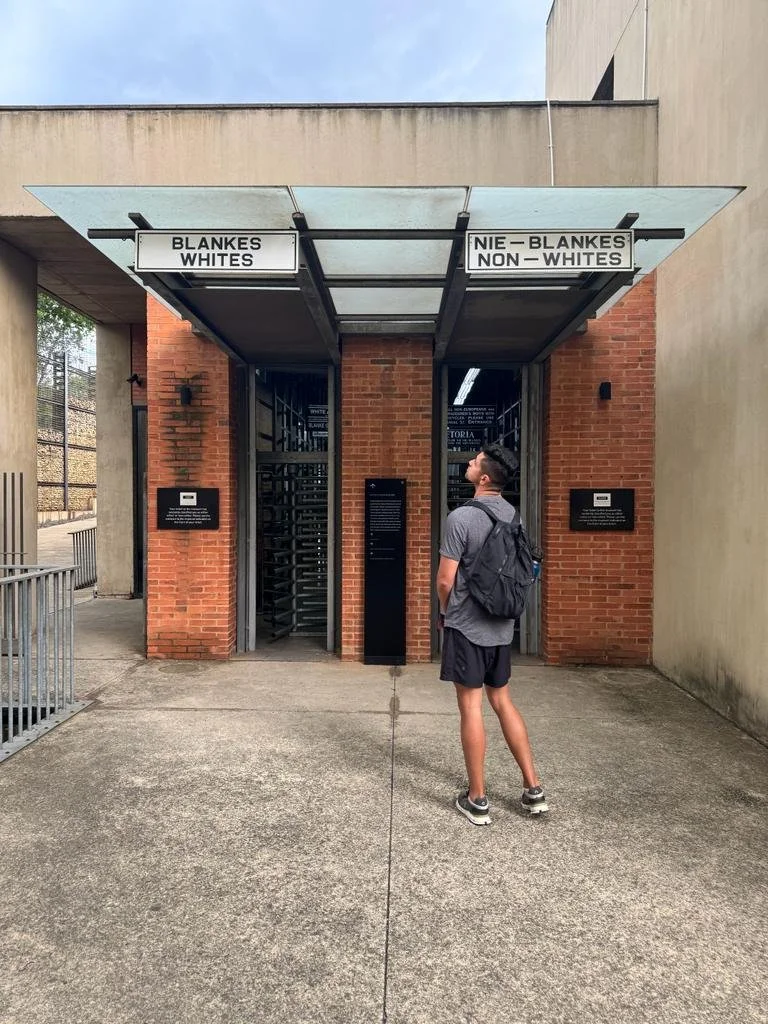
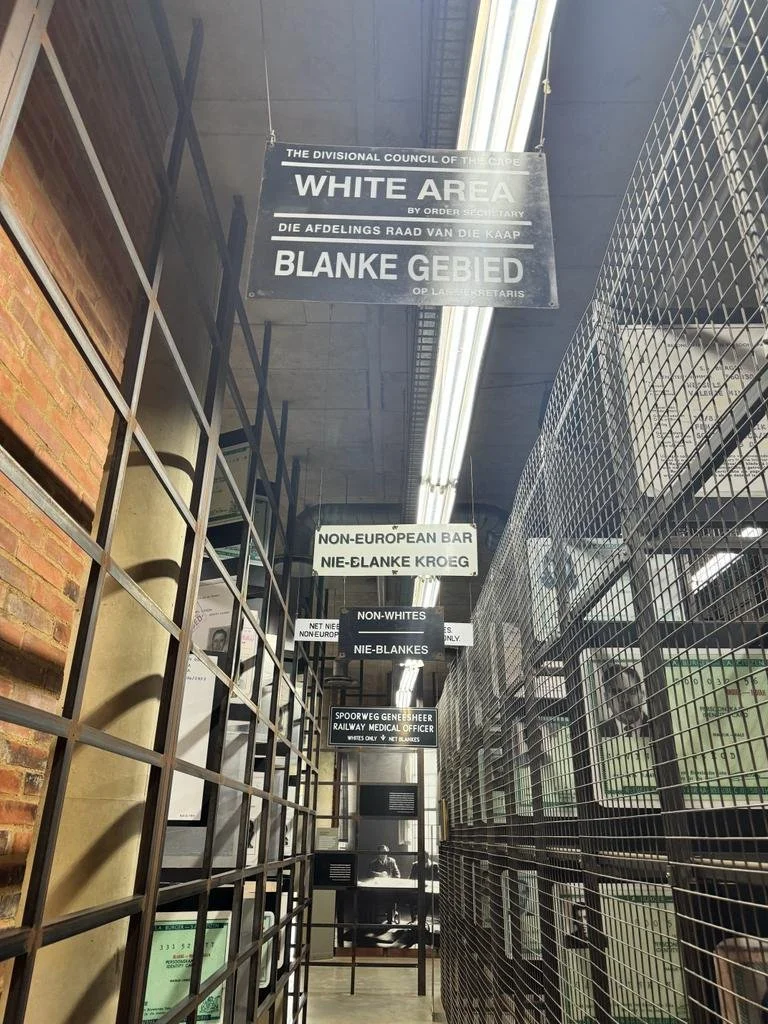
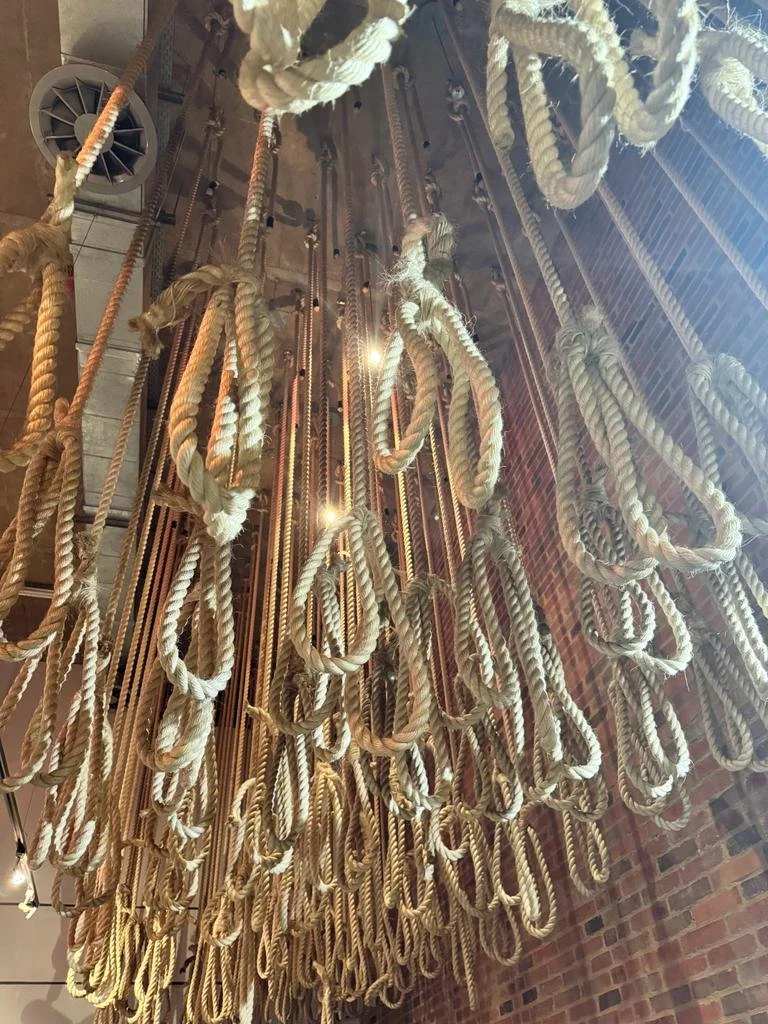
Coming to South Africa, we shared a novice understanding of Apartheid. In Afrikaans (a language derived from Dutch), Apartheid directly translates to “separateness” or “the state of being apart”. To add additional context, Apartheid (1948 - 1994) was a system of institutionalized racial segregation under the all-white National Party, which dictated that the majority of the population (non-white South Africans) would be deprived of civil and political rights. A myriad of emotions pulsed through my veins as I made my way through the museum, ultimately leaving me outraged.
“Reconciliation does not mean forgetting or trying to bury the pain of conflict, but that reconciliation means working together to correct the legacy of past injustice.”
Apartheid is a stark reminder of how easy it is to systematize white supremacy into policy. It’s changemakers like Nelson Mandela and Desmond Tutu, to name a few, who made it their life’s purpose to be the change and free the oppressed.

2. Visit Soweto
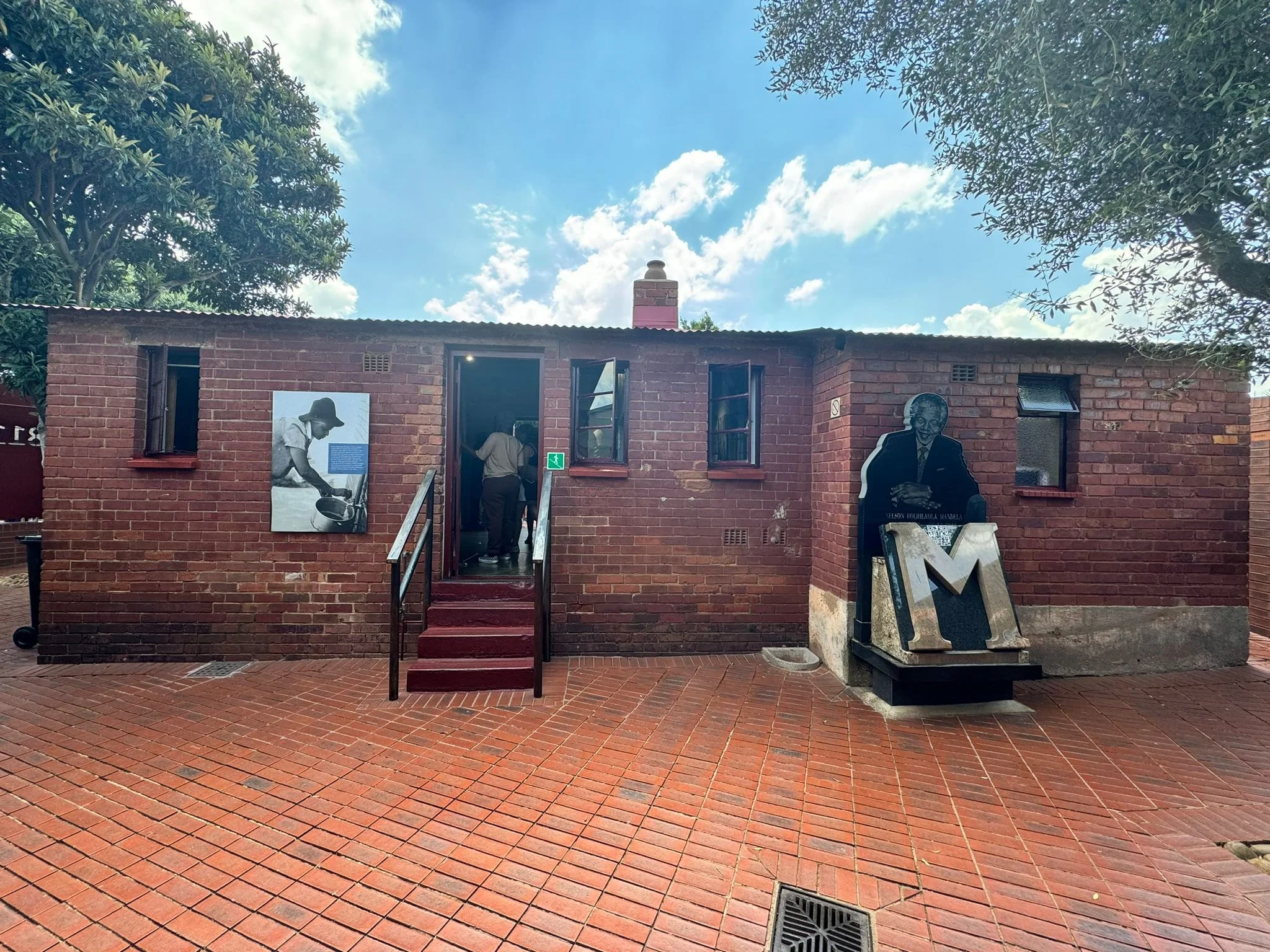
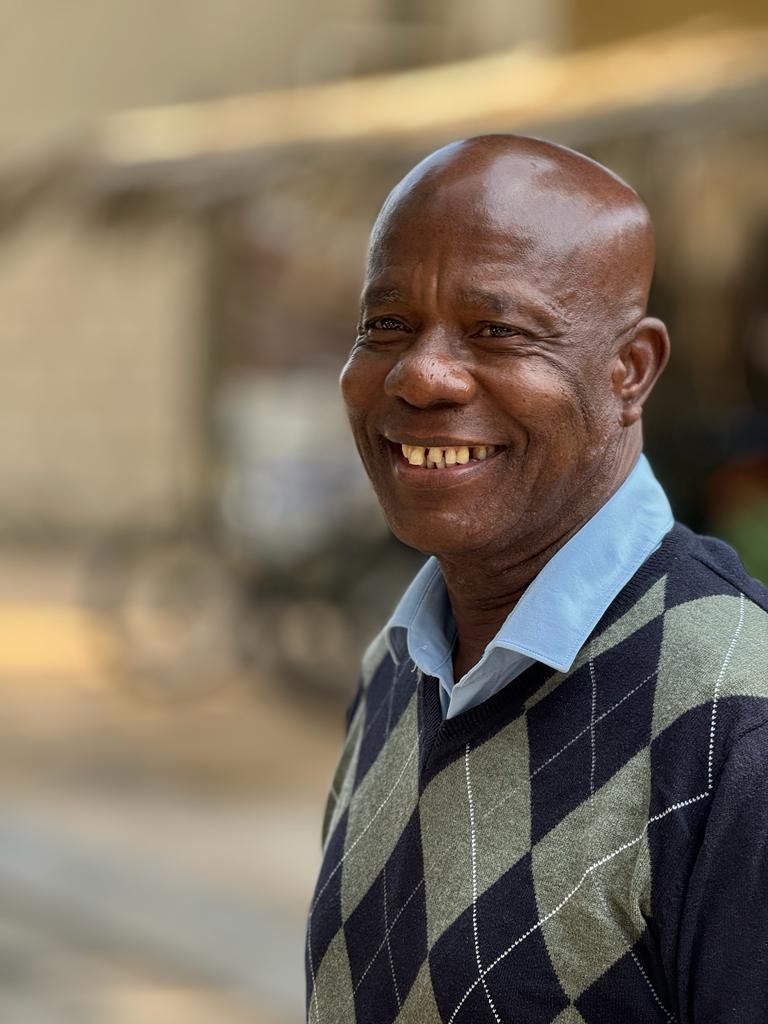
Comprised of 32 different townships and spanning over 200 km, Soweto, is the largest township in South Africa with a population of over 2 million people. Mr. Isaac picked us up and we were instantly greeted with a giant, crinkly-eyed, smile accompanied by a rich chuckle that erupted from the depths of his belly; the definition of BIG uncle energy. As we drove to Soweto, he asked us what we knew about apartheid and what we were hoping to get out of our visit.
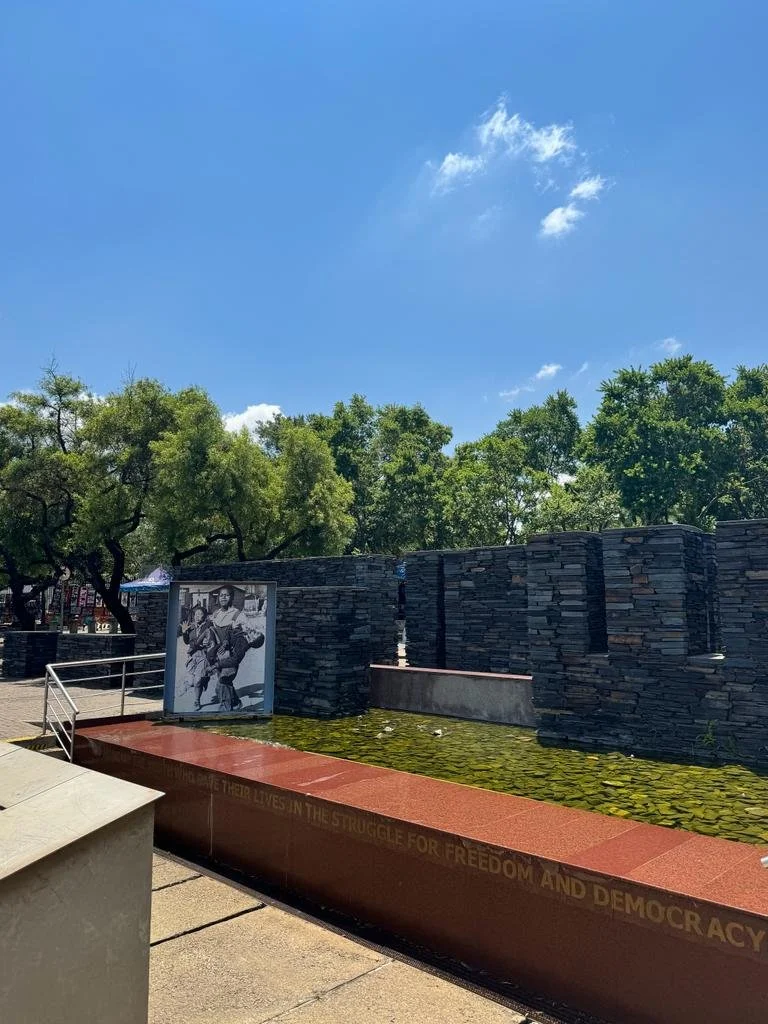
We acknowledged that we had a lot to learn and wanted to gain a better understanding of the history and effects on the present-day community of Soweto. A survivor of both apartheid and the 1976 Soweto uprising, Mr. Isaac shared his experience of growing up in a time of total oppression. He was eager to share memories of his life during apartheid, especially recounting the horrific day of June 16, 1976.
We specifically chose Lebo’s Soweto because the company was created by Lebo (a Soweto local, who unfortunately passed away during Covid) whose mission was to help create jobs within the community. All employees are from or live in Soweto and are from the neighbourhood where Lebo’s is located.
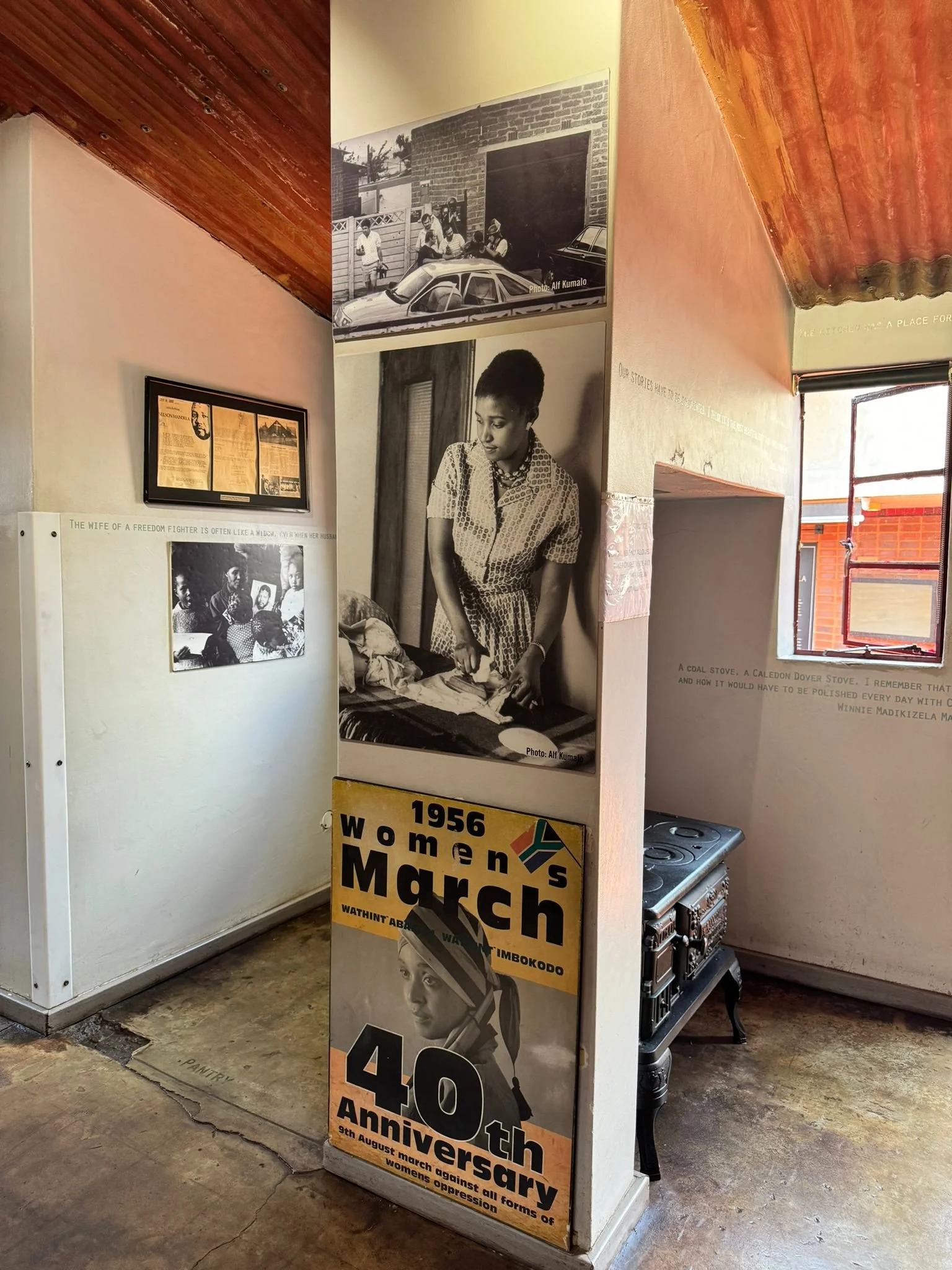
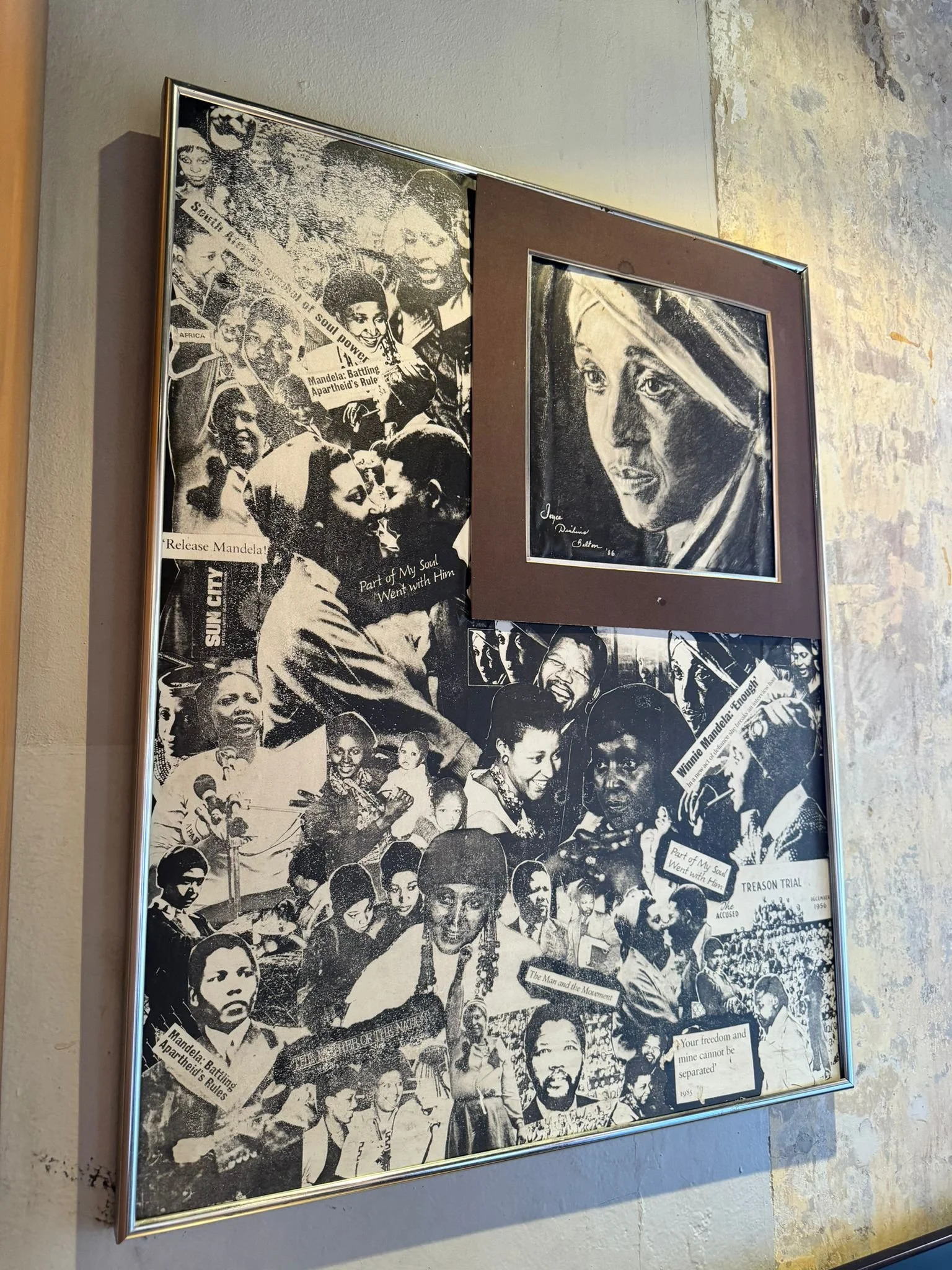
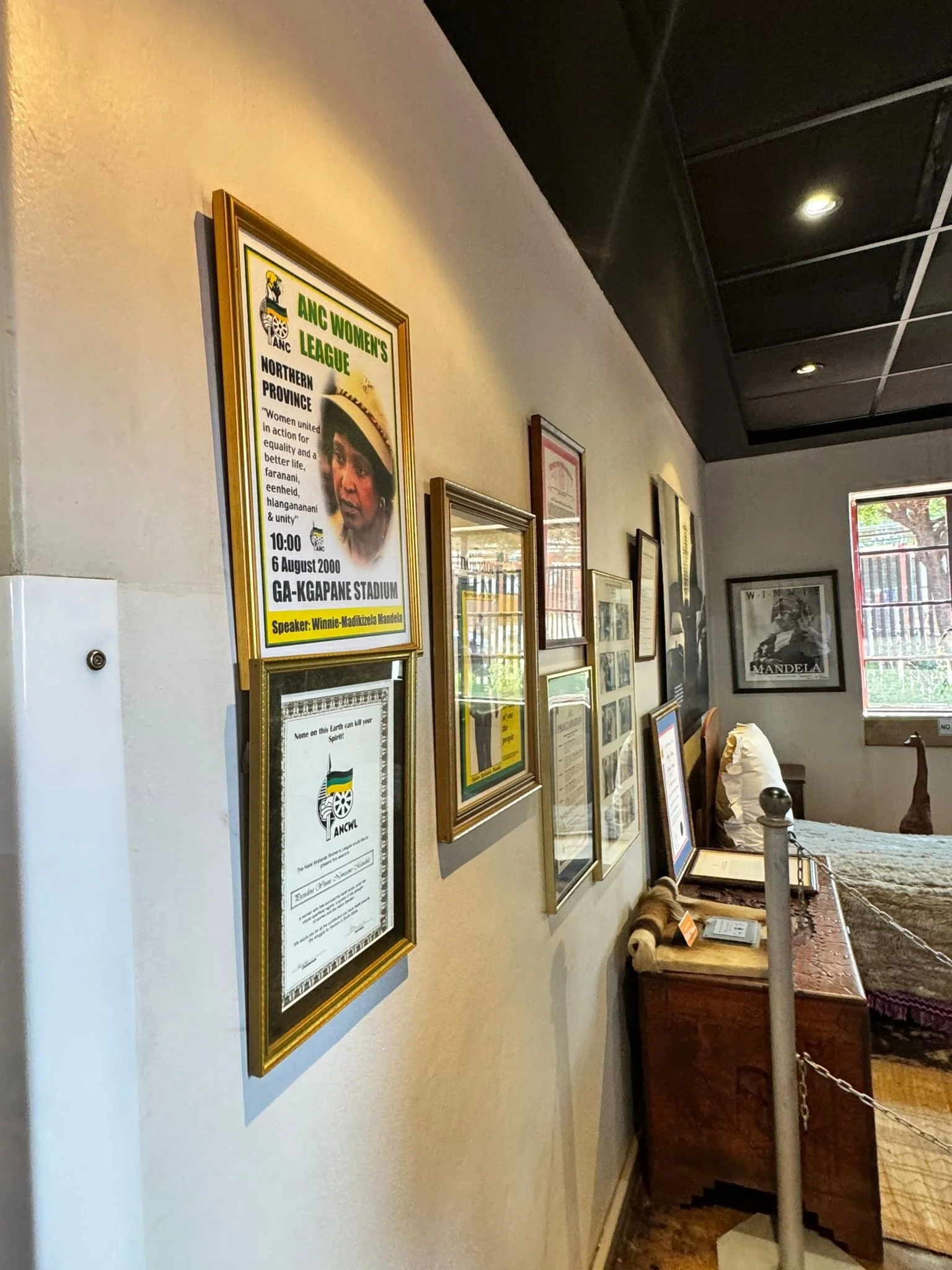
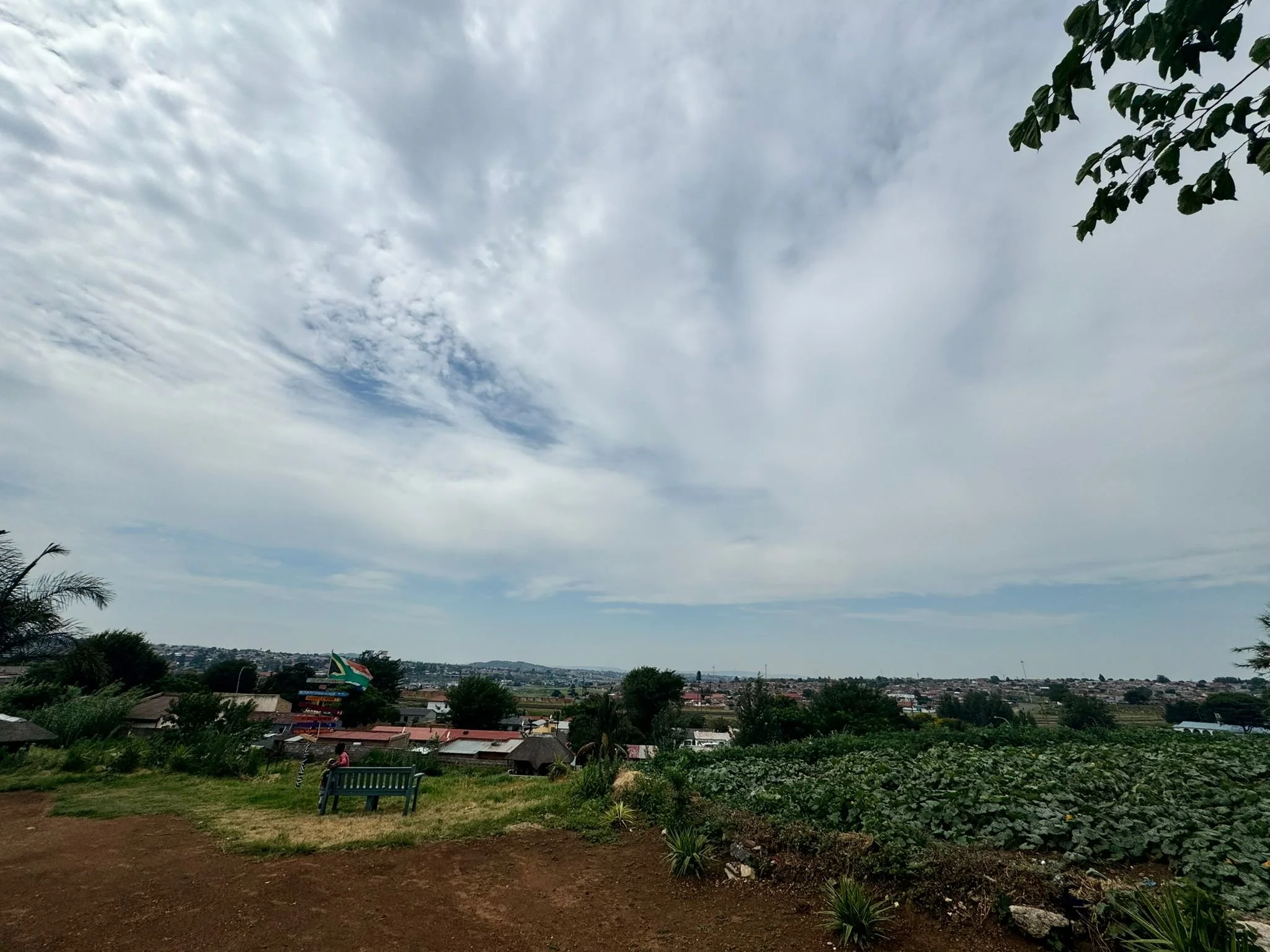
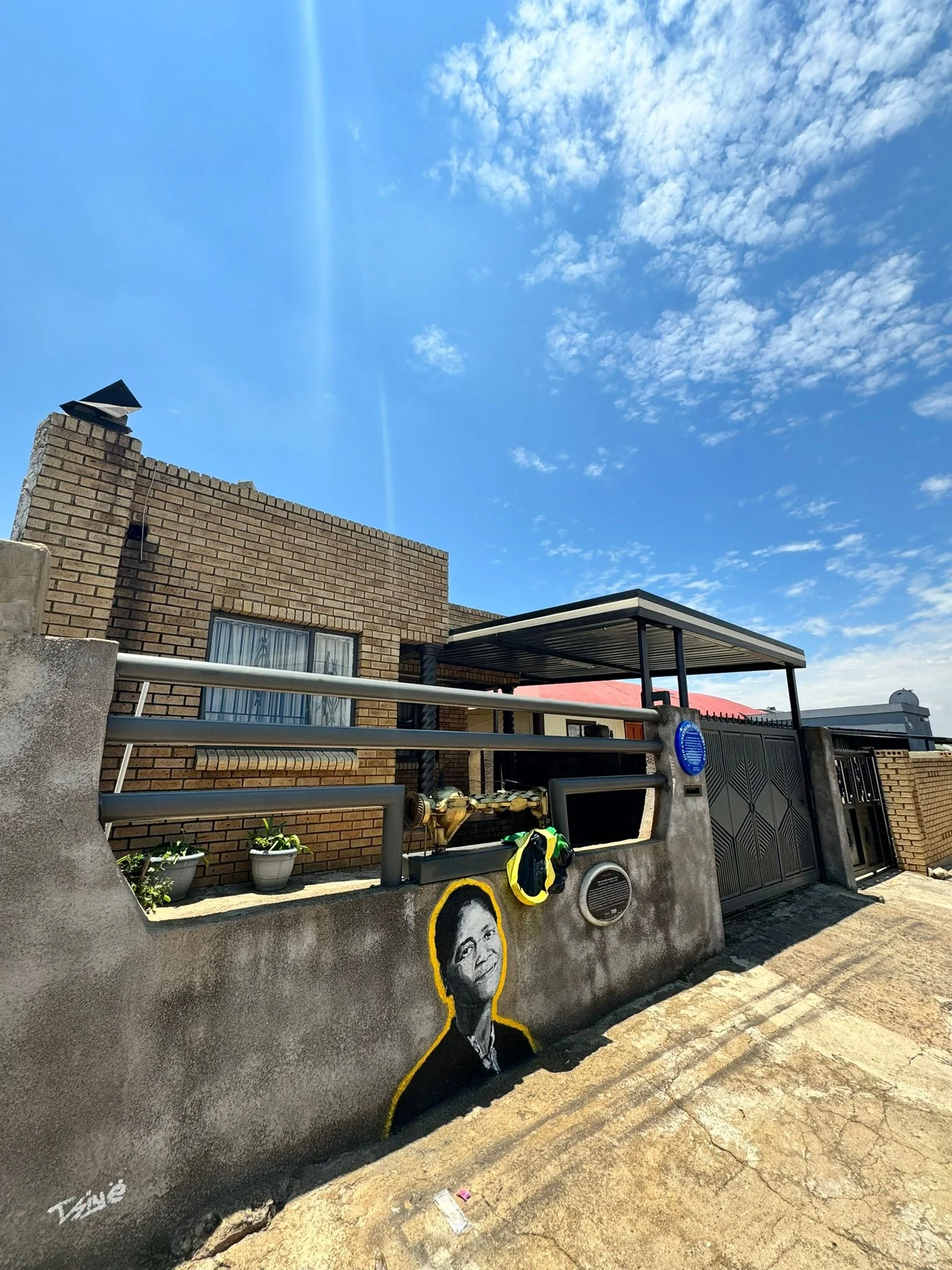
Over the course of a four-hour bike ride, we covered 14 km and barely brushed the surface. Our guide Siyabonga (meaning “thank you” in Zulu), gave us a crash course on the complex eco-system of the townships. We chatted with locals, learned more about the process of segregation of blacks in the area, and gained a better understanding of what reconciliation looks like today within South Africa.
Hoedspruit/Kruger Park (01/09/2024 - 01/12/2024)
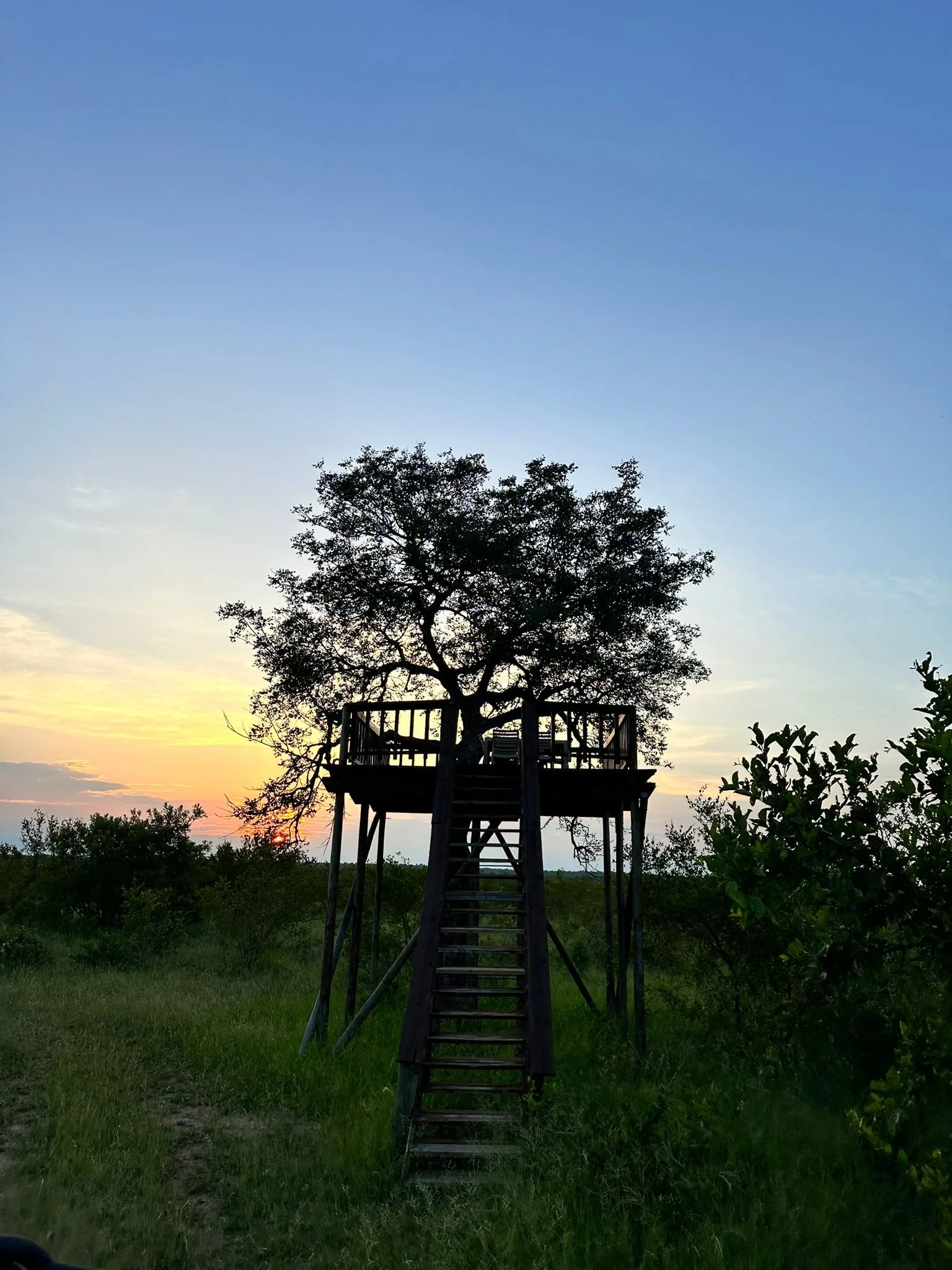
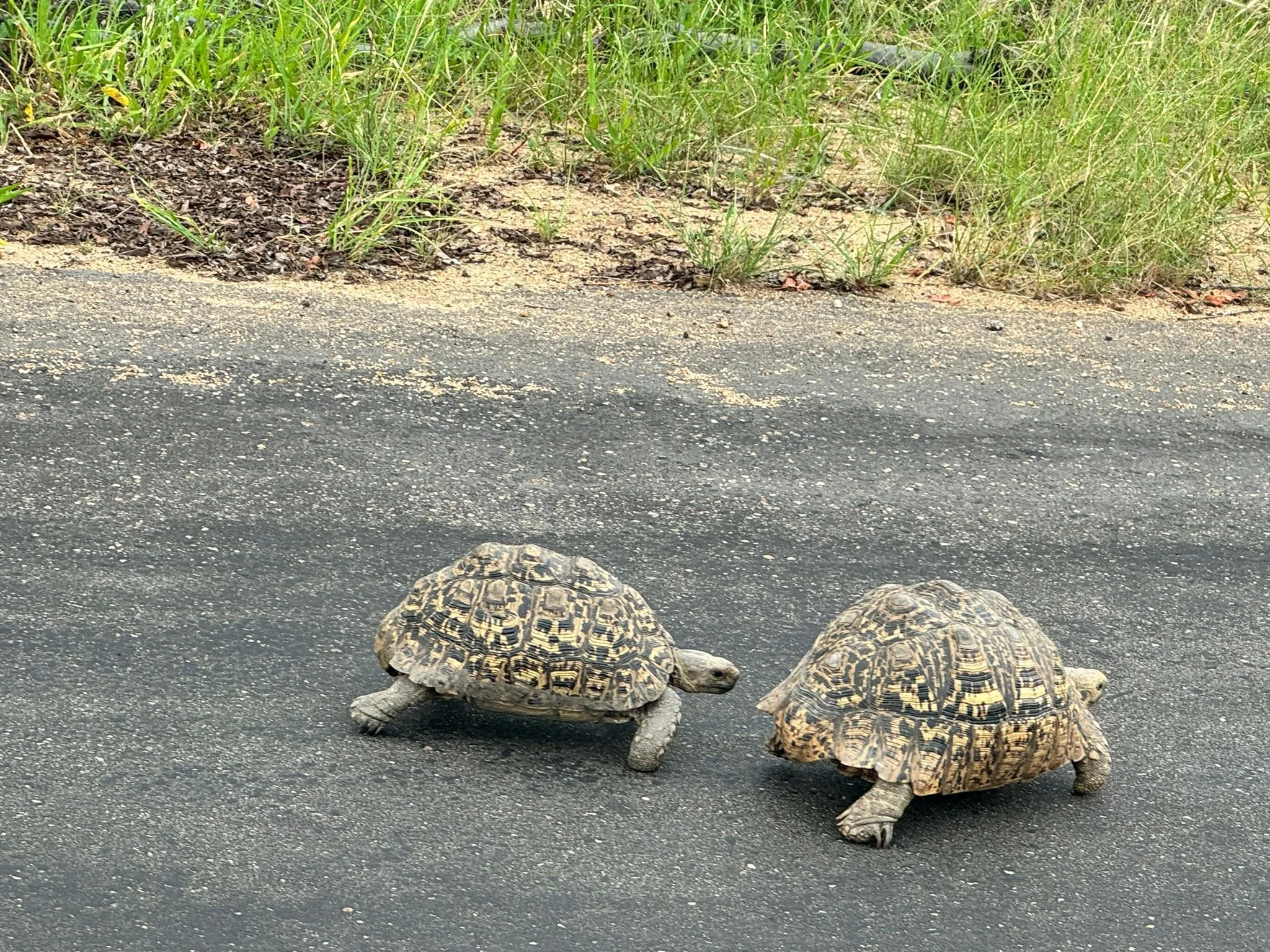
Our highly anticipated adventure to Senalala Safari Lodge was one for the books. A precursor of what was to come presented itself during our ride from the airport. We were graced by the presence of giraffe, baboons, elephants, impalas, zebra, kudu, and two tortoise friends. Senalala is a private reserve within Kruger Park and is situated outside of a giant watering hole, where guests can view animals in their natural habitat; one of the many and unique reasons why we were drawn to Senalala.
Upon arrival, Corlia, James, and Johan gave us the warmest welcome and immediately made us feel at home. We had just settled in, when all of a sudden, an elephant bull made an appearance at the watering hole. I instantly burst into silent tears (I live for a happy cry, especially when animals and babies are involved) and watched the grey giant in absolute astonishment – a true “pinch me” moment.
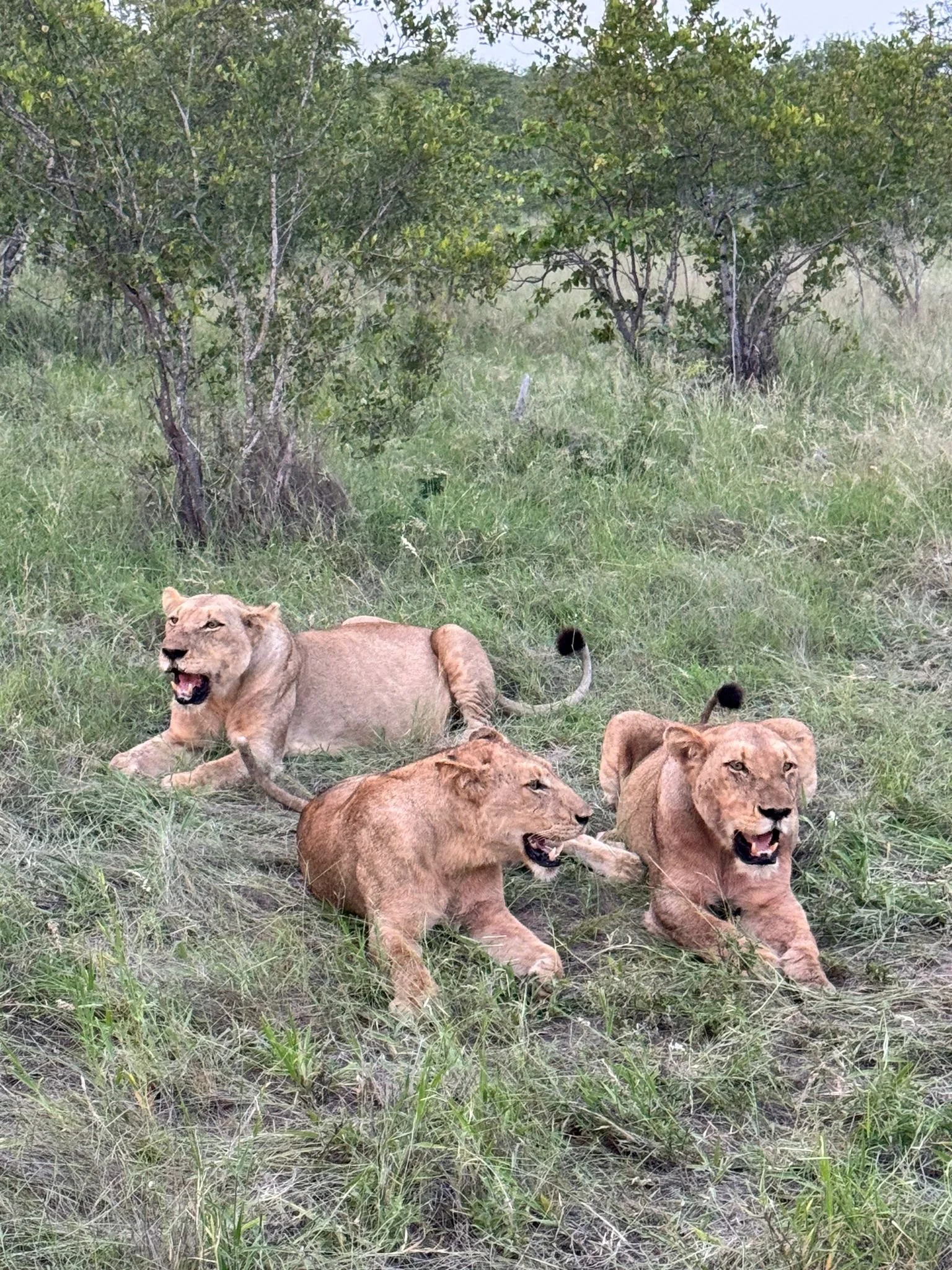
Two game drives took place every day, at 6:00 am and at 4:30 pm. Johan, our incredible guide, led the way on each drive and shared his deep knowledge and appreciation for the flora and fauna around us. During our first evening game drive, we came face to face with 14 kings and queens of the jungle. A pride of lions had caught three zebras and had gorged themselves silly. Their golden bellies were round and bloated from their feast and were glued to the ground, accompanied by intense panting because their lung capacity had been compromised from the amount they had consumed.
The stench of rotting animal flesh permeated the air, followed by the cracking and crunching of bone, as sharp feline teeth devoured what was left of the carcass. Not to be cliché, but it was neat to witness a full circle of life moment up close. The zebras, caught and eaten by the lions, the hyenas, who would clean up the scraps, the vultures, additional scavengers (interesting and unexpected fact: who are also endangered) and the bones that would be left to disintegrate into the ground and turn back into organic matter.
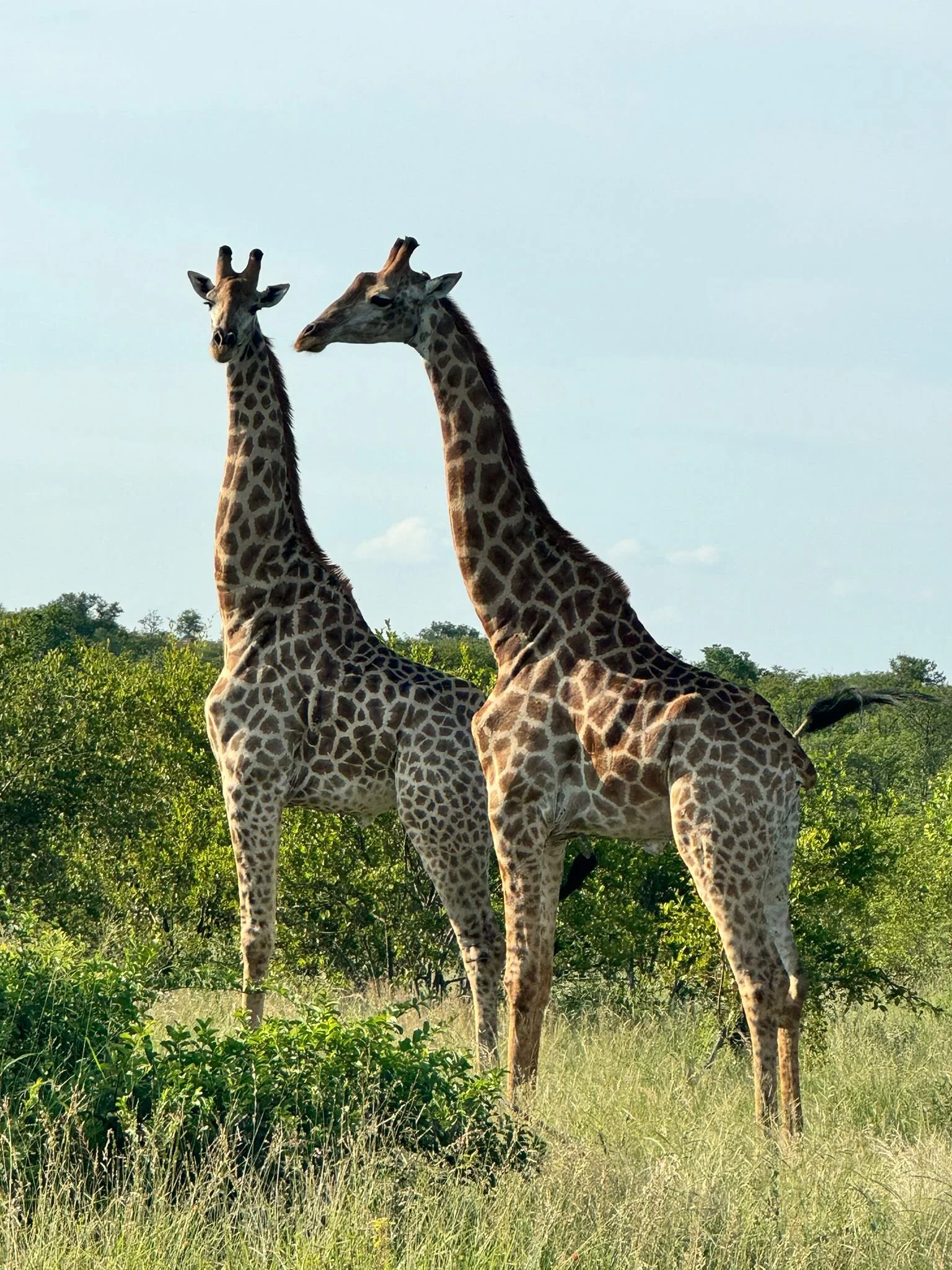
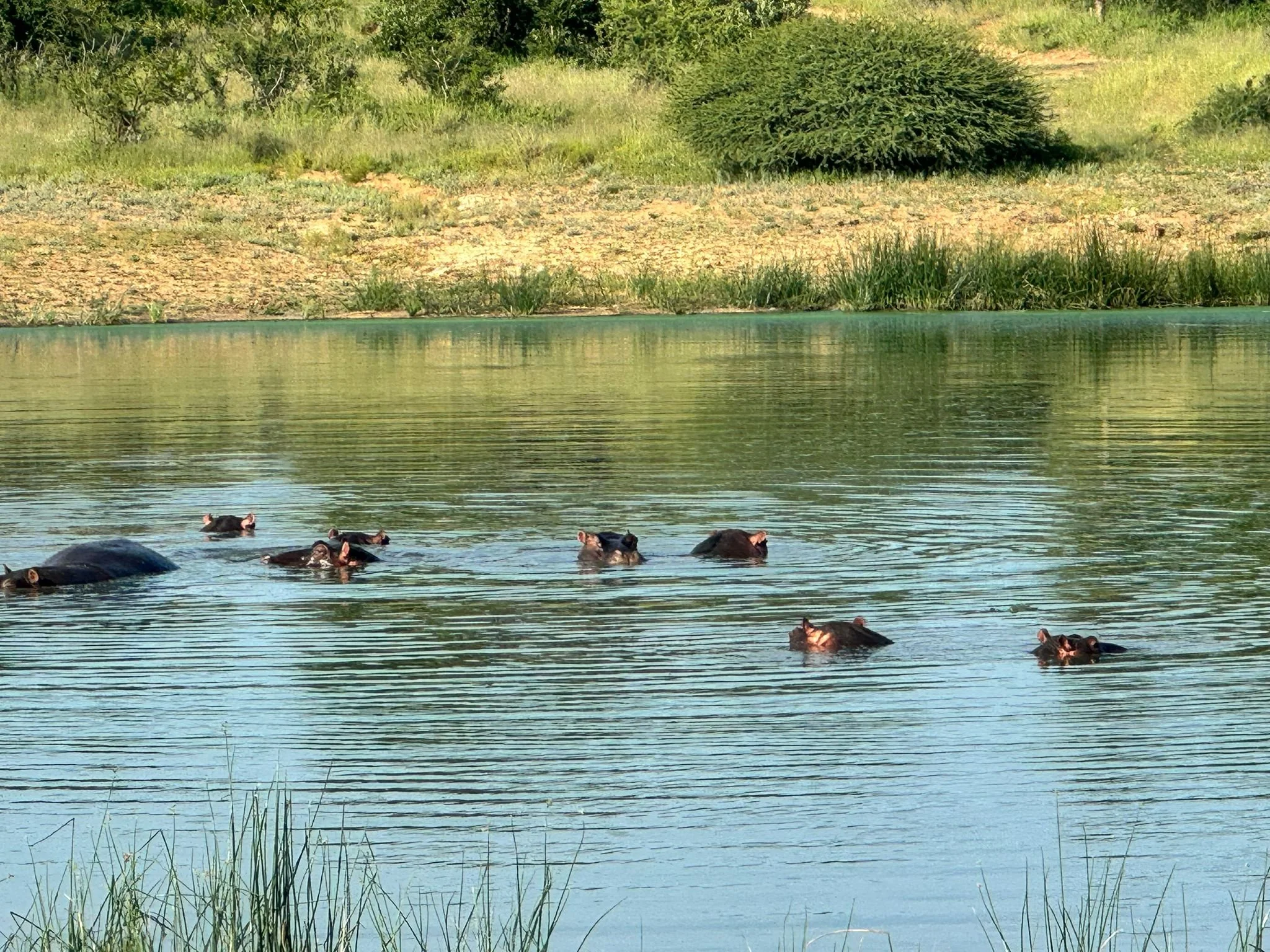
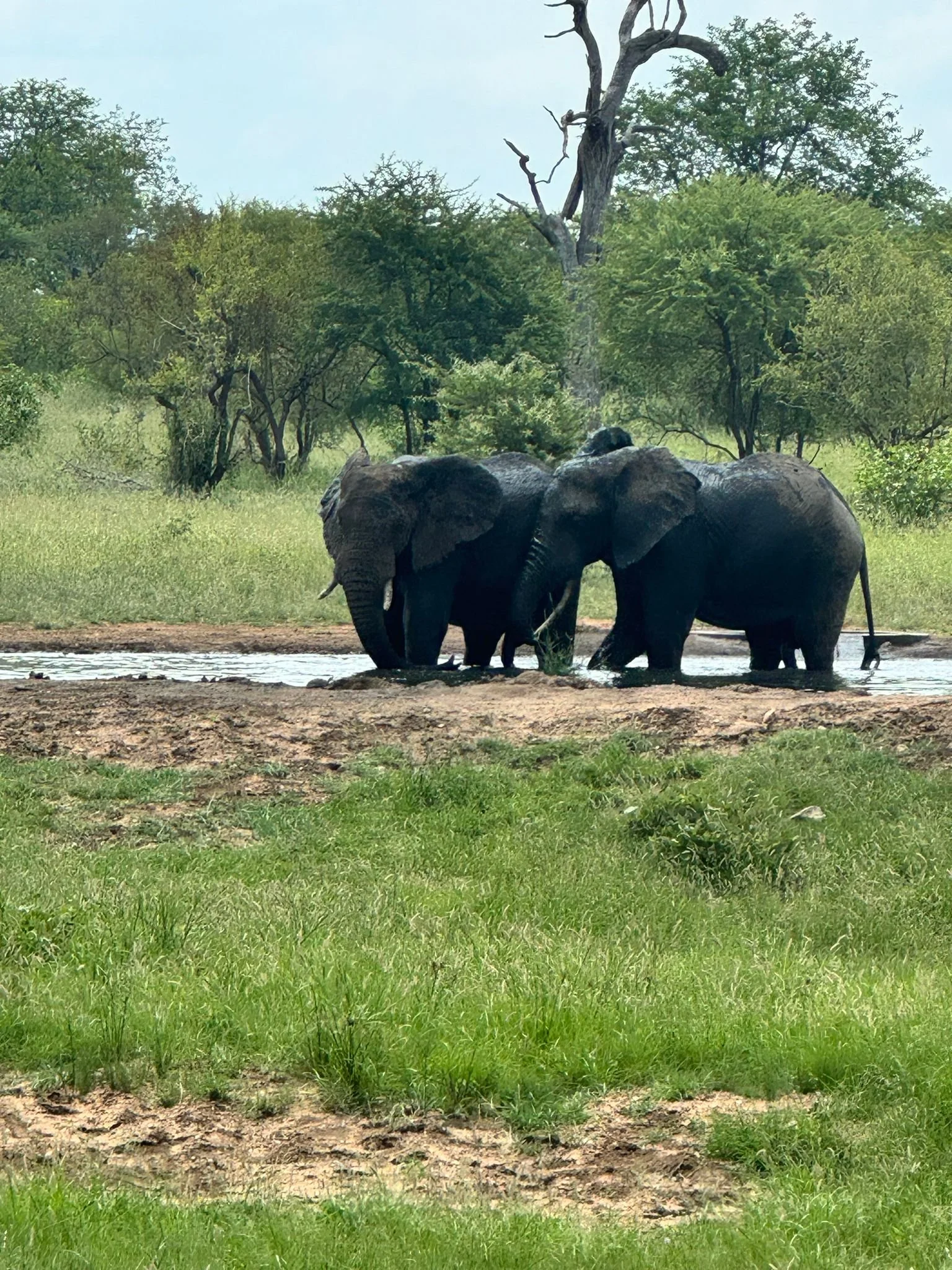
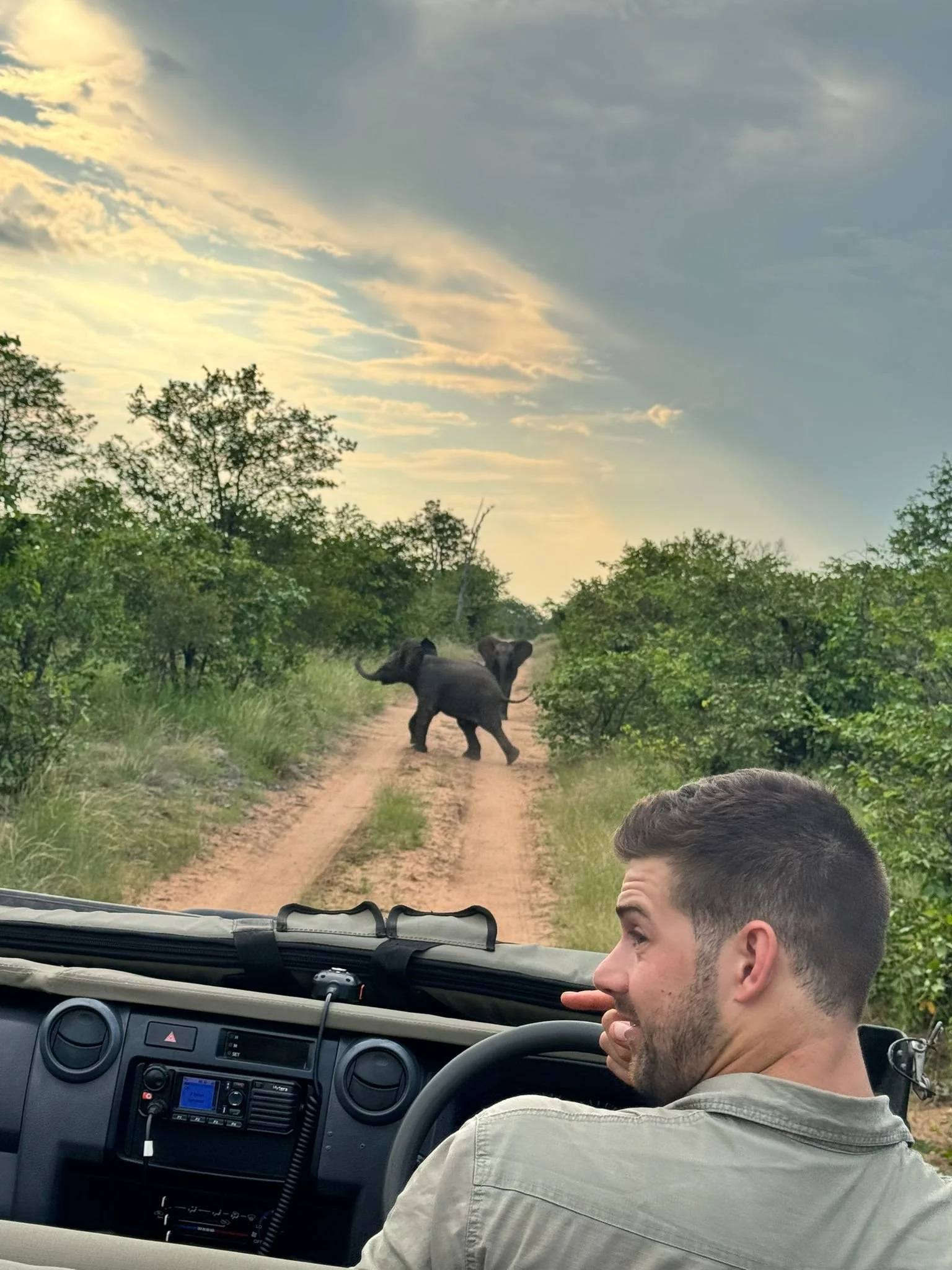
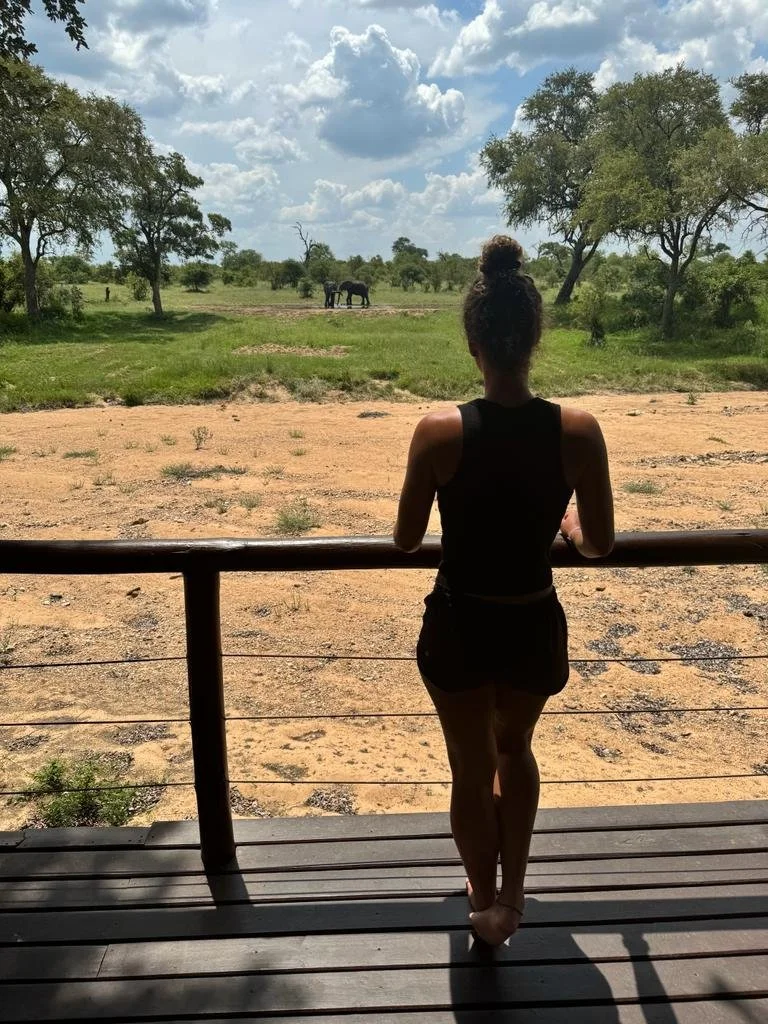
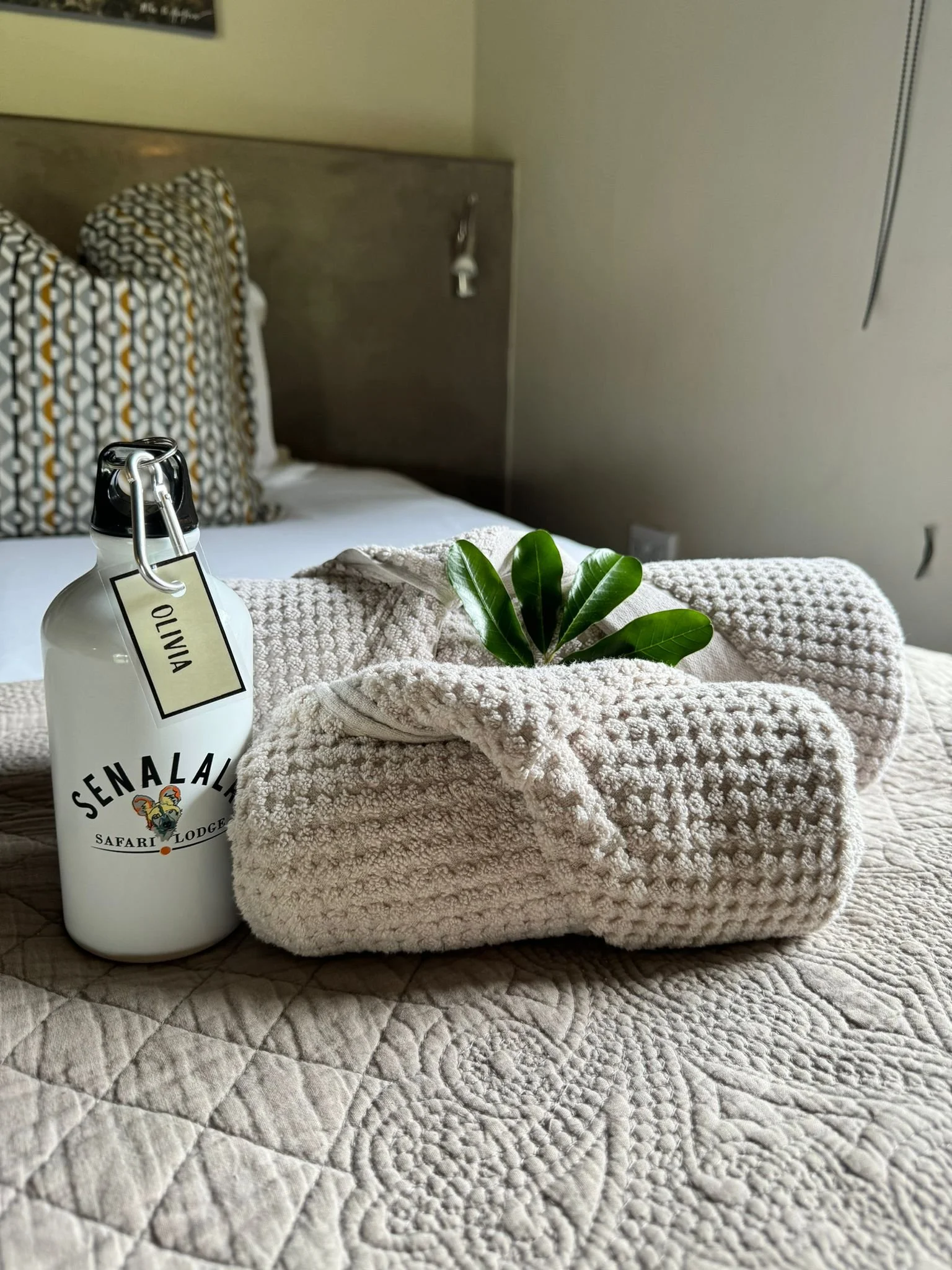
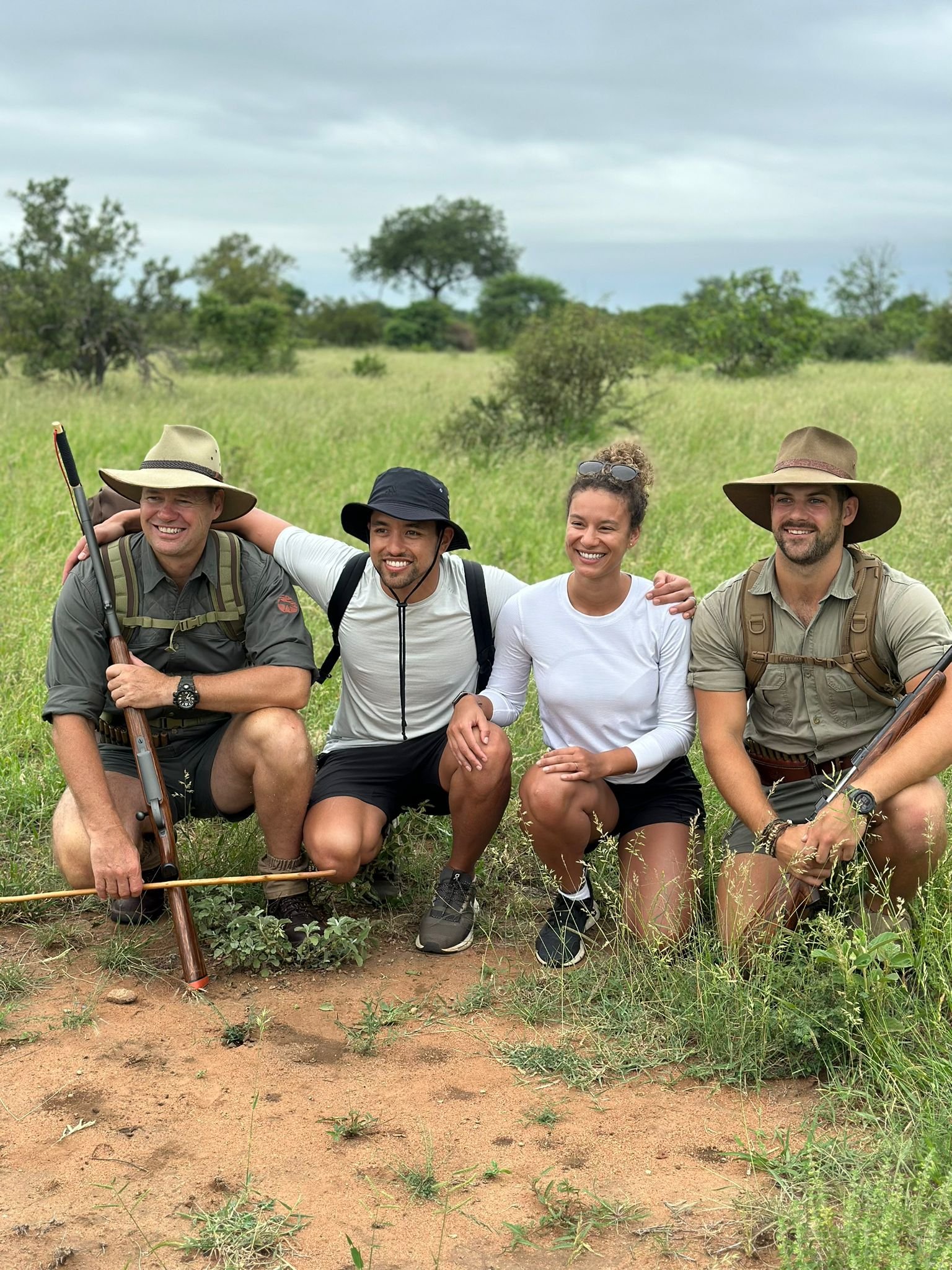
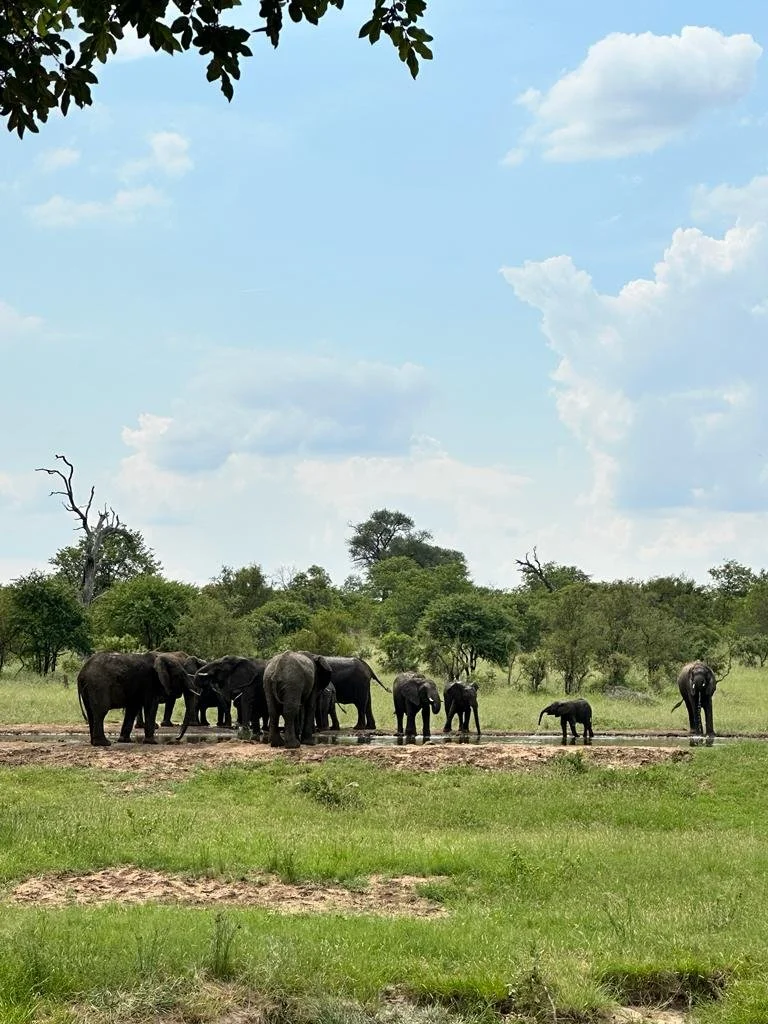
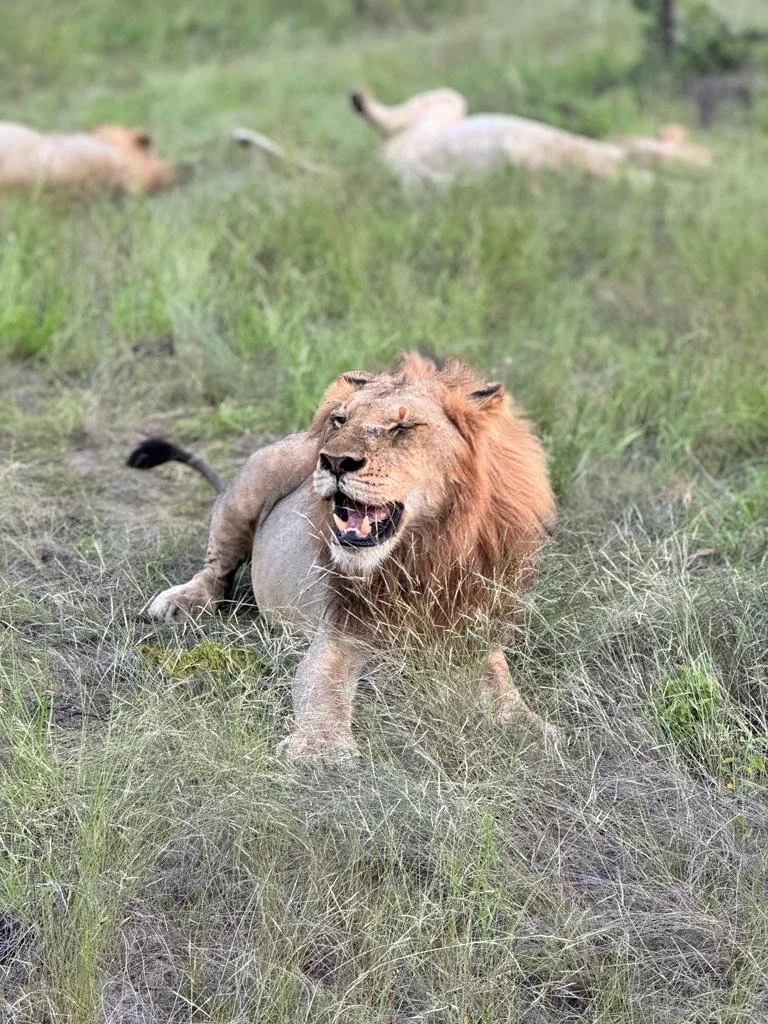
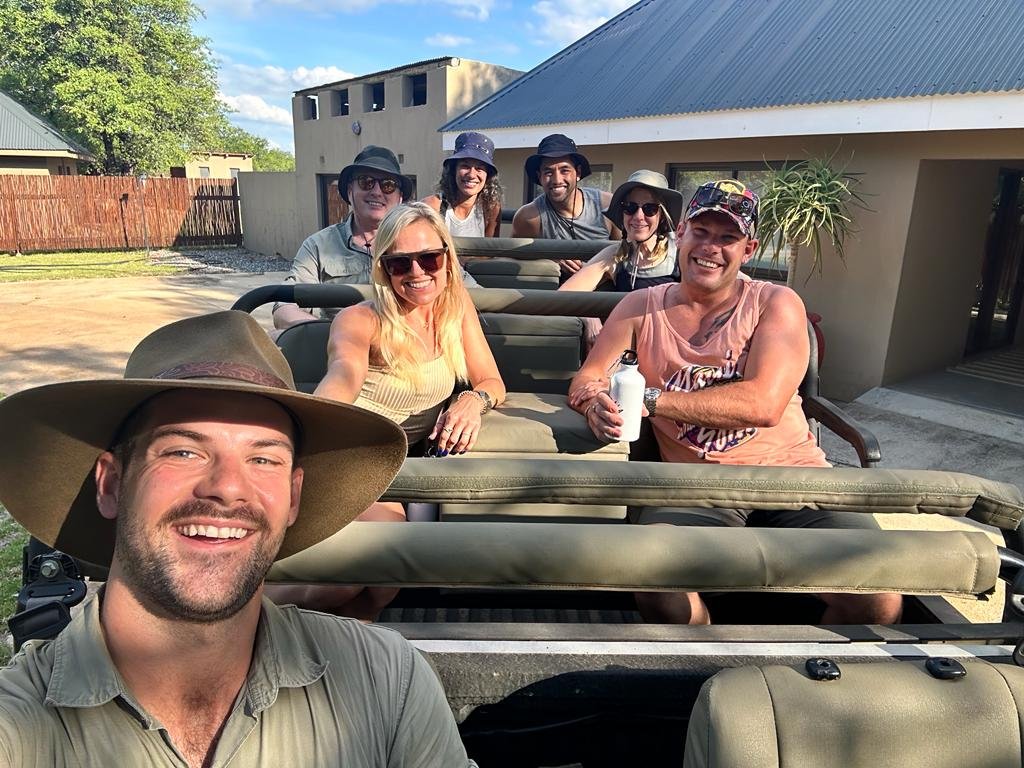
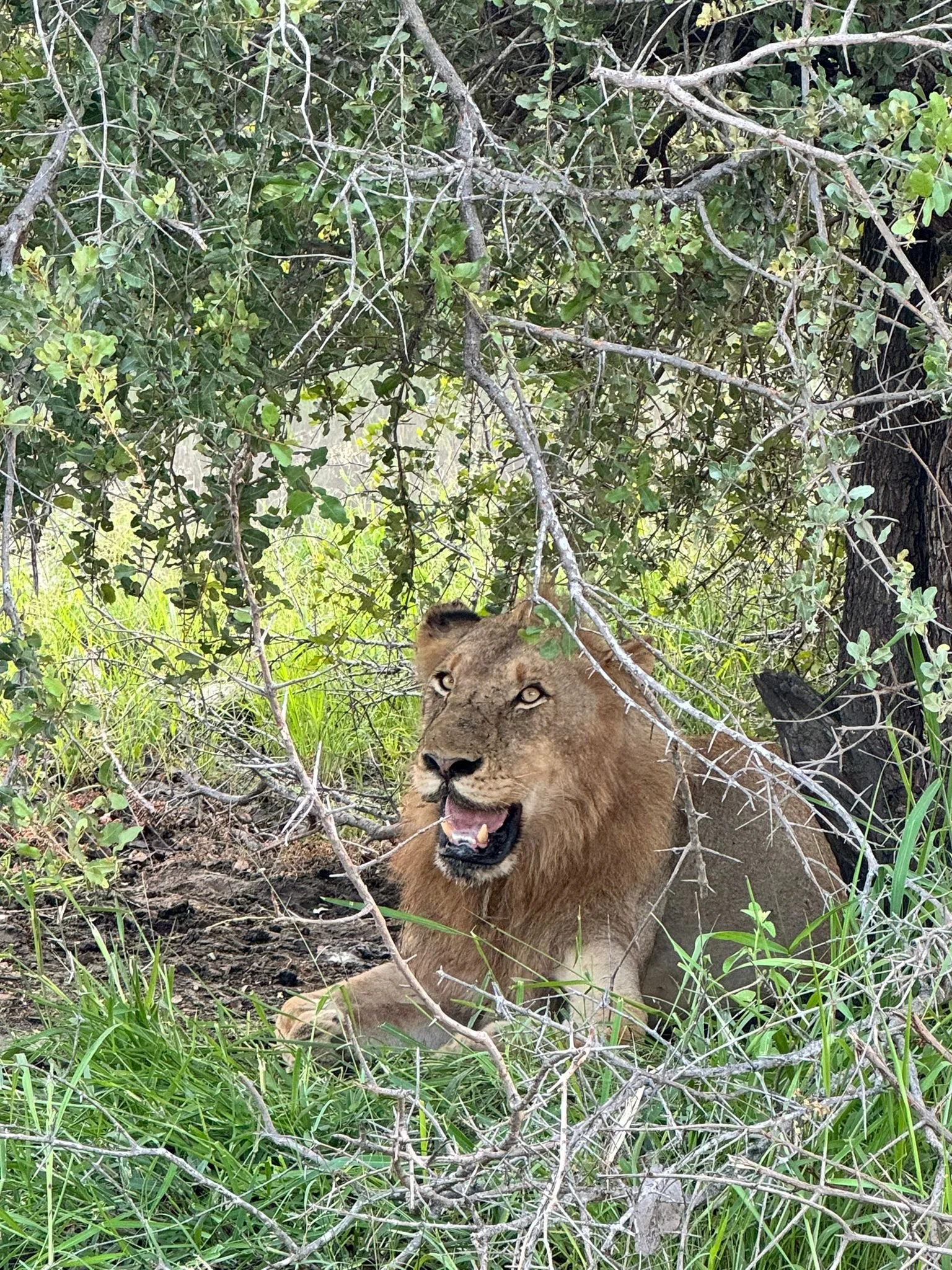
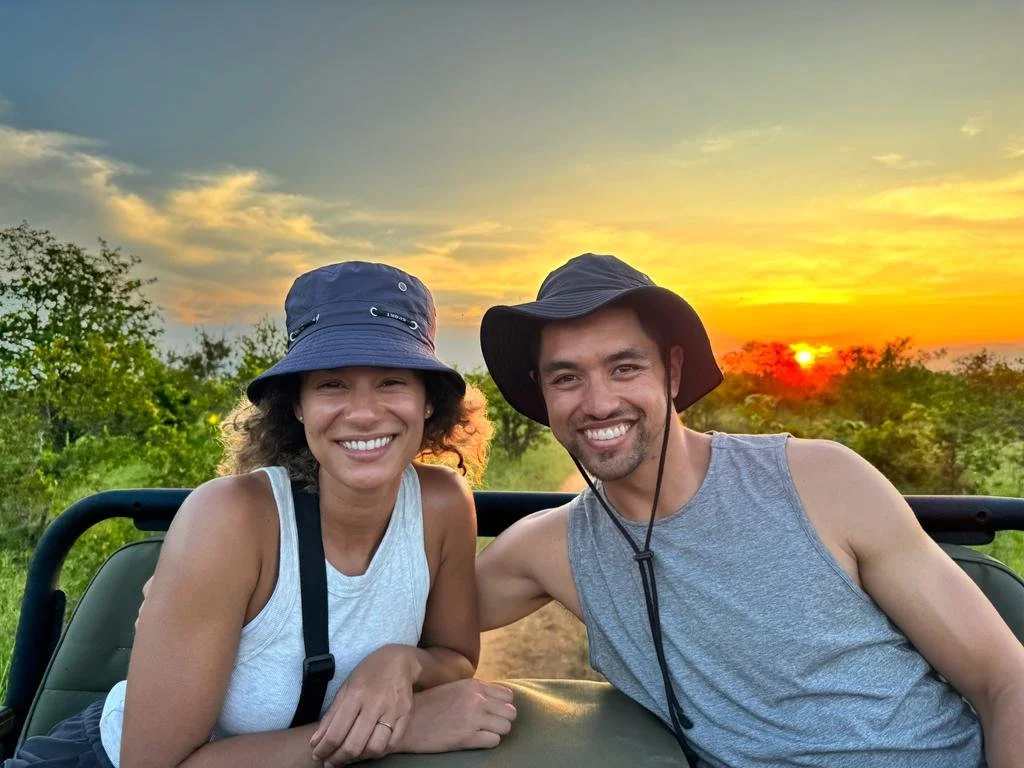
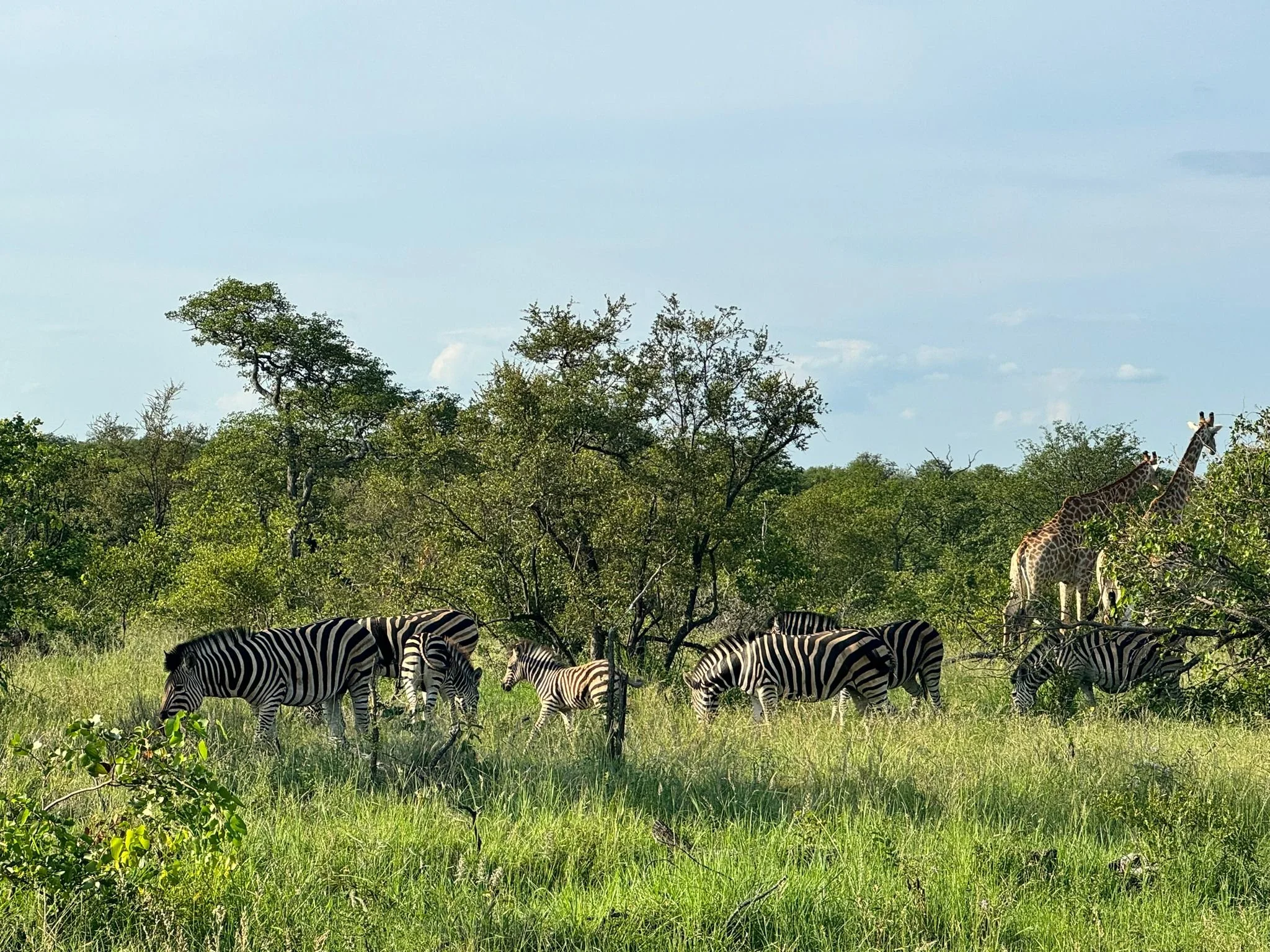
My greatest highlight was seeing a herd of 12 elephants, ESPECIALLY the babies. Watching the matriarchs guide and protect the herd was a sight to be seen. Double the size of Asian elephants, African ellies are a force to be reckoned with. Such sentient creatures that hold and pass down knowledge to their family members in ways that humans will never be able to understand. I went in with the serious hopes to see an elephant and my wish was granted.
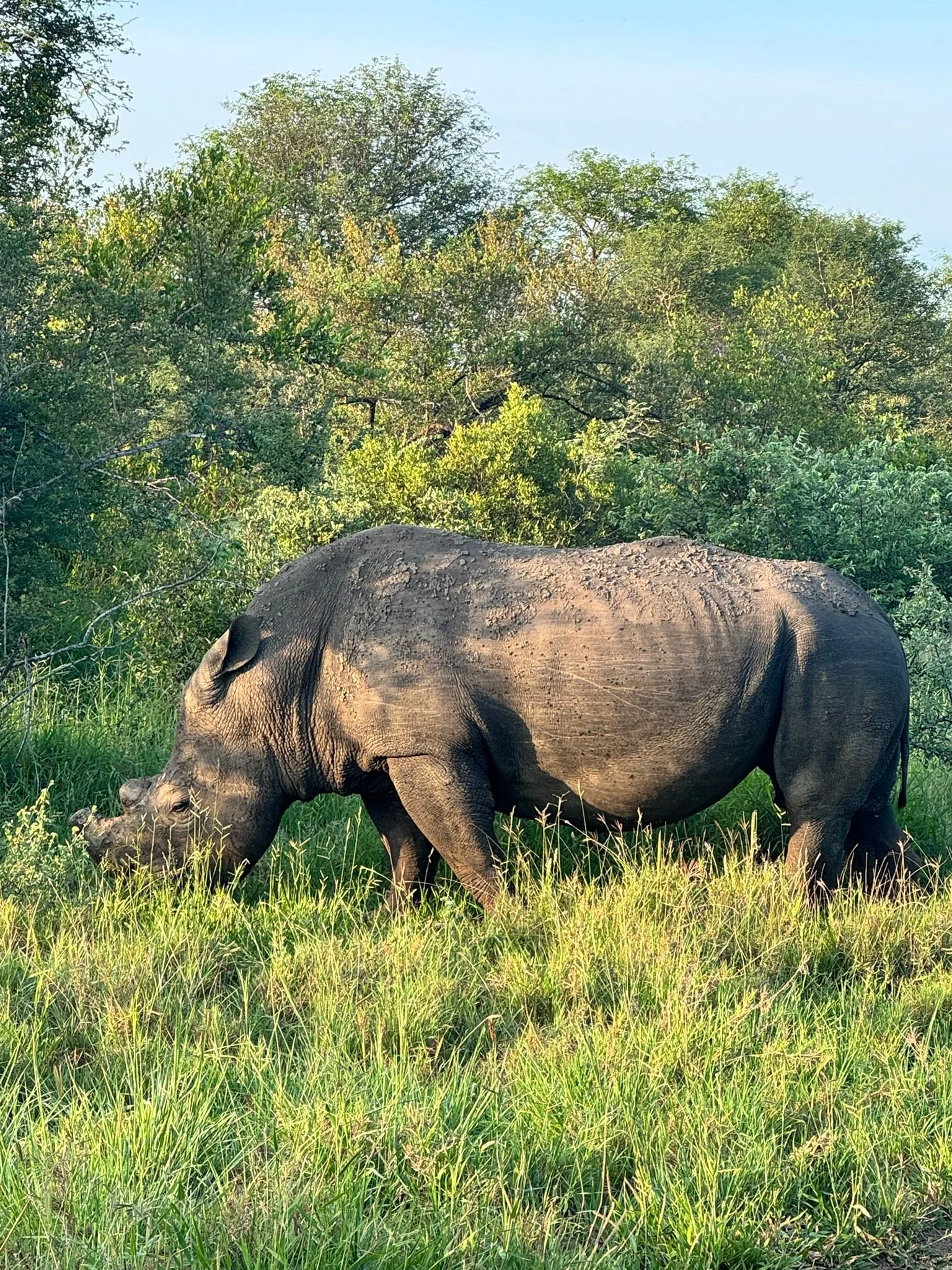
Johan had been following rhino tracks for a day and finally, during one of our morning drives, in the middle of the path grazed a white rhino. The one ton tank silently made its way into the brush and nibbled on greenery in the most noble fashion. Did you know when rhinos aren’t grazing, they walk at a speed of five to seven kilometres/hour? They’re large, yet speedy walkers.
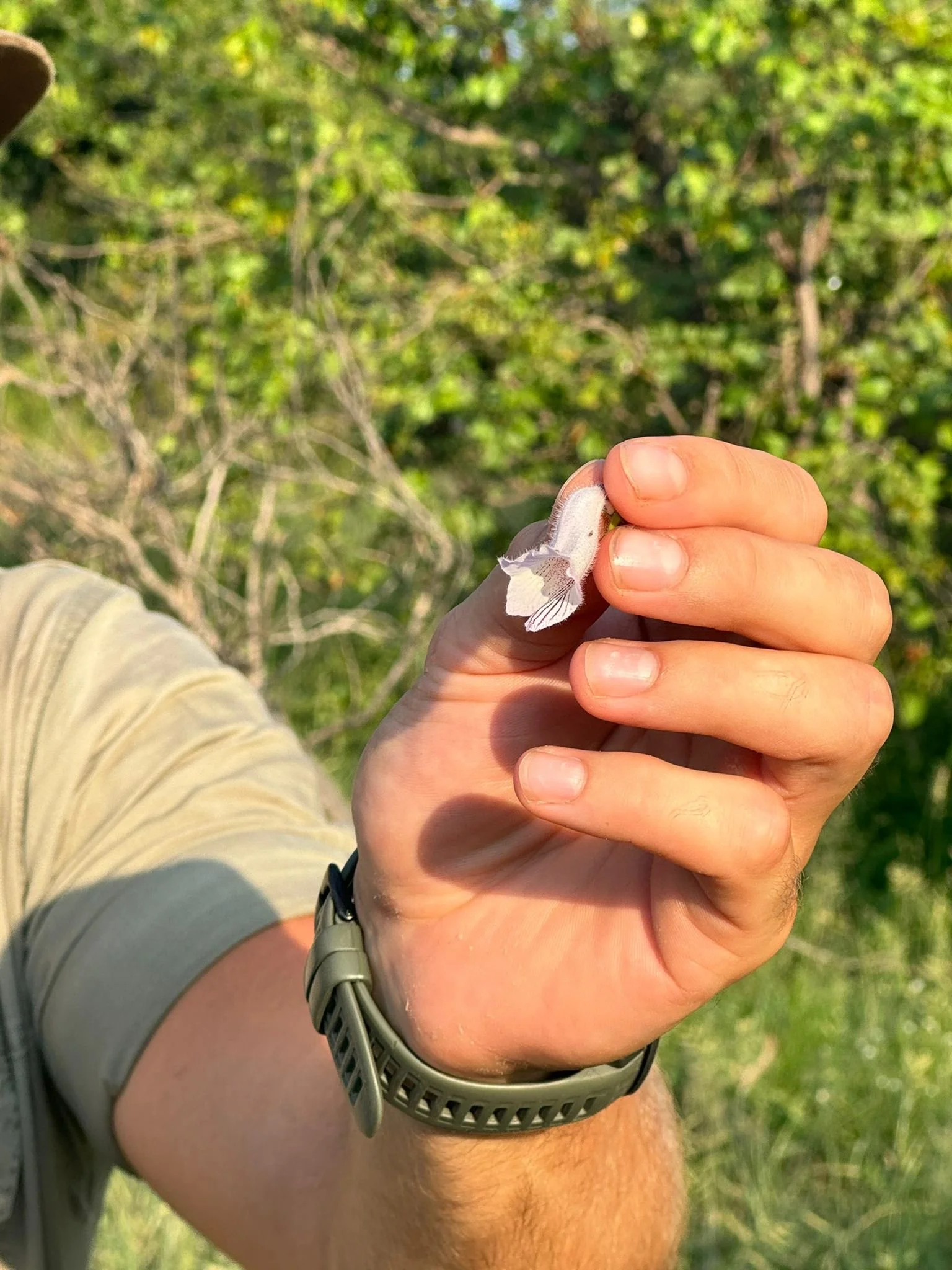
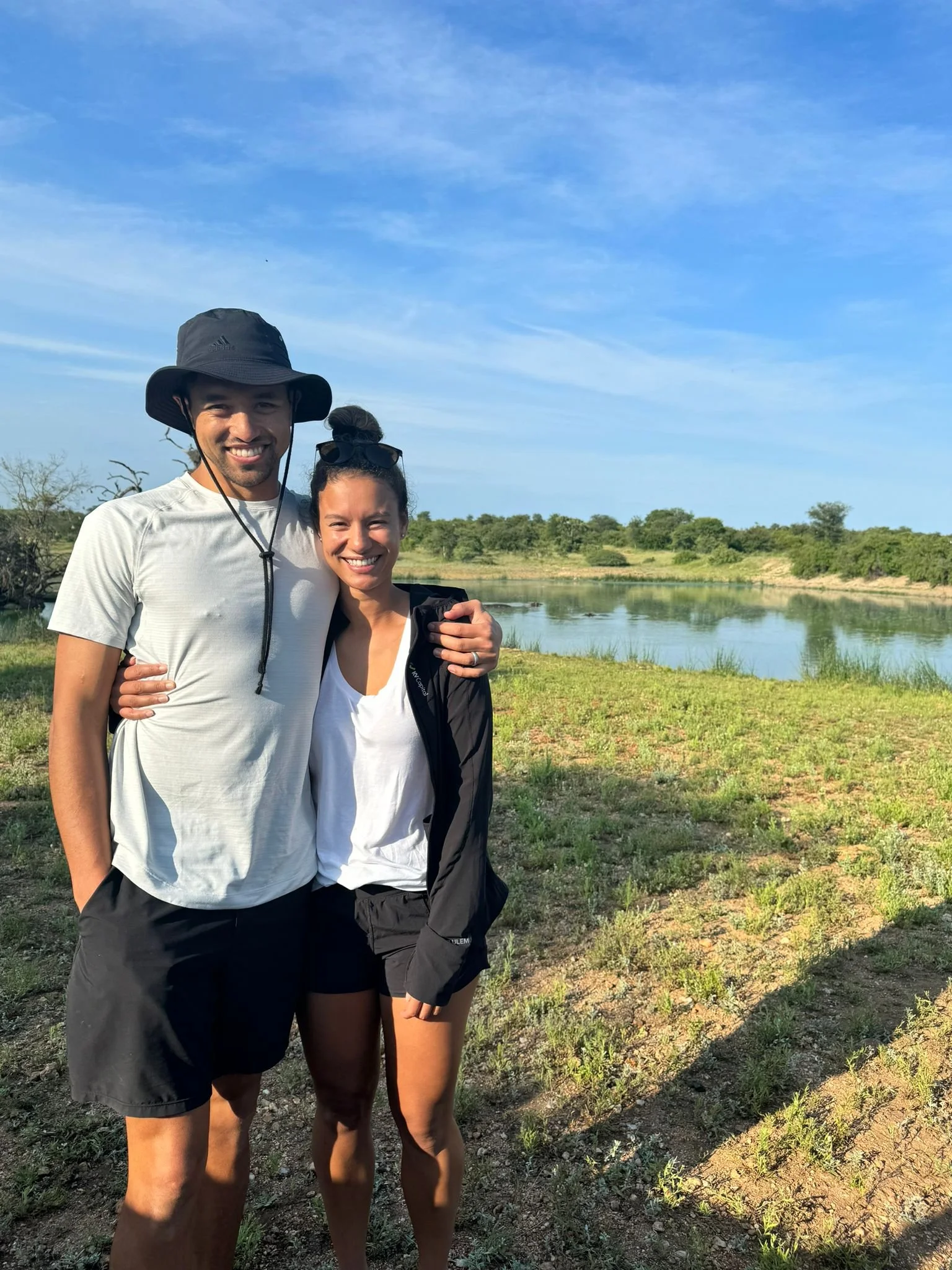
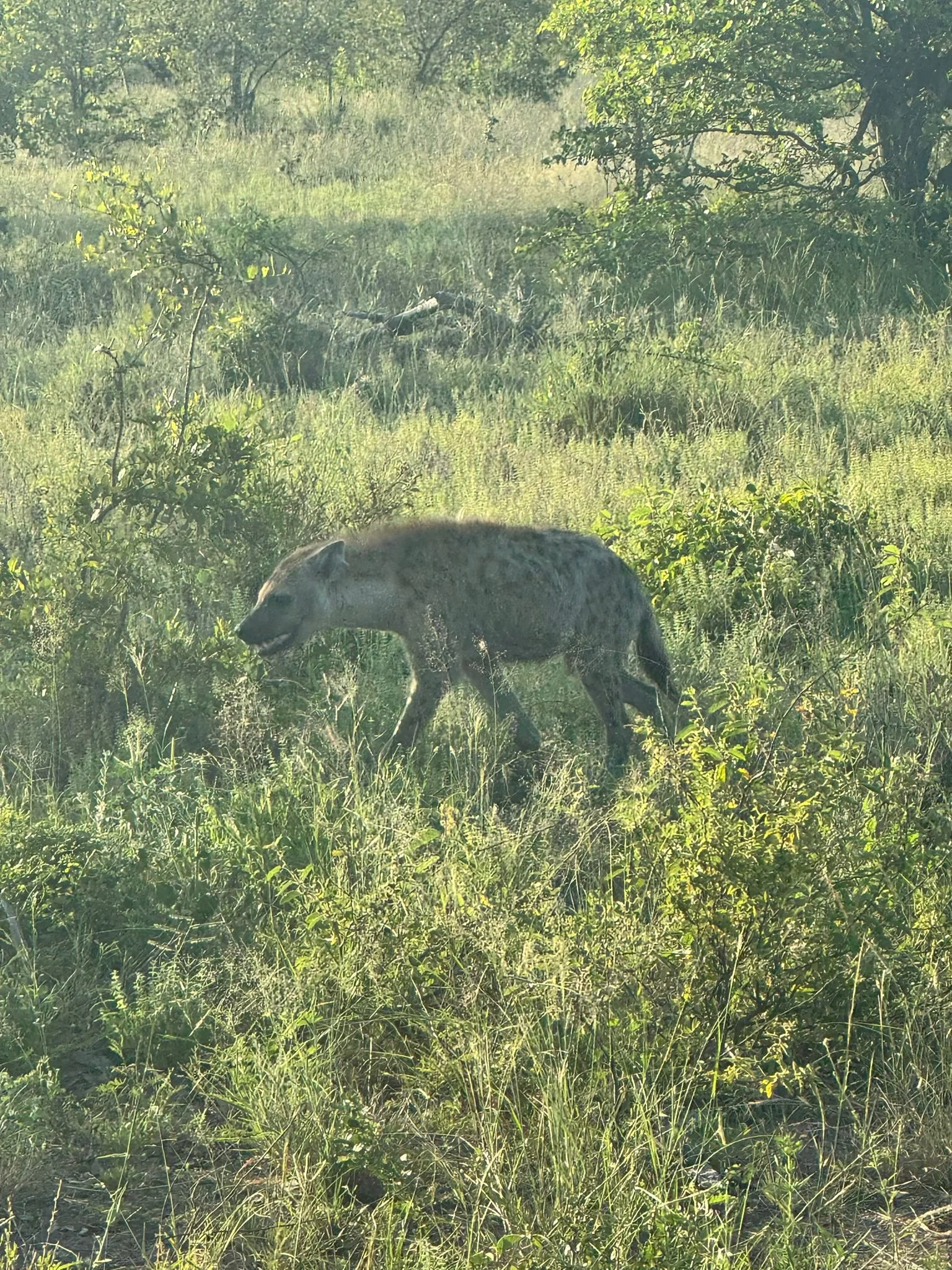
Additional highlights included: being feet away from hyena (they’re way bigger than I could have imagined), watching wildebeest graze, enjoying a cup of coffee near a lake full of hippos, hearing a mama elephant get angry and shriek 20 feet away from us during a drive, and participating in a survival walk in the bush and learning how to make fire by hand. After supper, we went on an astrological journey, as Johan traced the constellations with his laser pointer, and we stargazed the Southern Hemisphere.
Corlia, James, and Johan took the time and genuine effort to get to know us, ensured we were comfortable, and had real and meaningful conversations with all of their guests – truly the hosts with the most.
We came as strangers and left as family.
Umkomaas/Aliwal Shoal (01/12/2024 - 01/16/2024)
A quick change of scenery from the wooded savannah to the humid coast, all inspired and driven by our fascination with sharks. Aliwal Shoal is a world-renowned area to dive with a variety of sharks like black tips, tigers, ragged tooths, and bulls. It’s been a dream of ours to dive freely with these majestic creatures since our first bull shark dive in 2021.
Unfortunately, our diving adventure did not turn out the way we hoped. It ended up being one of the most terrifying experiences I’ve ever had underwater (after nearly 50 dives in a variety of different settings), and I’m still a bit shell-shocked reflecting on it now.
Disclaimer: I love diving and always will, and this incident will not define my upcoming diving ventures. We also research the heck out dive centres, ask as many questions as we can, and scour through both Google and Trip Advisor reviews. Using the above tactics, we have a 99% success rate of a safe and awesome time (the 1% reflecting this most recent experience).
*To start on a super high-note: we were lucky and spotted 3 ragged tooth sharks during our first dive. Thank you sharkies.
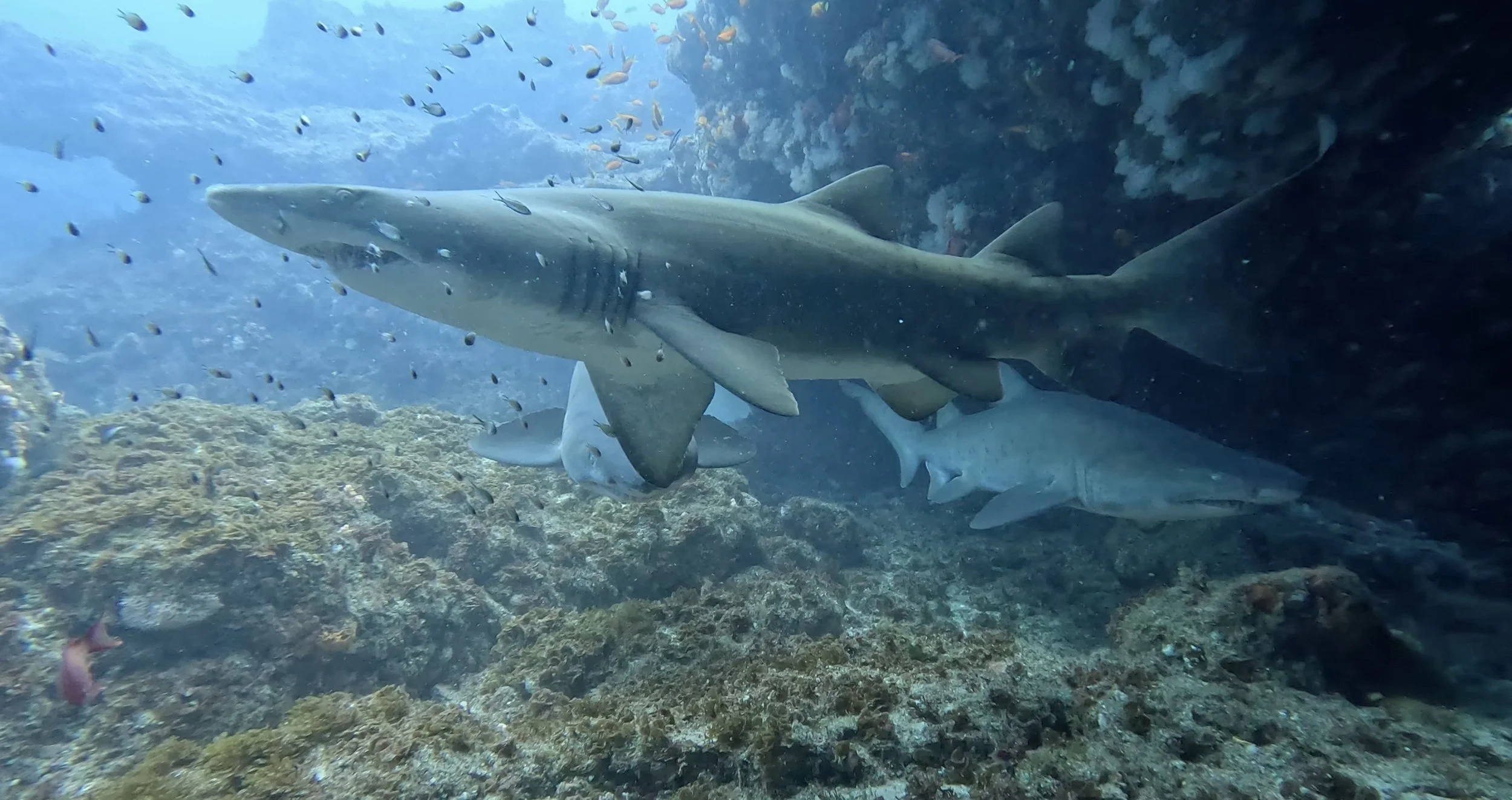
Whenever we dive, we like to begin with a “test dive” to ensure our comfort and safety in the water. Most times, you’re meeting a new dive master for the first time - they play an integral component in setting the tone for your dive. The first dive went perfectly, it was during the second dive where shit hit the fan. Never in all of my diving experience has this ever happened.
A few red flags from the start (our two dives of the day were reef dives, with a shark dive to follow the next morning):
We couldn’t rent a dive watch because “they had all been sent in for repair”. This stressed us out, because now we were at the mercy of our dive master to ensure we decompressed for the correct amount of time. This also meant we weren’t able to time our dive or monitor our depth.
Our dive master barely introduced himself, did not provide a proper briefing (dive depth, prediction of current, or what to look out for while we were under water).
Usually when you’re diving, the dive master will check in before descending to make sure all divers are ready (this check takes under a minute). They’ll hand signal an “OK” and, with consensus from the group, you’ll descend as a unit.
That did not happen on either dive. We back-rolled into the water and our dive master immediately descended - cool, we love that!
After our second descent, everything was fine…until it wasn’t. I heard a pod of dolphins come up beside us, singing their squeaky song, and then my mask began to flood. No problem, when this happens, you’re taught to stay calm, tilt your head back, and blow the water out of your mask. Except there was a tear in the bottom portion of my mask, and I had no idea until it wouldn’t reseal. I must have gotten lucky on my first dive.
Our dive master and skipper were well ahead of me before things started to go sideways. Ryley and I usually dive side-by-side but will sneak away momentarily from each other to explore independently (we’re never more than a few feet from each other). At this moment, he was a few feet ahead of me and everything unraveled in under two minutes.
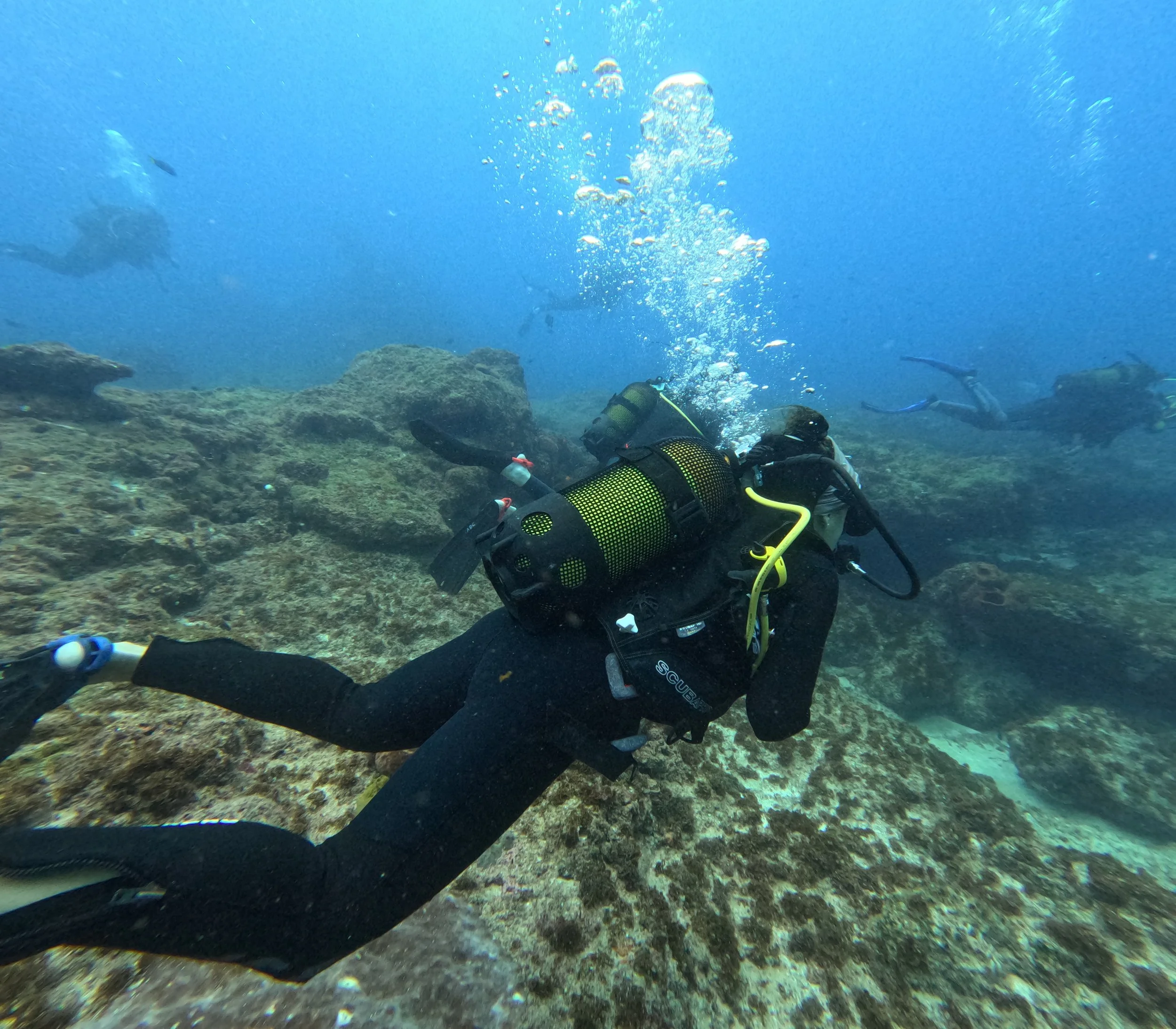
10 meters below the surface, water bombarded my vision and gushed into my nostrils. My vision, and breathing were now impaired and I felt like I was blind and being waterboarded all at the same time. I began signaling an emergency and hoping someone would help me. After 30 seconds, I began a rapid ascent to the surface as I was losing oxygen. The skipper pulled me to the top as I was about to break the surface and asked me what had happened, and I scream- explained that my mask wasn’t sealing properly. A combination of fear and embarrassment kicked in, because we’d come all the way to the coast to dive and I didn’t want to ruin this experience for the both of us. After I caught my breath and calmed down, and tested my mask, we descended again. Insult to injury, my mask continued to slowly leak for the remainder of the dive.
To make this wonderful dive even more fun, when I was making my way back to the boat I was stung by a blue-bottle, also known as a pacific-man-o-war. I’ve swam through baby jellyfish gardens before, so instinctively I thought “ah, it’s just a temporary sting”, until the sting transformed into what felt like my hand and ankle being lit on fire.
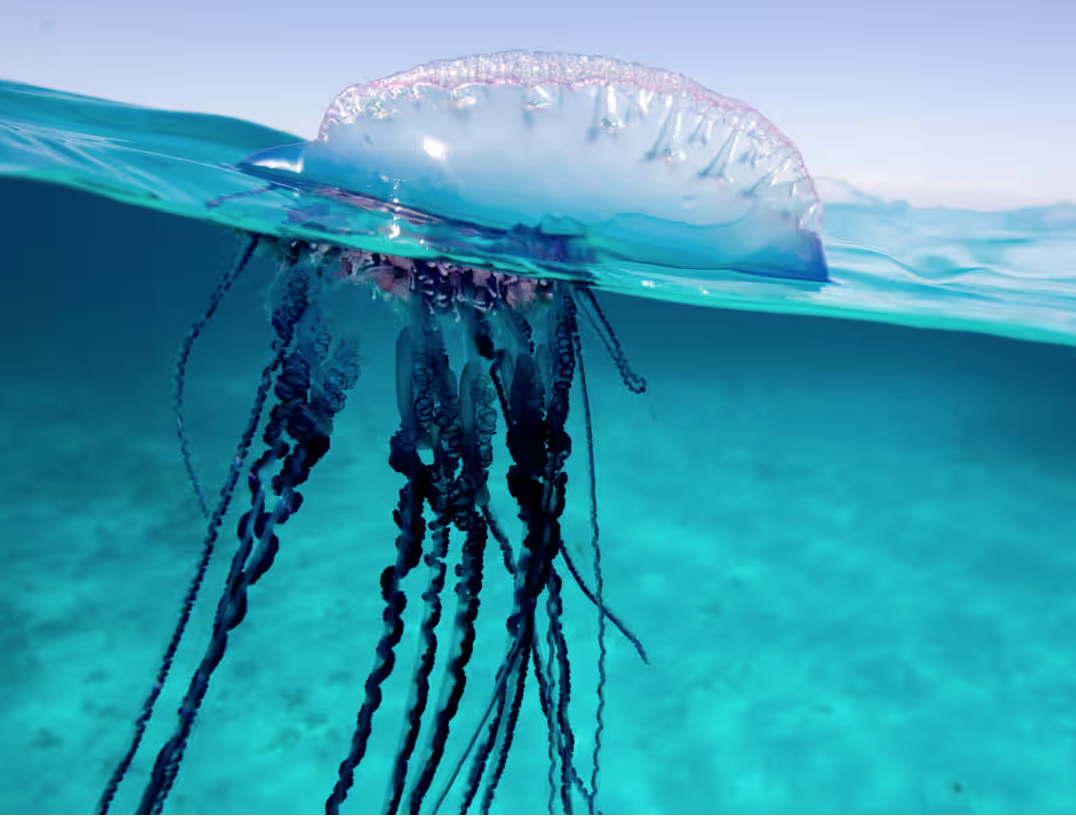
Our skipper removed the dangling tentacles from my arm and leg, and noted “wow, that sucks”. There were a few comments of putting vinegar on it but help never came. Our dive master also mumbled “oh man, that’s rough…maybe we have some vinegar”, and quickly left me to my own devices. No follow up or debrief would occur after the dive either.
Fast forward to the next day, the day of our supposed shark dive. After processing what had happened during our reef dives, we were both terrified as to what the shark dive would be like.
We walked into the dive centre ready for a refund, only to find out that the dive had been cancelled due to poor visibility from the heavy rain the night before.
This was a combination of a “listen to your gut” moment and the universe overtly saying “this dive isn’t supposed to happen right now - don’t force this”. We’ve never been so thankful for a refund in our life. Ryley and I felt as though a giant weight had been lifted off of our shoulders and decided to use this moment of grace as a huge learning lesson.
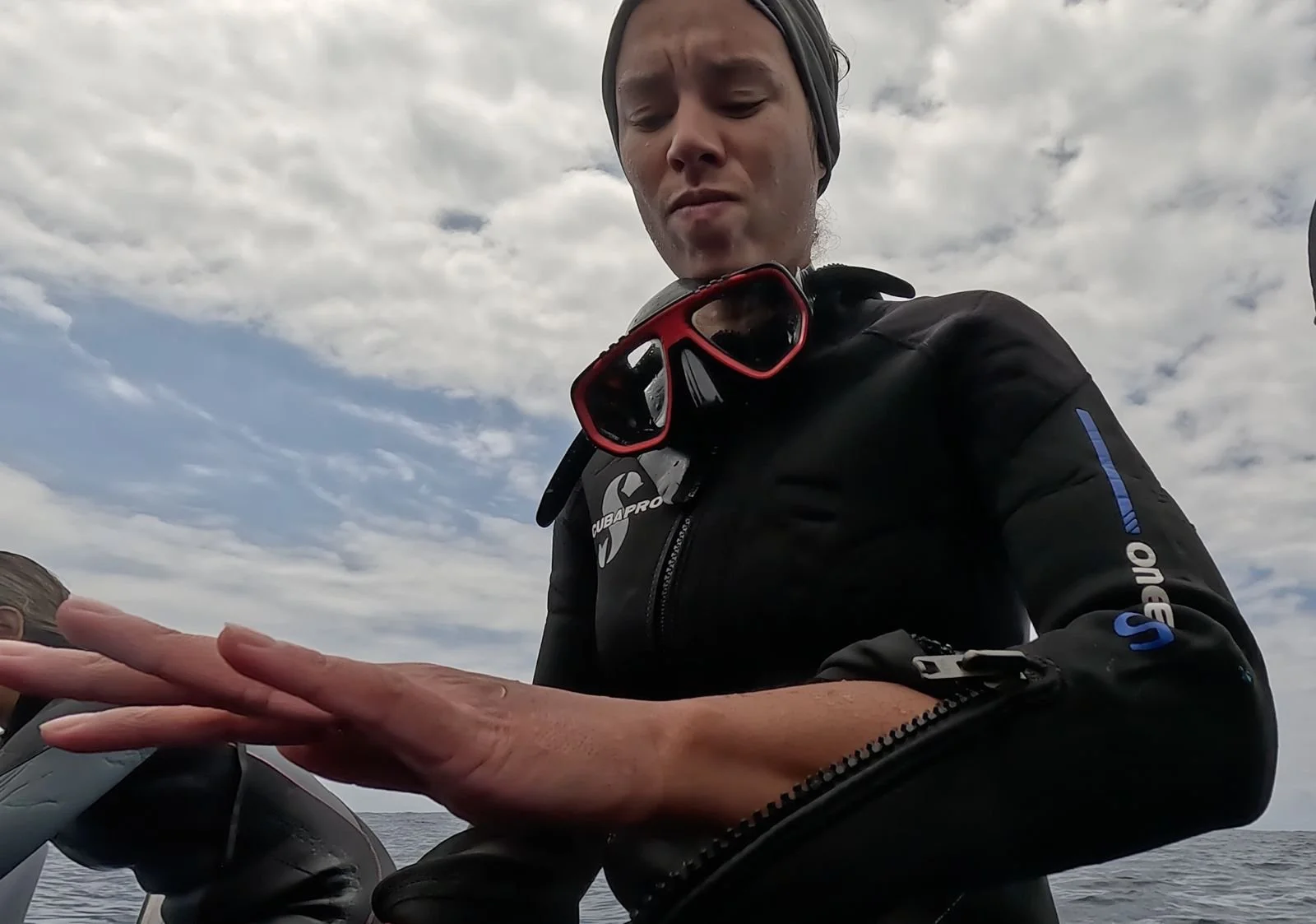
Many profanities came out of my mouth before, during, and after this photo was taken.
If it doesn’t feel right, then it probably isn’t right.
ALWAYS listen to your gut.
Slow down and don’t force things to happen, especially when you’re travelling for extended periods of time.
Ask questions in the moment and advocate for yourself - especially when it involves your personal well-being.
Give feedback to the person who created an unsafe environment for you, even if it’s uncomfortable.
Don’t dive without a dive computer.
We decided it would be best to take the next few days to decompress and gear up for the 22-hour trek into the unknown.
Next stop: Madagascar