Memoirs of Madagascar
Antananarivo (01/16/2024 - 01/19/2024)
Durban — Johannesburg — Nairobi — Antanarivo
You might be wondering why we decided to visit Madagascar, and surprisingly it had nothing to do with lemurs.
6 years ago, during a layover in Guangzhou, China, Ryley and I saw a group of people pass by with boxes and crates covered in packing tape. We had rarely seen such unique looking people; a gorgeous combination of sub-saharan african and asian features. The language was similarly unique, driving our curiosity further. Ryley walked over, said hello and with the utmost kindness asked where they were from, to which the group replied with a giant smile “Madagascar”. We were immediately intrigued and agreed out loud that “if we ever manage to travel to Africa, we’re 100% going to Madagascar - we need to learn more about this beautiful place”.
6 years later, and that’s just what we did.
After a 22 hour journey, we reached Madagascar’s capital, Antananarivo - commonly referred to as “Tana”. We walked through the airport arrival gates at 1:30 am and were greeted by our guides, Theo and Ismail, who would become fast friends. Into the city centre we went, quickly followed by a short, sweaty sleep, only to be woken by the cacophony of the jam-packed city below. The familiar smell of diesel, the sight of a traffic conductor blowing their whistle accompanied by rapid arm movements and consecutive “beep beeps” from the fast-moving vehicles, brought back great nostalgia from our time spent in Kathmandu.
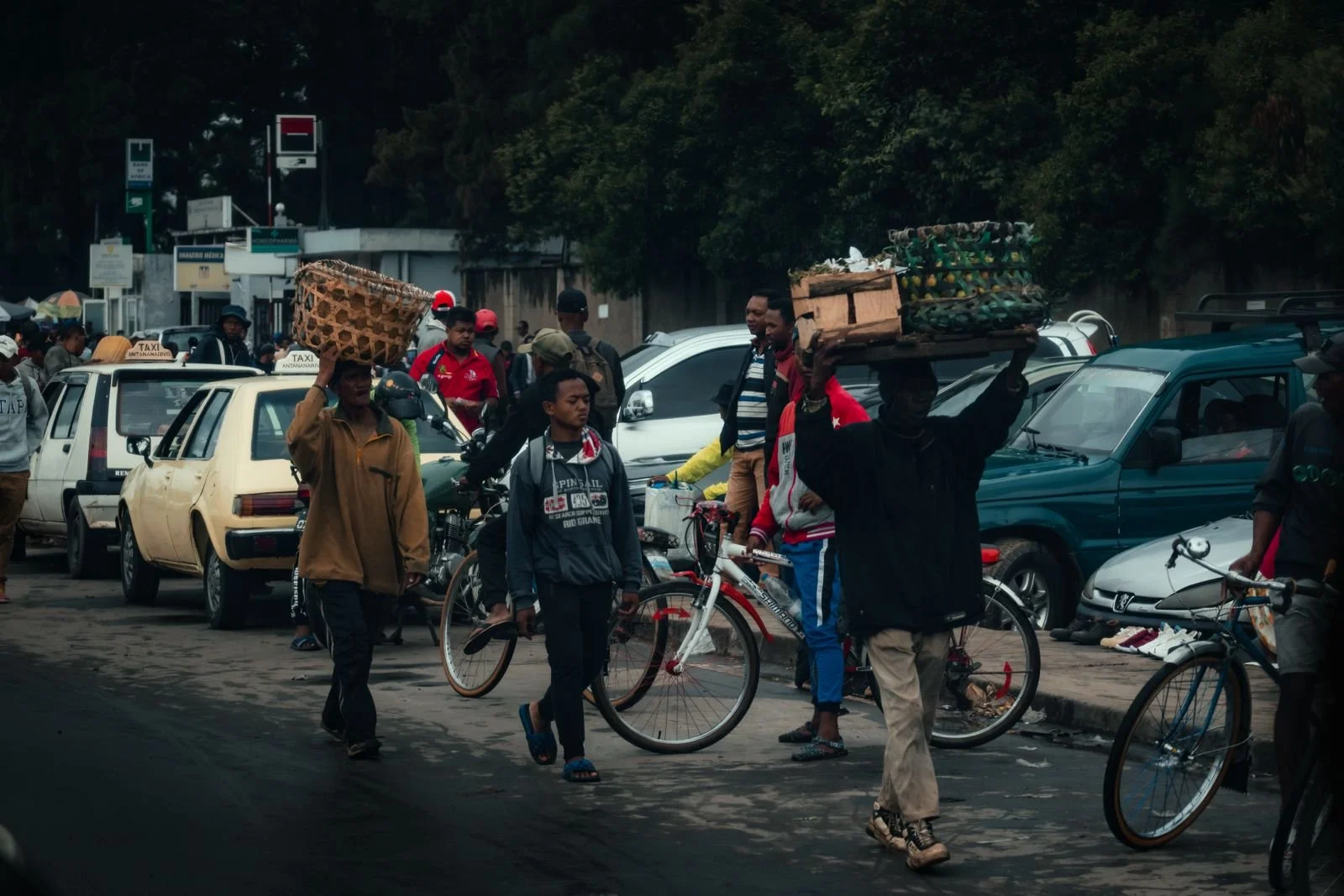
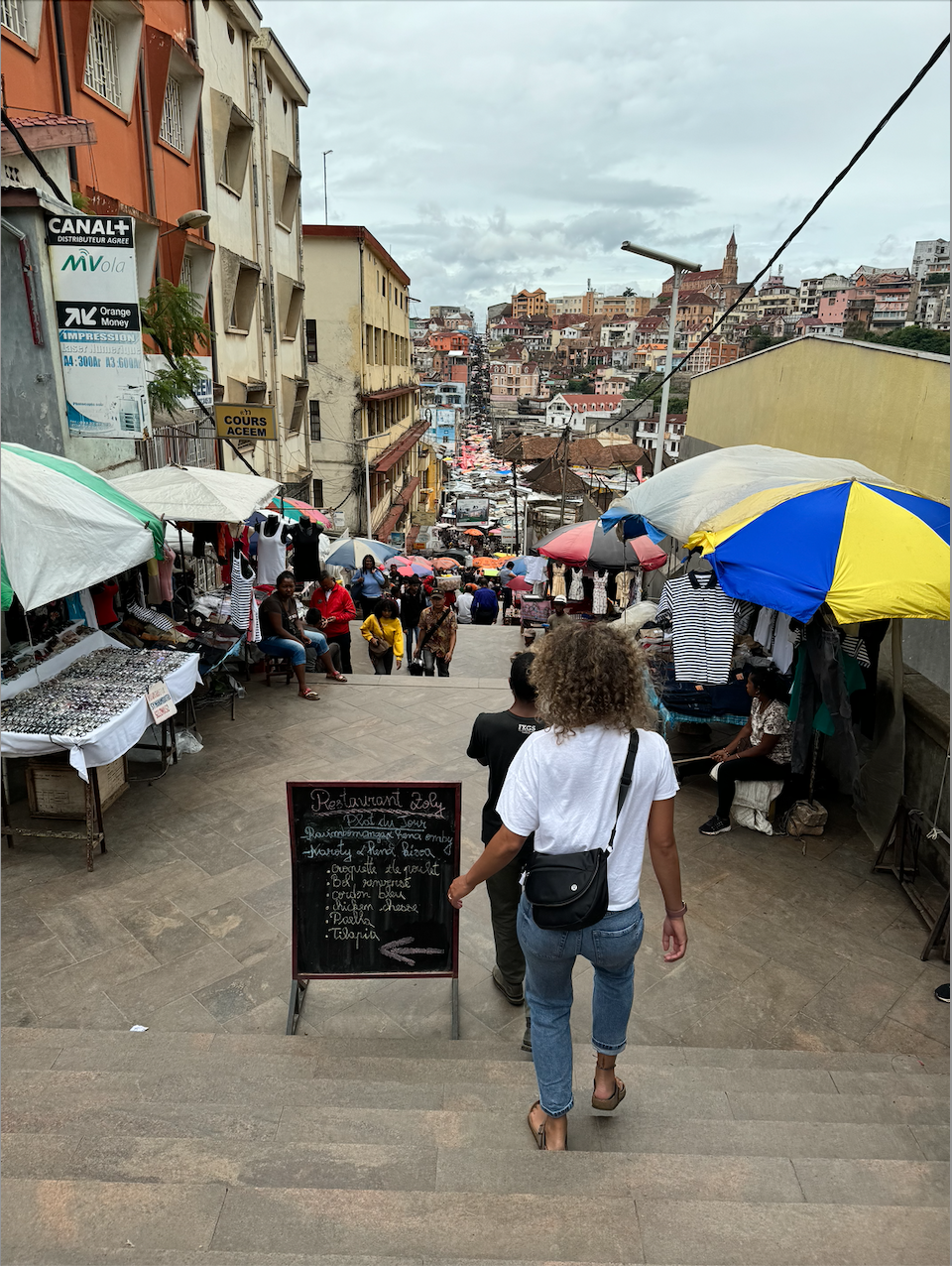
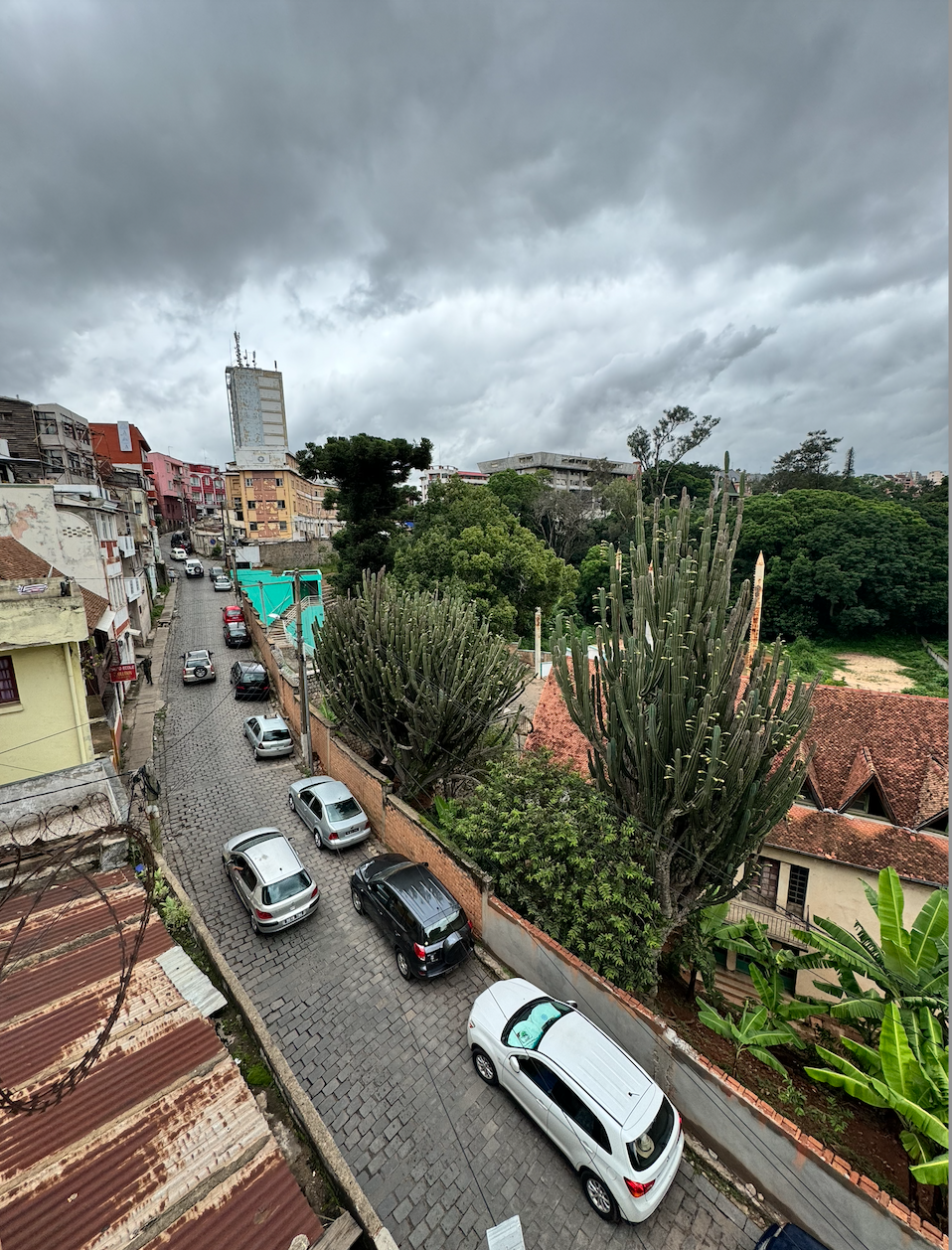
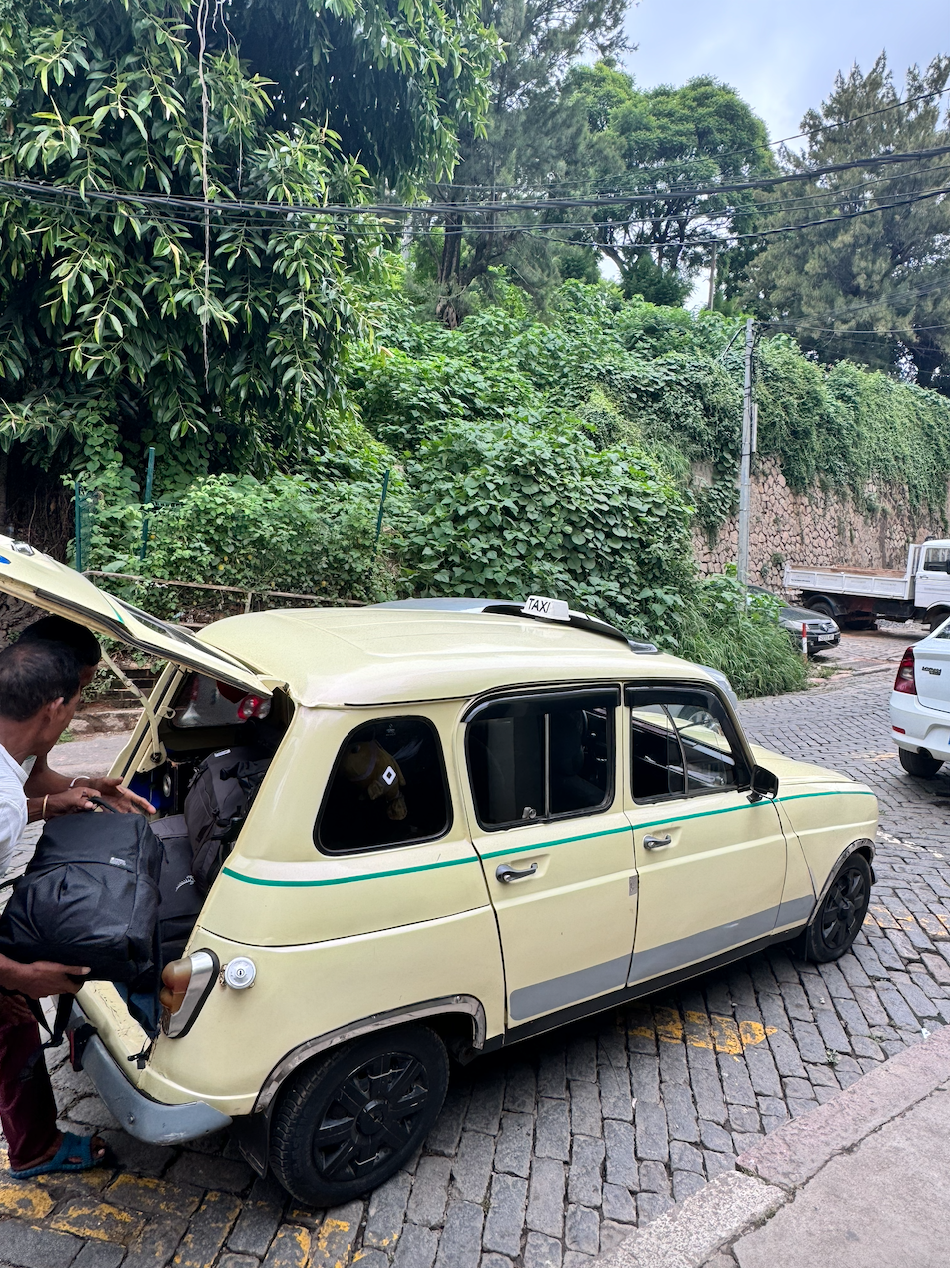
We took the day to acquaint ourselves with the city and prepare for our upcoming 7-day trek across central and western Madagascar. My first observation was the stunning ethnic diversity ranging from sub-Saharan African, Indo-African, to Indo-Asian. Second, was the extreme poverty and desperation - especially at night.
A short and eye-opening story.
Disclaimer: I have chosen to share this story and acknowledge that this was a human to human experience that deserves to be treated with respect and dignity.
It was 8:00 pm and we were on our way to dinner, in the dark. Four blocks away from arriving at the restaurant, a very young, barefoot woman, with a small baby on her back started walking beside us asking for money. Theo had mentioned that we shouldn’t give money as it perpetuates the cycle, but try to provide food whenever we could. This was a moment where we had no food and were walking quickly through the eerie dark streets of Tana, a still unfamiliar city that we had been in for less than 24 hours. We crossed our hands over our hearts, gently shook our heads and said “I’m sorry”, and continued walking. The woman quickened her pace and continued asking, to which we continuously said “I’m sorry, no”. My innate reaction was “I need to help”, and dig into my bag and give her cash, but I knew that reaction was not a sustainable one. It was a deeply unnerving situation, because it was dark, and we are always trying to be hyper vigilant of our own safety, while also feeling horrible about what is unraveling in front of us.
The woman continued to follow us for four blocks and became more and more desperate in her plea, to the point where I said to Ryley “please help her”. He handed her some ariary (Malgasy currency), and she shared a moment of intense thanks before running away.
This would be the first of many similar challenging situations.
Our guts somersaulted through a dinner of guilt, sadness, and a very real dose of perspective.
Additional context: Madagascar was colonized by France in 1896 and continued under French rule for over 60 years. An environmentally fertile island with abundant natural resources, Madagascar’s main exports are graphite, vanilla, coffee, and sugar. Post-independence in 1960, France still has their fingers in Madagascar's political and economic honey pot. Political corruption is rife, acting as a key driver for fear amongst the Malagasy population; this is evident historically and current day. Colonial echoes are alive and well, making an already difficult life for Malagasy people harder.
When researching Madagascar, we discovered it was not a country we’d be able to explore alone. The infrastructure outside of the city often requires a 4x4 vehicle and a local driver to navigate safely. Malagasy and French are the two main spoken languages, and we knew our grade eight French was not going to be enough to get us by. Between navigational safety and basic communication, we felt it prudent to find a local guide to be our “guiding light” (A.K.A Theo & Ismail).
Our journey began early the next day - Theo and Ismail met us with their van and we began the chaotic trek out of Tana. Theo expertly dodged potholes, pedestrians, and rickshaw runners, all while energetically pointing out important parts of the city.
Traffic dispersed as we made our way to the outskirts of Tana. Our first stop: Lemur’s Park.
The park is home to seven different species of lemur, and was created to help aid reforestation and preserve the lemur population. Our park guide, Jonathan, led us through a fascinating experience pointing out the endemic and non-endemic flora throughout the park and explaining the behavior of each lemur we encountered.
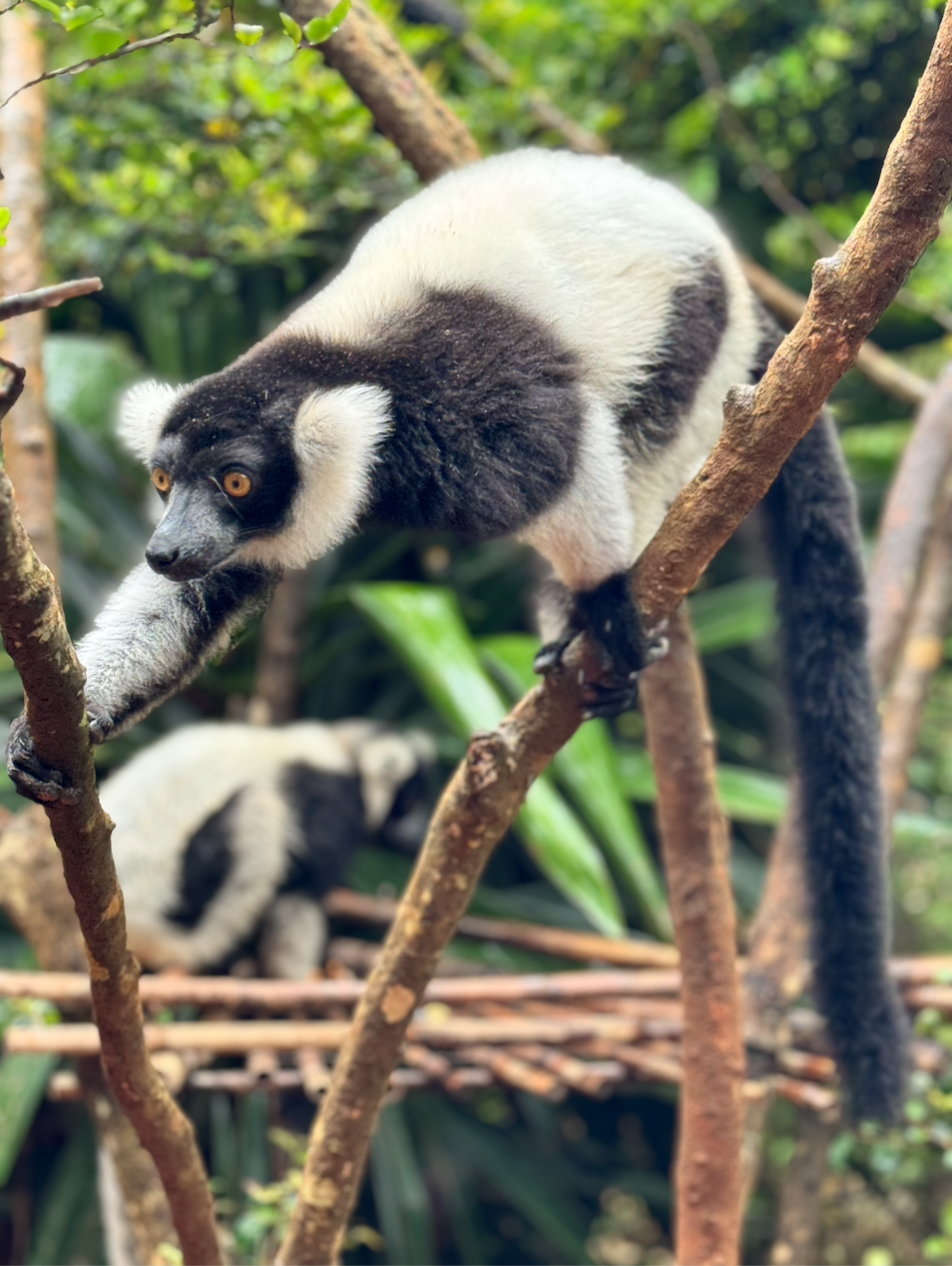
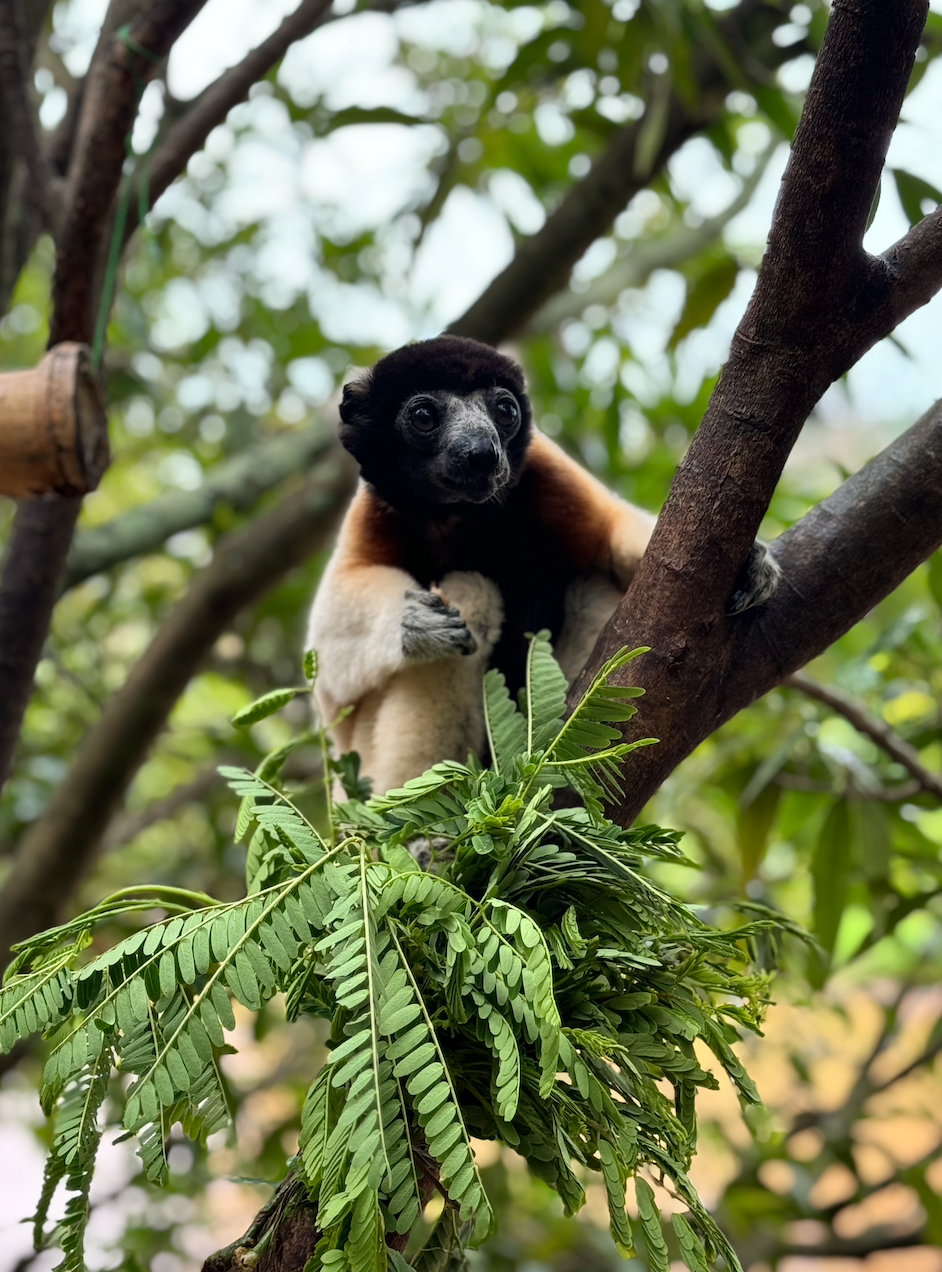
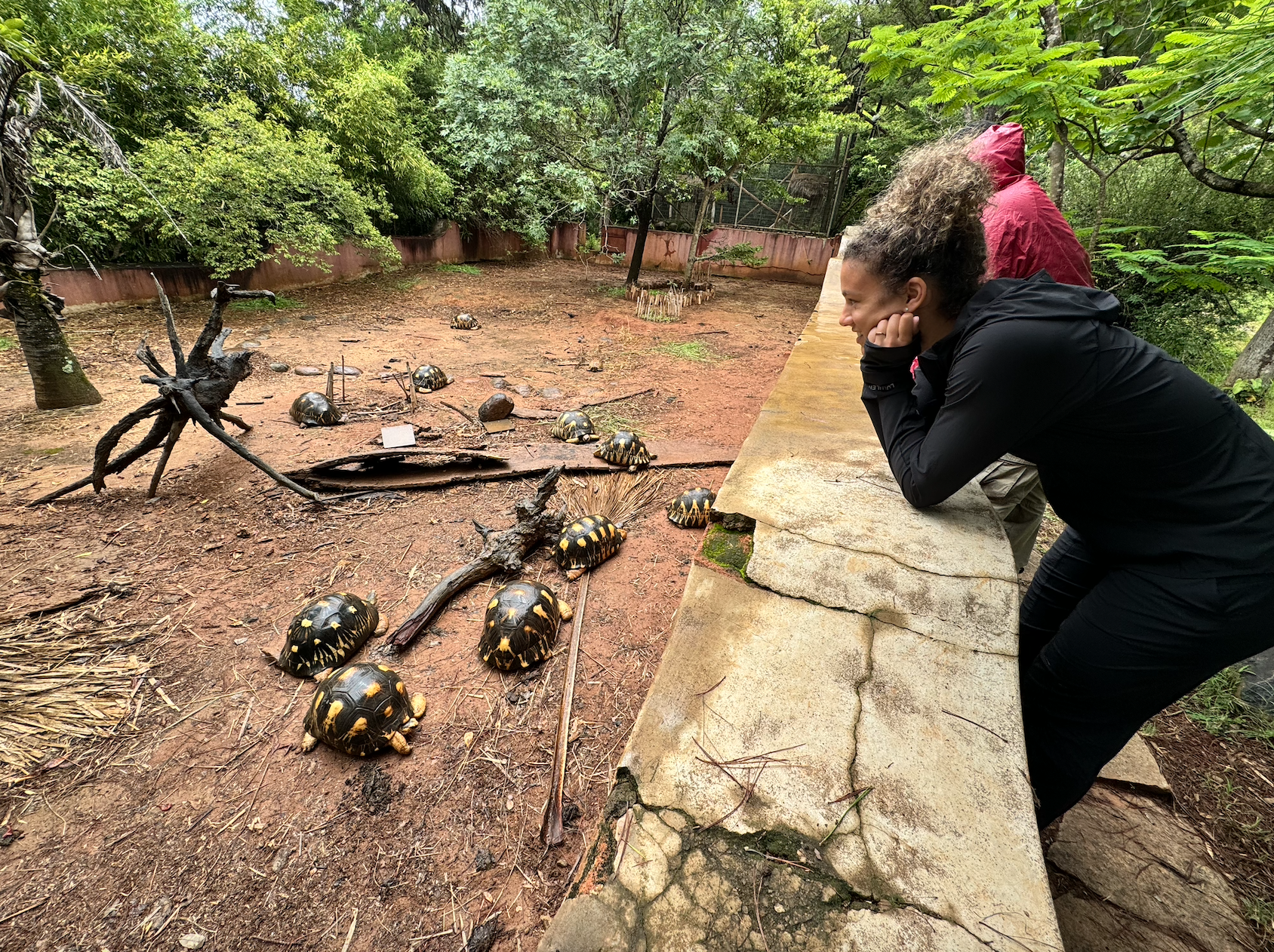
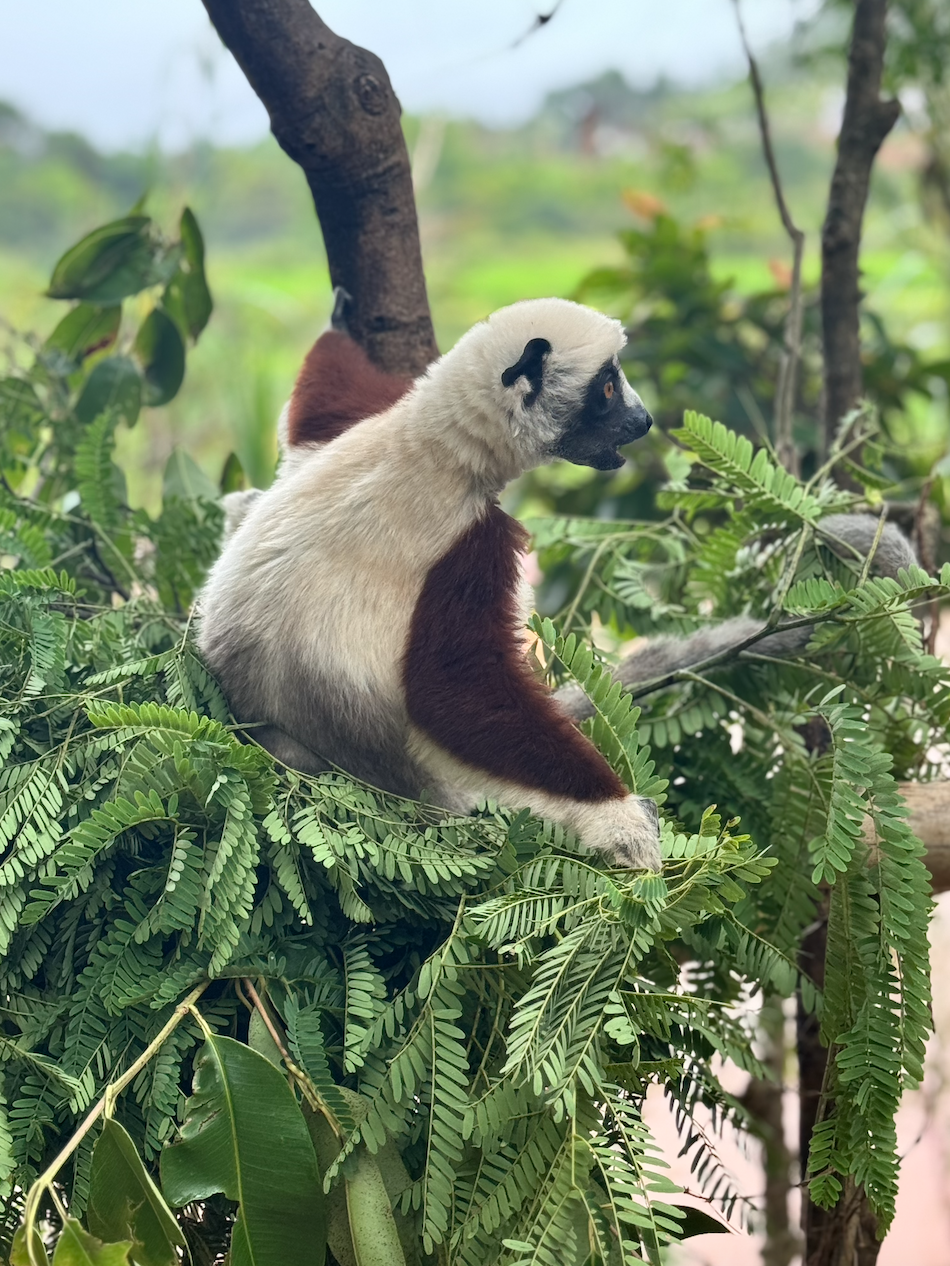
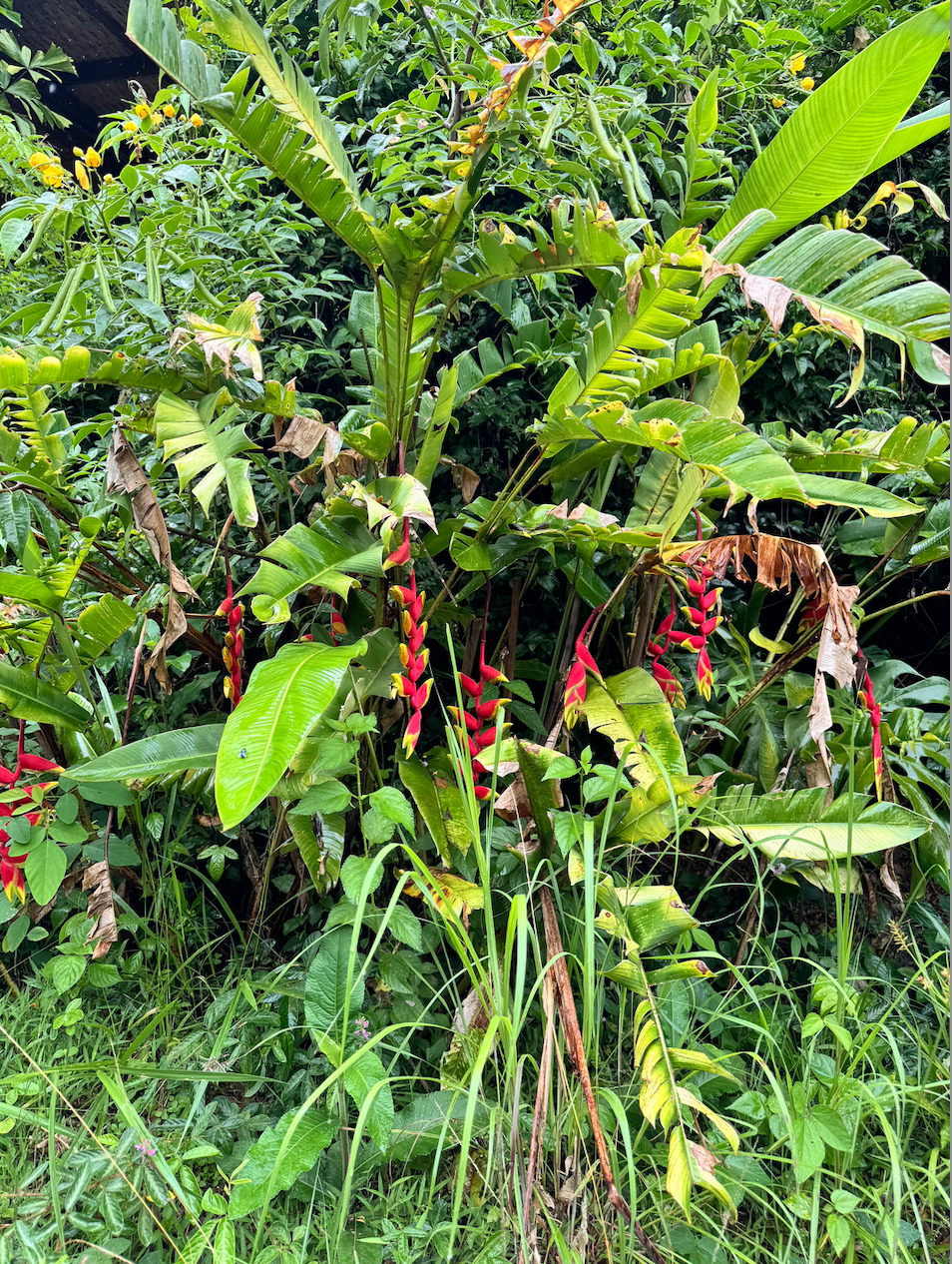
Throughout our forest expedition we kept a safe distance from our primate friends, and had so much fun watching them devour fruits and interact with each other. Of course, we lost it when we saw a real life Zoboomafoo, also known as the “dancing” sifaka, and a family of ring-tailed King Julians. We also learned that one of the most versatile trees that is used to build homes, weave baskets, collect rainwater, and be dried for kindling, is commonly known as the “Traveler’s Tree”.
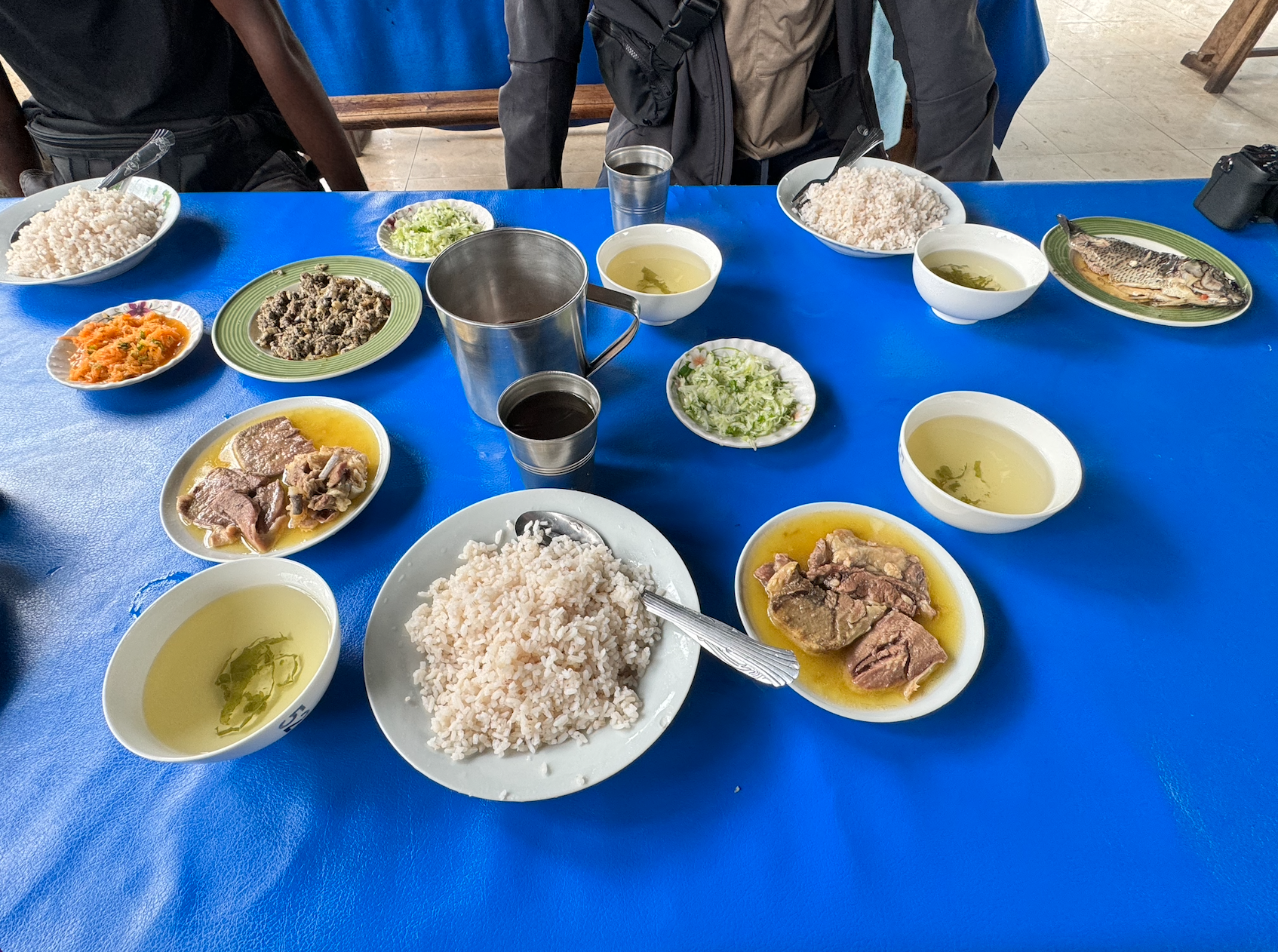
For lunch, we ventured down the road to a local outdoor styled restaurant and tried a traditional Malagasy menu that consisted of: roasted rice tea, zebu tongue (cattle tongue), small river fish, vegetable broth, and a Kilimanjaro sized mound of rice (rice is eaten with every meal in Madagascar). The aroma of food cooking over the wood fire engulfed us in a warm hug, as rain pitter pattered on the tin roof above our heads. With full bellies, we continued the drive to Ampefy.
Ampefy (pronounced Am-pef-ee) (01/19/2024 - 01/20/2024)
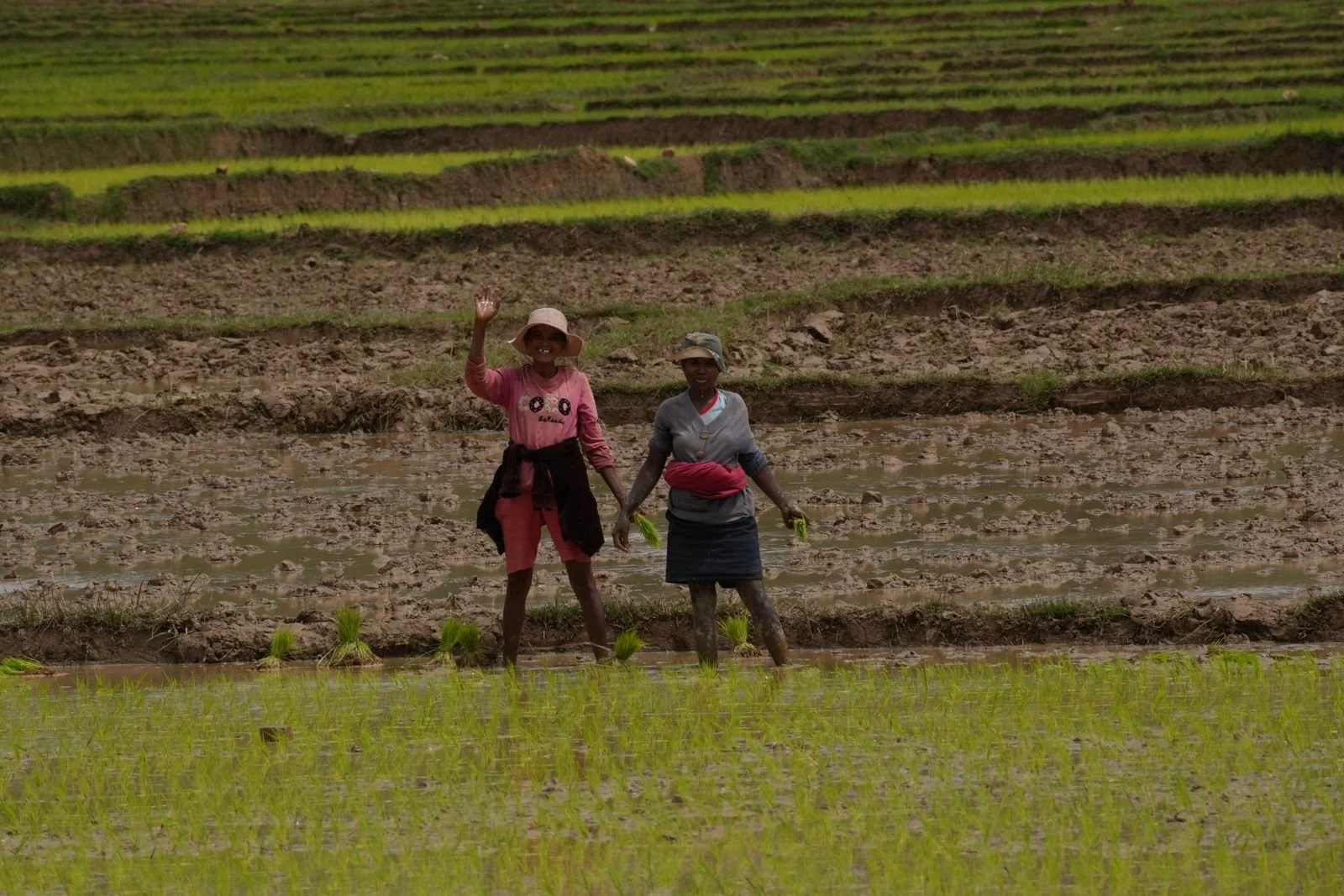
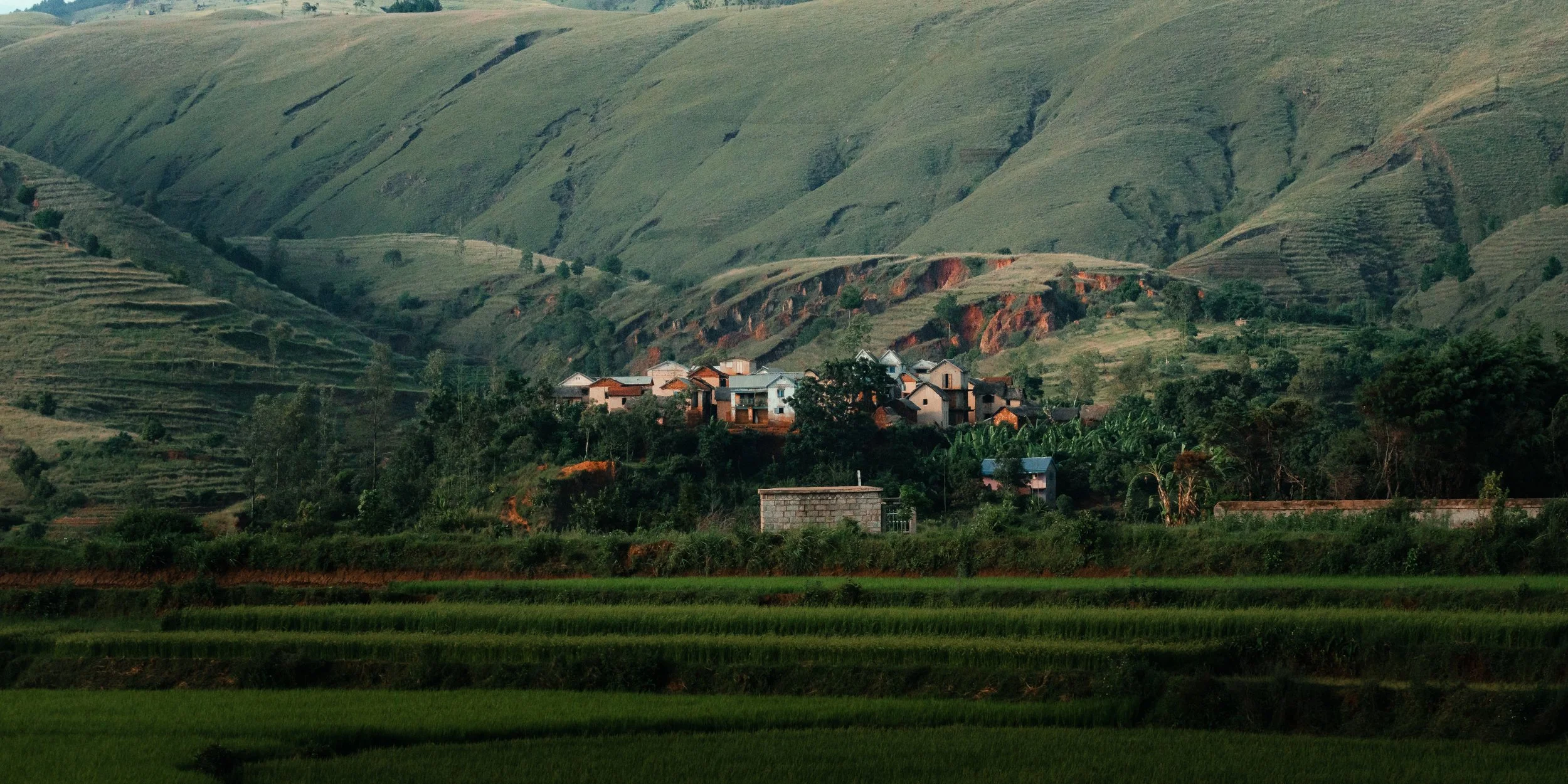
Scenes of vast rice terraces, barefoot workmen running rickshaws, and school children coming home for the day, passed us by as we journeyed through a number of villages. Along the way, I spotted a Koba stand and was eager to try it. Koba (pronounced Kuba) is a starchy and sweet snack composed of ground peanuts, brown sugar, and rice flour, wrapped in a log shaped banana leaf. It’s steamed and sold warm, and was a carby combo of goodness.
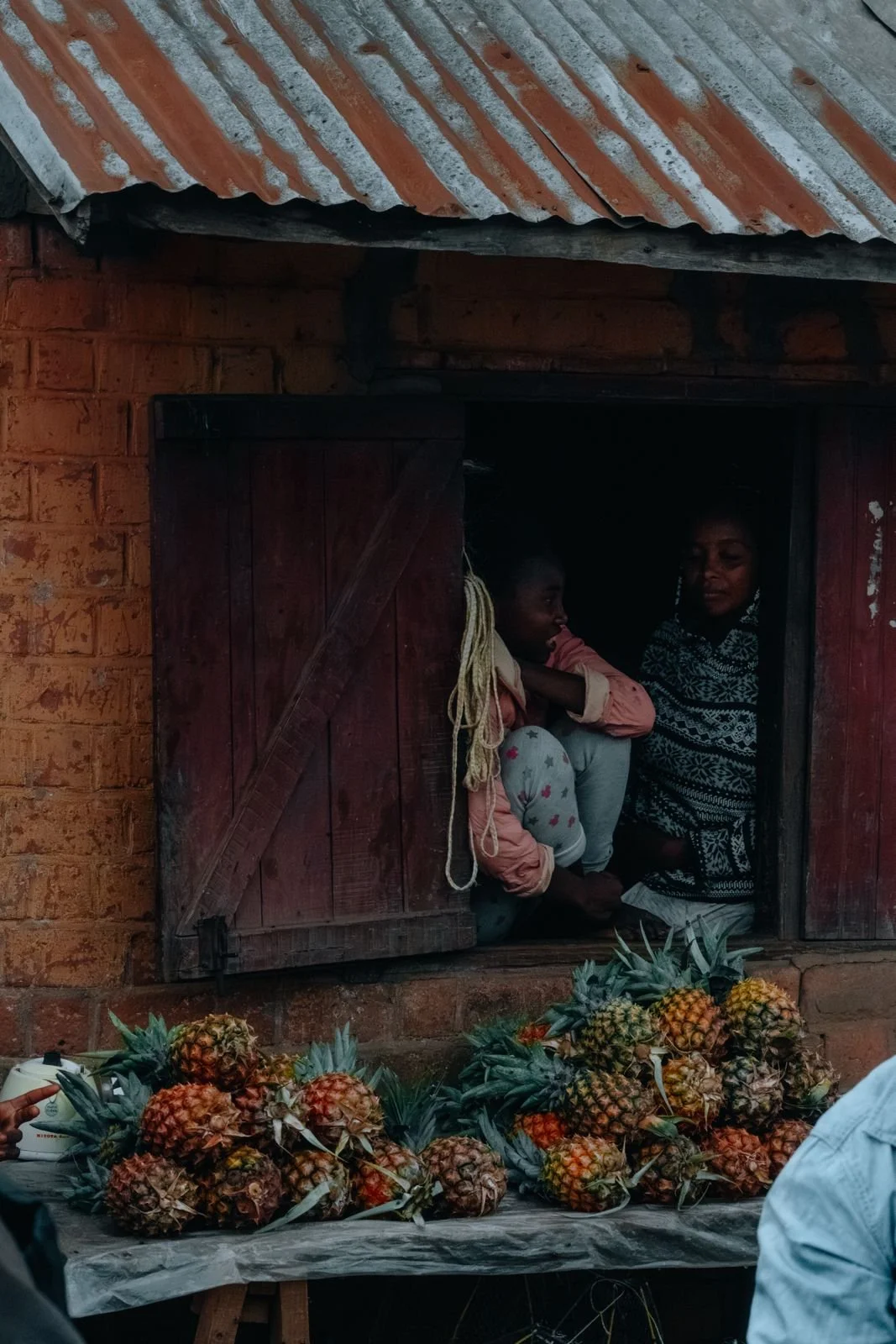
Pineapples are also abundant all over the highlands. Multiple vendors could be spotted on almost every street on the main roads, all lined up beside each other ready to sell the golden fruit. Theo pulled over to a strip of road where there were six vendors, all eager to sell their pineapples. Out of respect to the eldest vendor, Theo picked a fruit out of her basket and using only the palm of her hand and a giant knife, removed the pineapple’s pointy outer shell and sliced it into bite sized pieces in less than a minute. No exaggeration, it was the most delectable pineapple I’ve ever eaten; it tasted like liquid gold.
Off to visit geyser d'Andranomandroatra Analavory.
Keep in mind we visited Madagascar during low season, which meant there were very few tourists. During our entire trip, we saw a total of 15 tourists throughout the capital and countryside. This meant that tourist attractions (like the Geyser), were rather quiet. Ryley and I were guided to the geyser, where 10 people trailed behind us. It was a little overwhelming, as these folks intermittently would ask us to buy souvenirs, and to take our picture. We gently redirected and took in the geyser as much as we could (because when are we ever going to see one again).
As we concluded our visit, we piled back in the vehicle and continued on our way to the municipality of Ampefy where we would stay the night. While we were there it was lychee season, so the only correct option was to gorge ourselves with it.
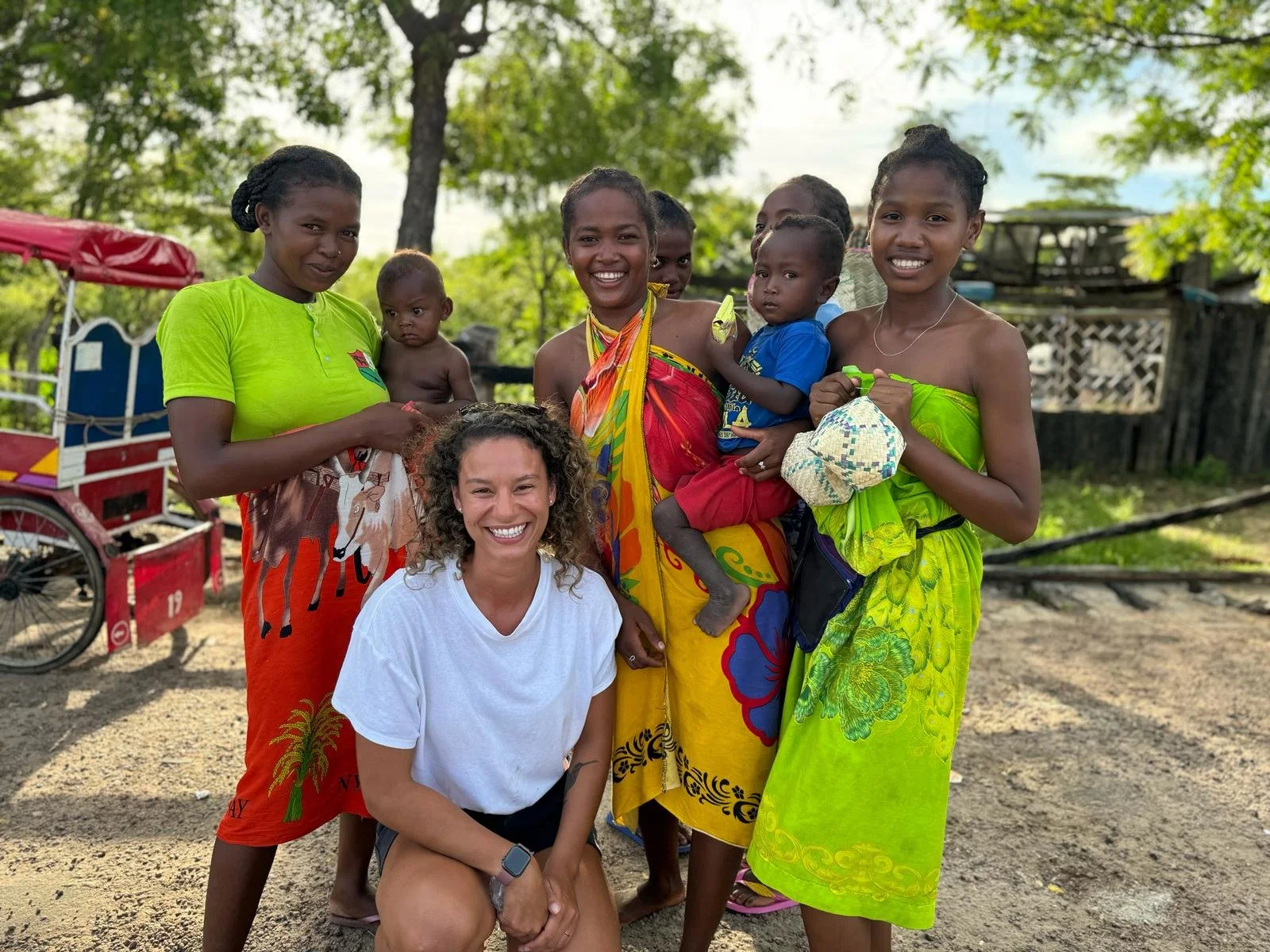
Theo gave us the evening to explore the area ourselves, so we decided it would be a neat idea to walk through the local market. Going off the beaten path meant that we stuck out even more than we did before; LOTS of long, hard, stares. Curiosity is a shared human experience and how it is expressed varies everywhere you go. That was something I really had to come to terms with during our stay in Madagascar, as the looks we received were rarely accompanied by a smile and would last for extended periods of time.
I think the part that I struggled with the most was the intensity of the male gaze. I had to quickly learn to stand my ground by practicing a simple yet disarming greeting in Malagasy. Instead of casting my eyes down, I’d look right back and greet them with a “selama!”, which was warmly accepted and returned 90% of the time. When you’re a visitor in someone else’s country, it is imperative to learn and practice proper greetings, ensure you are a respectful and active participant, and always approach with kindness (it’s free).
Feeling uncomfortable is normal, and acknowledging that feeling is important. Sit with it. Question it. Think critically about it and what that discomfort means to you and how it relates to the environment that you’re in.
The next morning I woke up frustrated with myself, because I struggled to be present during my walk through the market. I was transfixed on my discomfort, which didn’t serve me in the slightest. I made a vow to myself to, with safety at the forefront, push myself outside of my realm of comfort because I am never going to experience that moment again. Release the care attached to what people think of me, because it isn’t within my control.
I didn’t know that walking through a market would free me of my own mind in a way that I’ve needed for a long time. My intent has always been to let curiosity, love, and an appreciation for cultures around the world lead me through my travels. This was a moment to kindly remind myself of that intent and release the projection of my ego trying to protect itself.
Antsirabe (pronounced An-seer-ah-bey) (01/20/2024 - 01/21/2024)
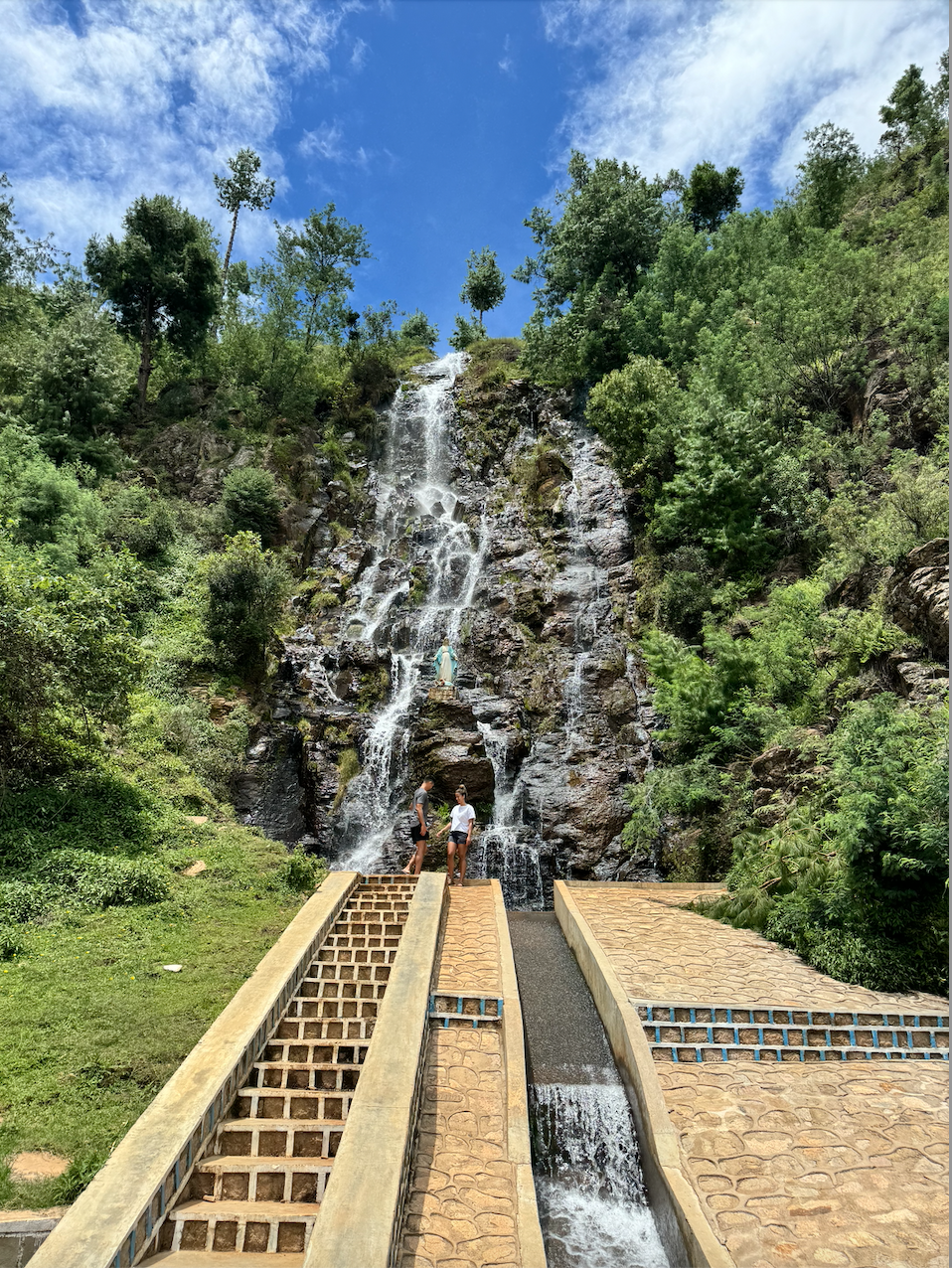
We had an early start so we could arrive in Antsirabe before sunset. Along the way we stopped at a stunning waterfall that overlooked kilometers of rice fields.
During our drive, we witnessed a group of people smashing granite by hand into gravel sized chunks. Many Malagasy people live in extreme poverty, and in order to survive people must work - this means children as well. This is a reality for many Malagasy families. Amidst back breaking work, many smiles and waves came from above where a number of folks stopped to say hello.
6 hours later we arrived in Antsirabe - the second largest city in Madagascar.
We toured the city that evening via bicycle rickshaw and drank in all of the fascinating backlit scenes that passed us by. Antsirabe’s Friday night consisted of lively music, family time, beers, and wafts of charcoal and roasting meat from the multitudes of barbecues located on every corner.
Our tour of Antsirabe ended at a restaurant where we indulged in a few pints of Madagascar's local brew, “Three Horse Beer”. Without our knowledge, the wonderful rickshaw driver who dropped us off, ended up waiting outside of the restaurant to take us back to our accommodation. Back into uncle’s rickshaw we went!
Morondava (01/21/2024 - 01/24/2024)
A full day of driving in 40-degree weather was challenging, but not nearly as challenging as some of the terrain we encountered along the way. After 12 hours of Theo expertly navigating potholes and dodging herds of zebu and goat, we made it to the west coast of Madagascar.
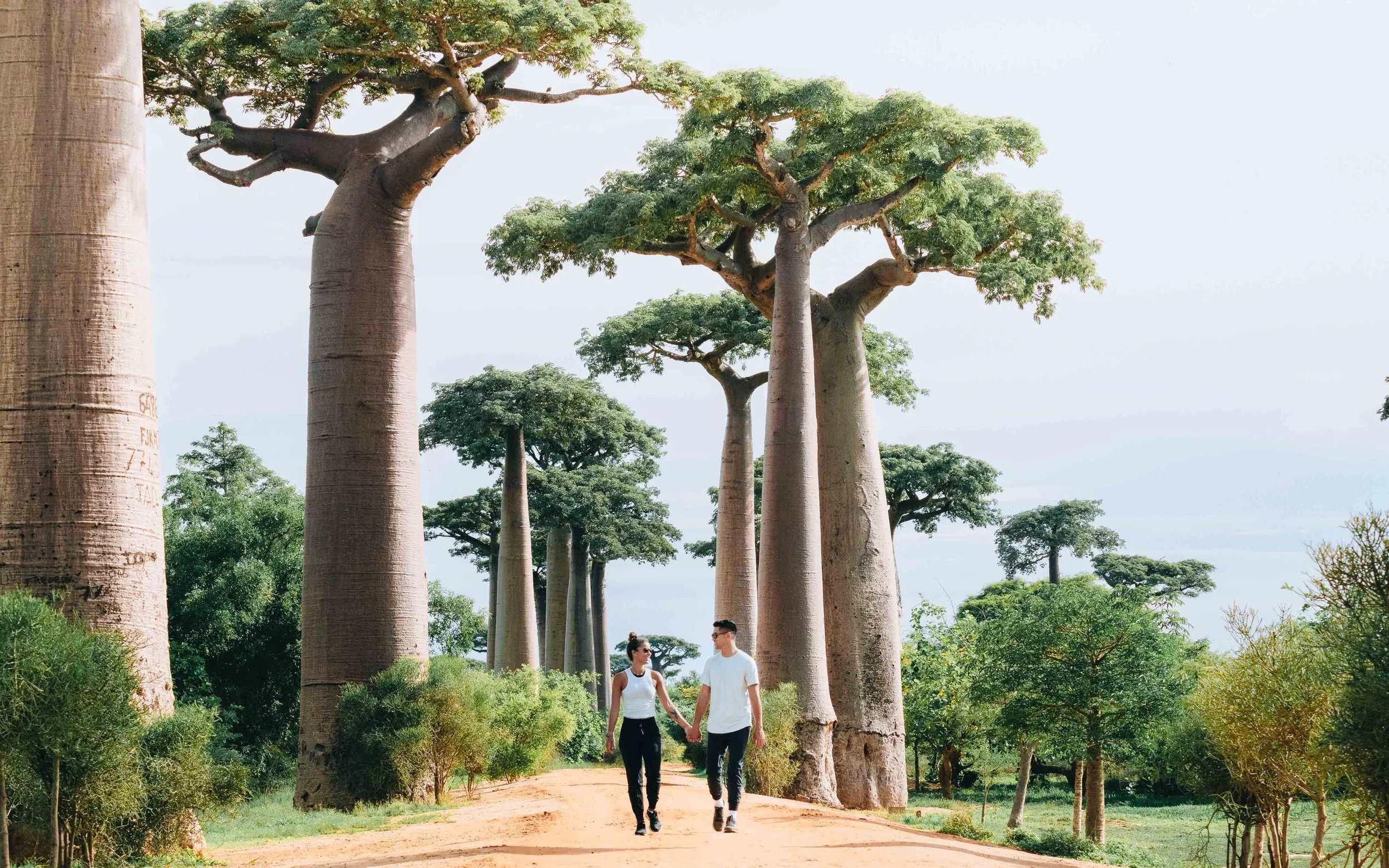
The next morning, we hopped in a 4X4 SUV and drove through deep divots to the sacred reniala (baobab) avenue. As the mighty flora came into view, we couldn’t believe our eyes - thick, powerful giants, with thousands of years of roots laid deep within the earth. In Malgasy, “reniala” translates to “Mother of the forest”, an emblem of life, wisdom, and continuity from both an ecological and cultural perspective.
The journey continued and turned into a bumpy 4x4 experience through deep water filled craters and uneven dirt roads, which would lead to the narrow entrance of the Kirindy Forest. We trekked through the dense greenery in hopes of seeing at least one of the eight species of lemurs that reside there. If I’m being completely honest, this particular trek was terrifying as the path was narrow and filled with spider webbed branches. If you know me, you know that I do not like spiders (I know…I know… they’re more scared of us than we are of them), but still, that’s a no thank you for me. Unfortunately, due to the rainy season, we were unable to spot any lemurs - many spider webs were faced all in the name of spotting the wild lemur.
Back to baobab avenue to catch the sunset.
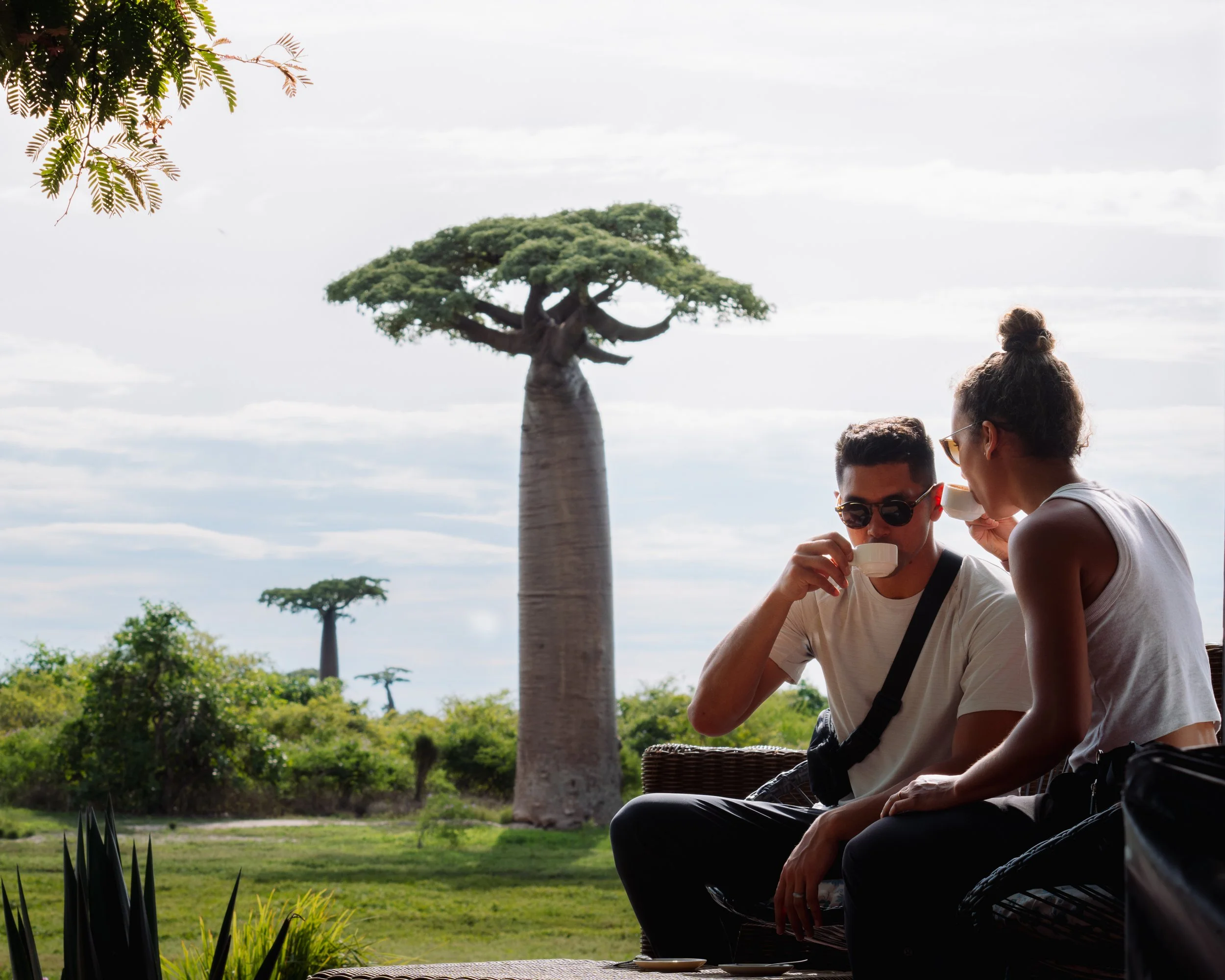
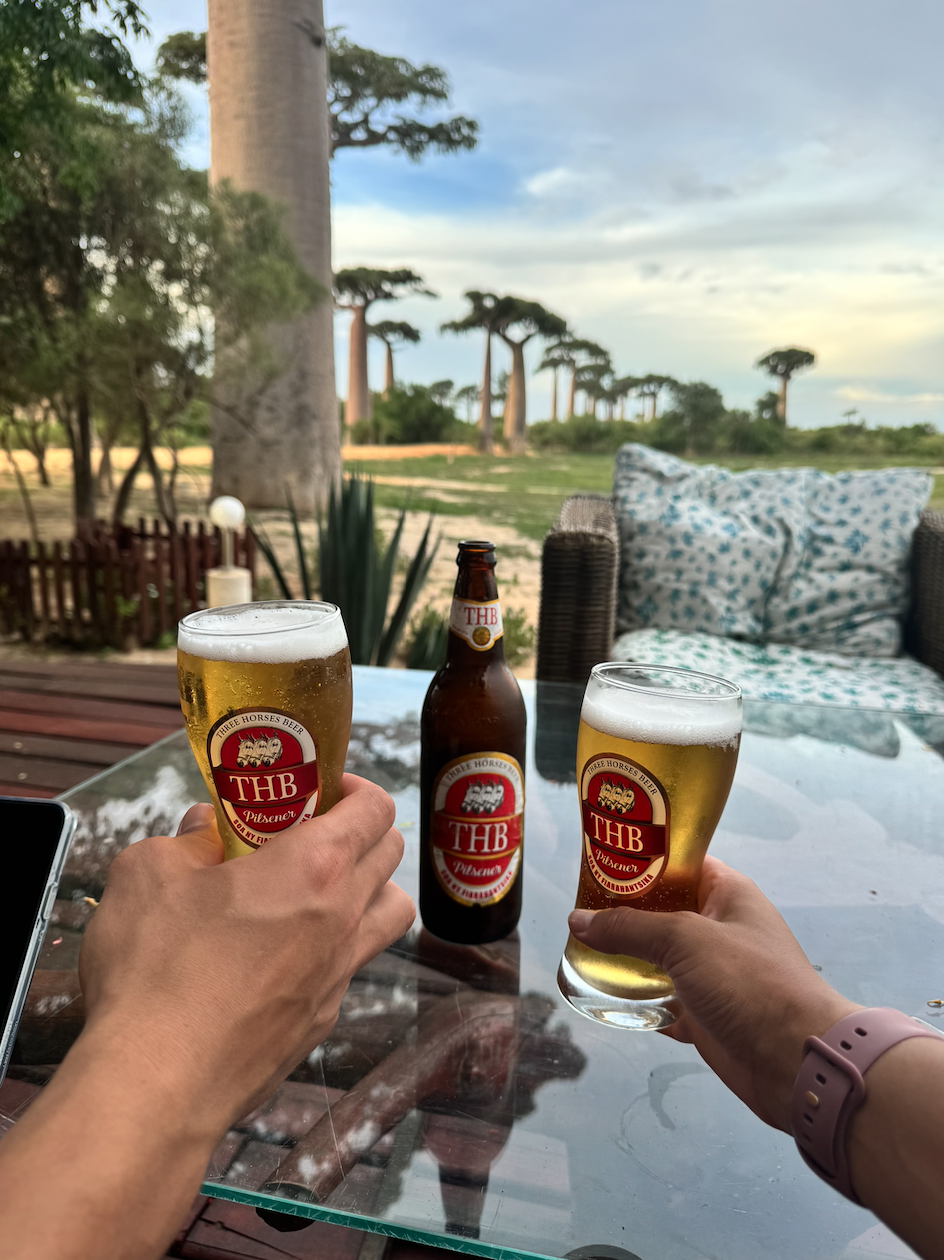
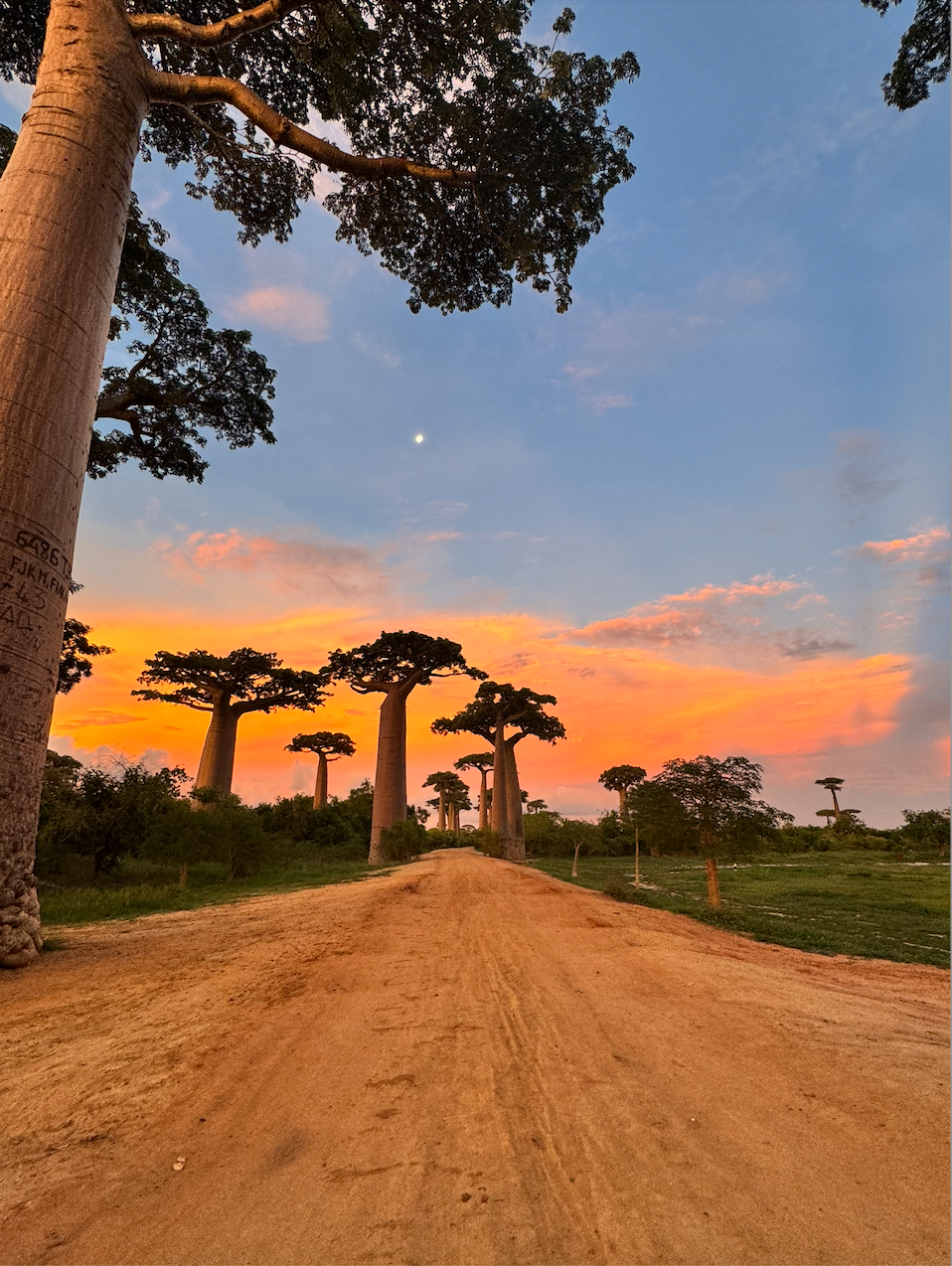
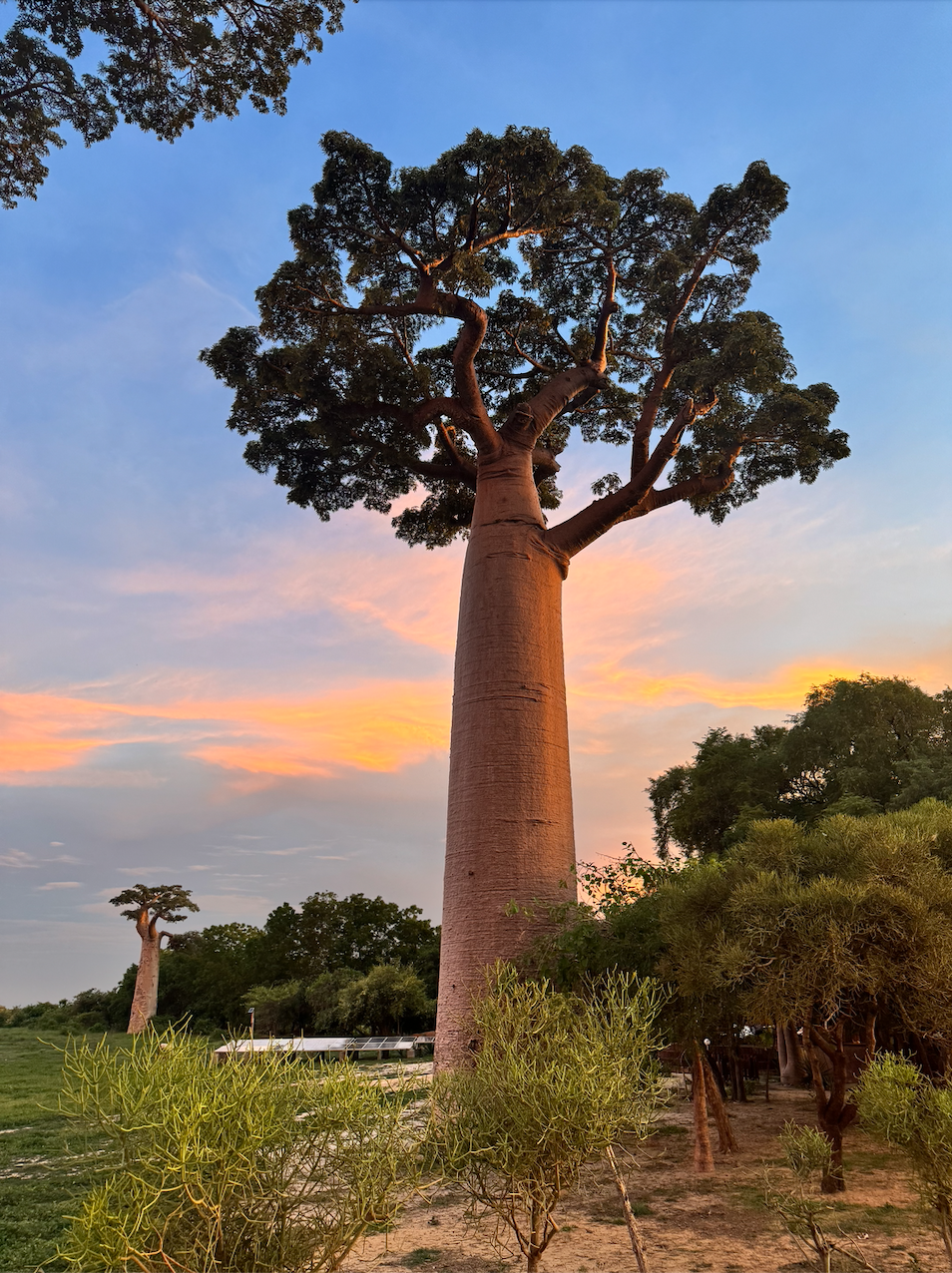

Our final day with Theo and Ismail came too soon and we shared our final goodbyes. They made our Madagascar dream come to life, and we couldn’t be more grateful.
We’d take the next two days to recharge in more ways than one. I woke up violently ill in the early hours of our last day in Morondava with one of the most awful bouts of food poisoning. Chills and aches radiated throughout my joints and I had a fever that lasted most of the morning. I hate to say it, but this was bound to happen. We have learned throughout previous travels to always bring a small pharmacy with us - thank you ciprofloxacin for saving the day. Ryley nursed me back to health with a variety of fruit and tons of water. I rested for most of the day and was determined to see the city, as we hadn’t had the chance to explore on our own yet. By 5:00 pm my symptoms had subsided, with a hint of fatigue still lingering, we jumped into a bicycle rickshaw and explored.
As we were peddled closer to the beach, we came across two energetic street performers surrounded by a giant group of people. Of course, we had to stop and enjoy, because these are the best types of moments - the ones that you don’t plan.
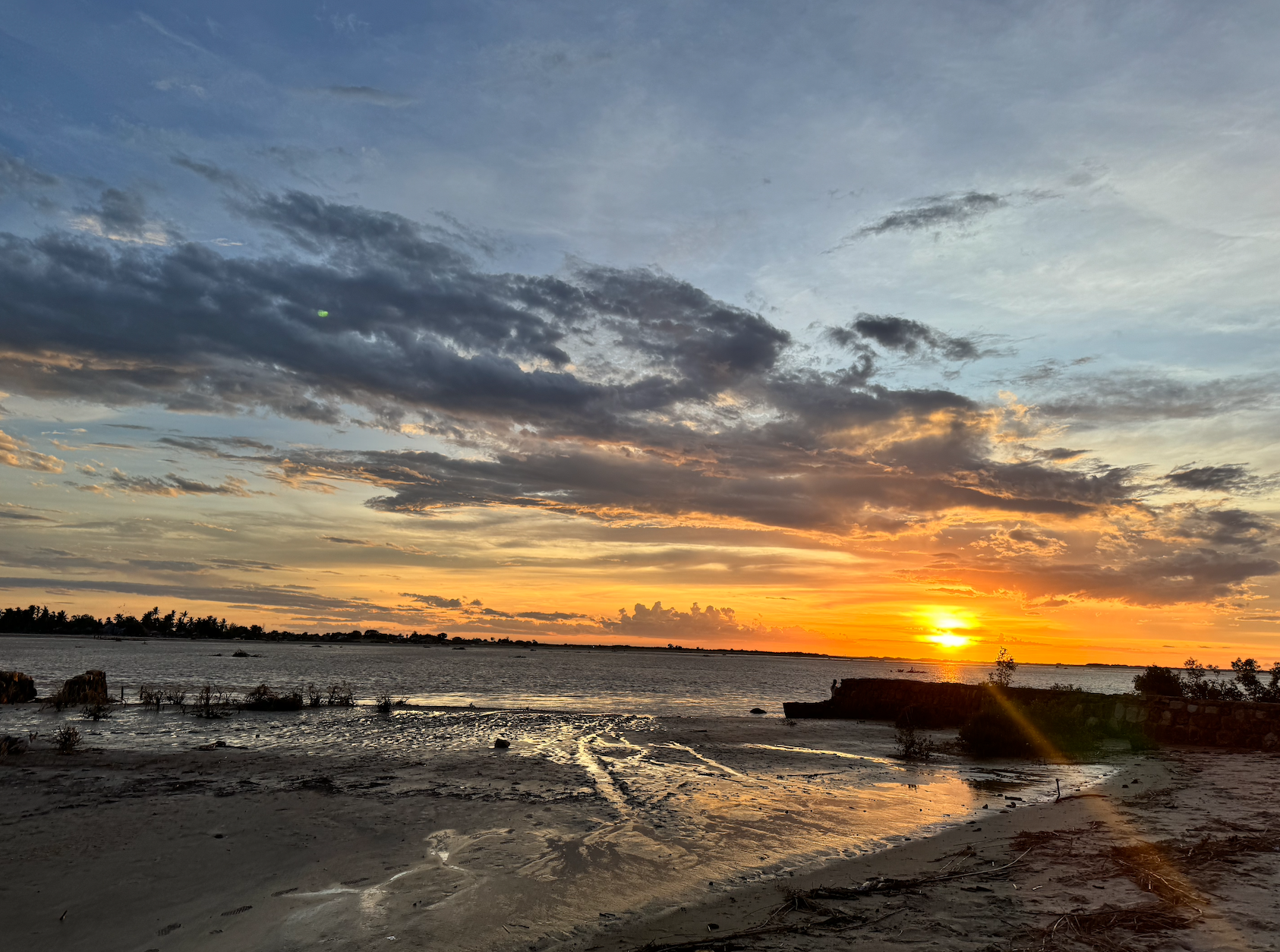
We found our way to the beach where we witnessed the sun disappear into the horizon, turning into a spectacular shade of fiery orange gold. A not so great start to the day transitioned into a noteworthy ending.
Reflecting on my experience in Madagascar, I am overwhelmed with an immense amount of gratitude while being simultaneously conflicted. It was an honor to have the opportunity to visit, however, it left me with a feeling of unearthed awareness. You see the real and raw, completely uncensored, juxtaposed by incredible environmental and cultural beauty. It’s now my job as a traveler, to continue to educate myself, to acknowledge what I now know, and to never forget my own privilege.
Back to Tana in the morning to bid Madagascar a final goodbye as we headed further east to the neighboring island of Mauritius.
If you’re interested in taking a further glimpse into Madagascar, take a peak at Beyond Baobabs - An Adventure Through West Madagascar.